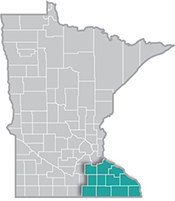
 Southeast Minnesota is a health care and agricultural powerhouse. The region is home to the renowned Mayo Clinic and some of the world's most recognized food companies and brands.
Advanced manufacturing is especially strong here, with machinery, chemicals, and electronics among the top products.
Want the freshest data delivered by email? Subscribe to our regional newsletters.
Southeast Minnesota's workforce is getting older.
1/29/2026 10:55:08 AM
Amanda Blaschko
Southeast Minnesota's workforce is getting older. Across all industries, nearly 25% of workers are 55 years or older (Figure 1). But some industries are aging faster than others, and the differences are worth paying attention to.
For example, Transportation and Warehousing has the oldest workforce at almost 40% aged 55 and above. Real Estate and Rental and Leasing comes in at 36.7%, followed by Finance and Insurance at 30.7%, and Agriculture, Forestry, Fishing and Hunting at 29%. These numbers suggest these industries will see significant turnover in the coming years as workers reach retirement age.
When workers retire, they take years of accumulated knowledge, established client relationships and expertise with them. Someone who's been doing a job for two decades has built networks, developed shortcuts, and learned to navigate situations in ways that can't be quickly replicated. For industries with older workforces, a wave of retirements means a lot of institutional knowledge could disappear in a relatively short time.
Organizations with aging workforces might want to think about how they're capturing and transferring knowledge:
Industries with older workforces face a natural transition period as employees retire. Organizations in Transportation and Warehousing, Real Estate, Finance and Agriculture in Southeast Minnesota have particularly large cohorts nearing retirement. Thinking about knowledge transfer now means being better positioned for the years ahead.

For more information about workforce demographics in Southeast Minnesota, contact Amanda Blaschko at Amanda.Blaschko@state.mn.us.

