

The Measure of a High-Quality Job


By Kevion Ellis, Molly Ingram
December 2025
What defines a high-quality job? The answer depends on who is being asked. A family sustaining wage is often the first measure that comes to mind, but workers balance many factors when making employment decisions. A "quality job" looks different depending on individual circumstances: a parent with young children may value predictable scheduling and strong benefits, while a single worker with no dependents may prioritize higher pay. Across Minnesota, industries and occupations vary widely in stability, risk and working conditions. These differences make one thing clear: job quality cannot be captured by a single metric. Recognizing this complexity is essential to designing policies and practices that improve economic security for Minnesotans.
High-Quality Job Framework
In November, the Governor's Workforce Development Board (GWDB) adopted a new framework that will support employers and other workforce partners in strengthening and expanding the number of high-quality jobs across the state. The framework organizes job quality into five pillars:
- Compensation & Benefits: Fair, competitive pay and benefits that support workers' economic security.
- Safe & Stable Working Conditions: Work Environments that protect health, safety and provide predictable schedules.
- Equitable Hiring & Career Development: Inclusive practices that ensure access to jobs and advancement of all workers.
- Worker Voice, Empowerment & Respect: Workers are valued, heard and included in decision-making.
- Sector Specific Metrics: Standards tailored to the unique needs and realities of different industries or sectors.
There are many actions employers can take to improve job quality within each of these buckets. The reality is, it may be difficult for employers to address every pillar at once, and every industry has its own constraints. Improving job quality is about identifying the most meaningful levers. For a high-risk occupation, employers may not be able to eliminate underlying hazards but can increase quality by offering stronger benefits, safety equipment and support systems. For a low-wage entry-level job, employers can strengthen quality by mapping advancement pathways, offering on-the-job training or improving scheduling practices. By engaging directly with its workforce, a business can better understand which changes are most meaningful.
Measuring Job Quality
Labor market statistics often emphasize the net number of jobs gained or lost, but job counts alone don't reflect wages, stability, benefits or career mobility. These factors all matter for whether employment supports household economic security.
Figure 1 shows that over the past decade, the median hourly wage across all jobs in Minnesota has remained consistently above the statewide family-sustaining threshold. In 2024, more than half of Minnesota's roughly 2.9 million jobs provided hourly wages above the state family sustaining wage. Because many existing jobs already meet this wage benchmark, additional job growth alone may not meaningfully increase household economic stability without corresponding improvements in job quality.
Figure 1: Statewide Wage and Cost of Living Trend
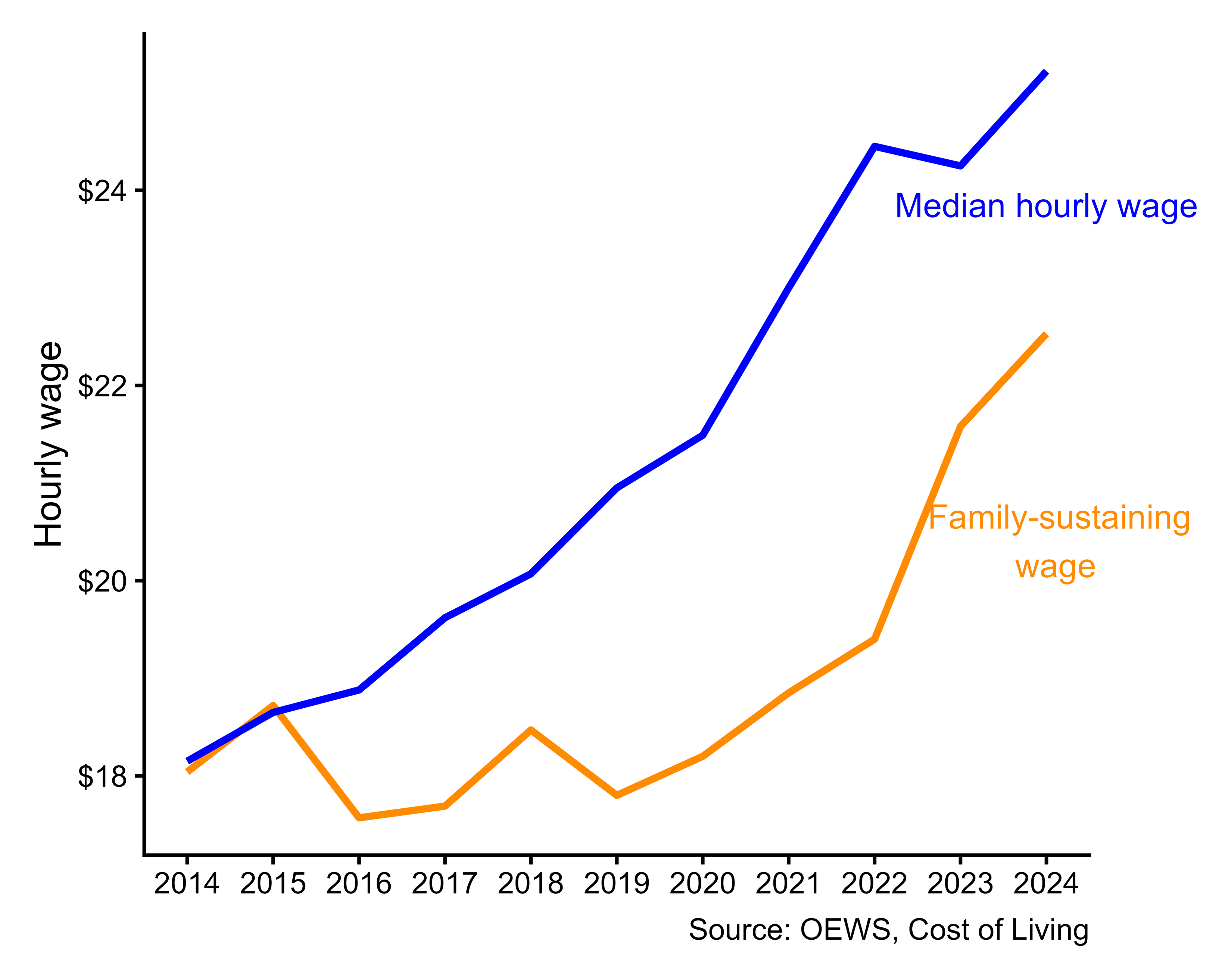
The family-sustaining wage is derived from Minnesota's Cost of Living Tool, which estimates the cost of meeting basic needs using federal and state data. The family-sustaining wage reflects a typical Minnesota household of three people, with one full-time worker and one part-time worker, and represents the hourly wage needed to cover basic living costs regardless of how work hours are distributed between adults.
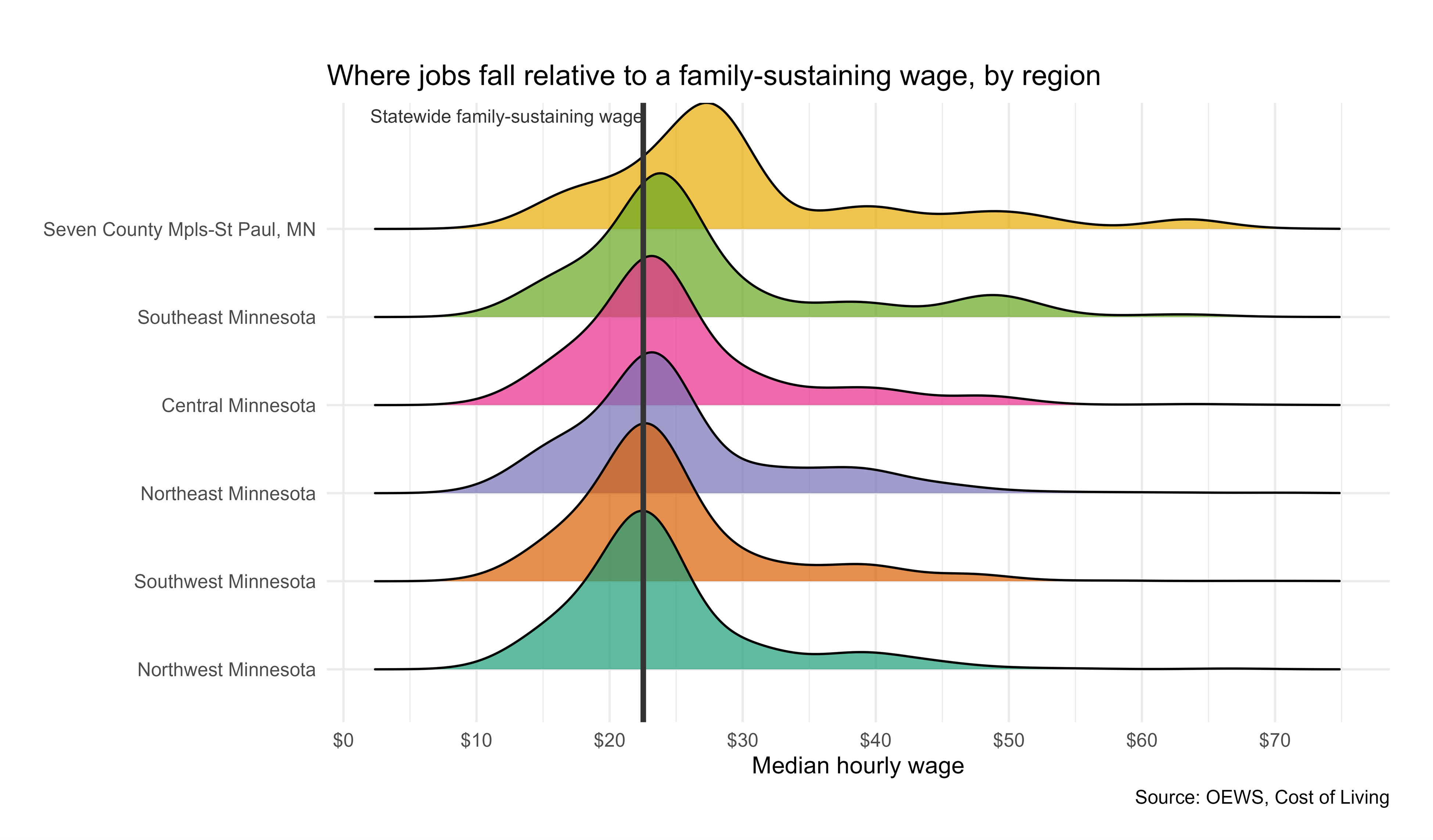
Figure 2 shows how jobs are distributed relative to the family-sustaining wage across Minnesota's planning regions. In the Twin Cities metro area and Southeast Minnesota, more than half of workers are employed in occupations with median wages above the family-sustaining level. In other regions, the share of workers in jobs with median wages at or above that threshold is closer to half.
Figure 2: Regional Distribution of Occupation Median Wages
At the same time, technological change is reshaping the labor market. More than 1.6 million jobs in Minnesota are highly exposed to artificial intelligence. AI and automation will both eliminate some jobs and create new ones, creating a continual reshaping rather than a simple gain or loss. Figure 3 shows estimates of current employment in selected occupations by exposure to AI, with over half having a higher likelihood. The opportunity isn't to predict the exact number of jobs that will rise or fall, it's preparing Minnesotans to succeed in a labor market where technology is evolving rapidly and ensuring that the jobs created are high-quality, resilient and accessible.
Figure 3: Employment by AI Exposure Rating in Minnesota
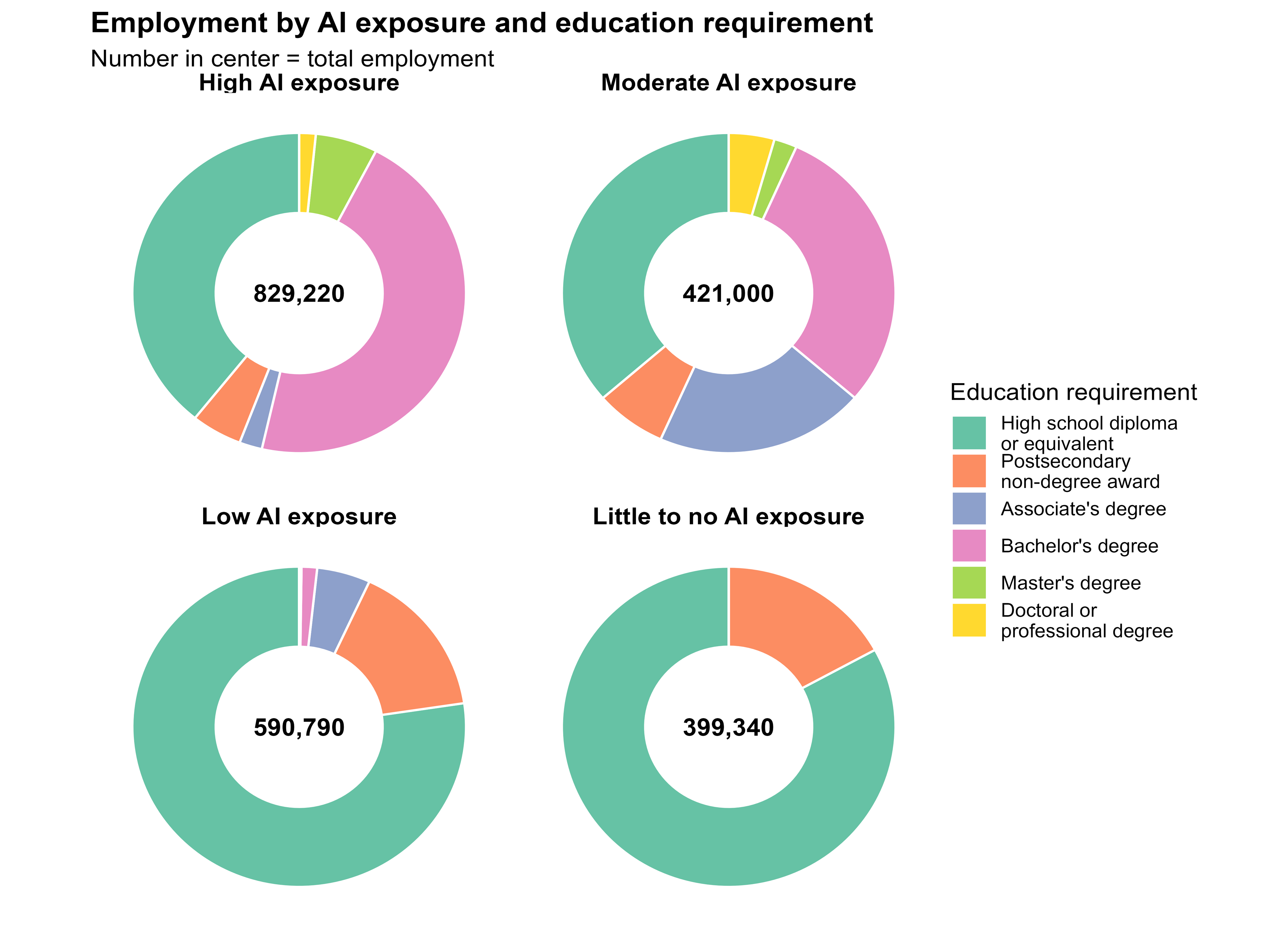
Source: Northern Exposure: Measuring Artificial Intelligence in Minnesota's Economy
Taken together, these trends reinforce a broader point: simple job counts don't tell us whether high-quality jobs are being created. Minnesota has an opportunity to lead by focusing not only on the quantity of jobs but on the quality of jobs available statewide.
The Business Case
Minnesota's labor market remains tight. As of September 2025, unemployment was at 3.7% with more job vacancies than unemployed workers. Additionally, labor force growth is expected to slow down in the state to about 9,500 new workers per year over the next decade. These factors already contribute to employers competing for talent, and long-term demographic constraints including lower immigration, aging workers and declining birth rates will continue to shrink the available labor pool.
Figure 4: Projected Labor Force Participation
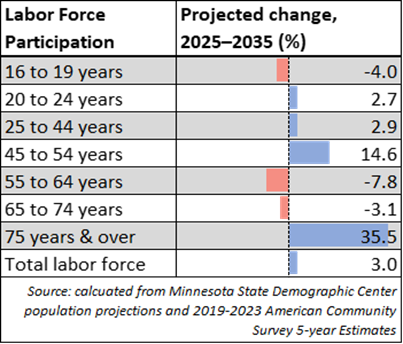
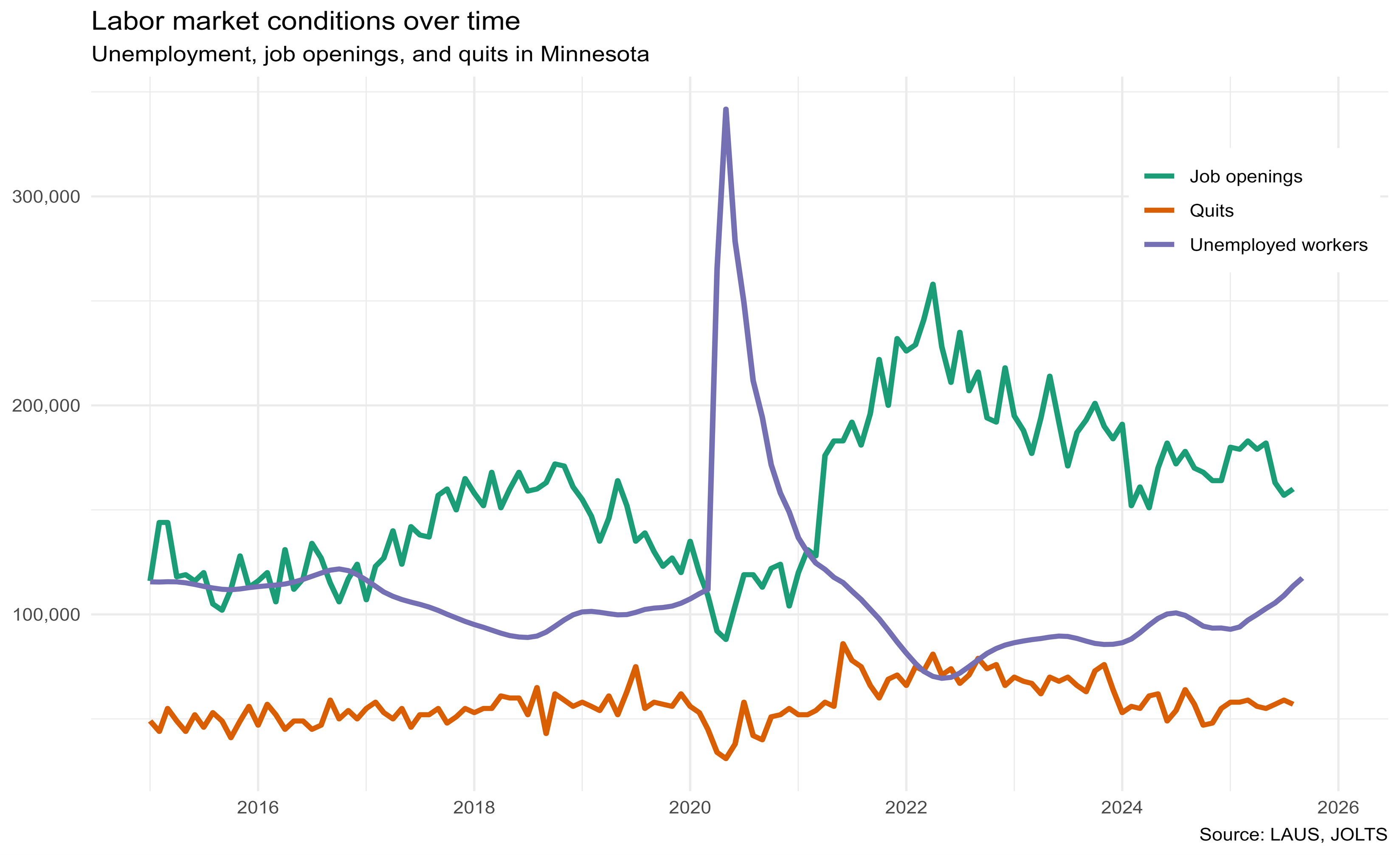
Figure 5 illustrates Minnesota's persistently tight labor market, where job openings exceed the number of unemployed workers and quits remain elevated, making retention as critical as recruitment. In sectors with high turnover, employers face significant direct costs such as recruiting, onboarding and reliance on temporary staffing, as well as indirect costs including lost productivity, increased staff burnout and reduced service quality. Implementing job quality efforts offers employers a practical strategy to improve retention, stabilize their workforce and protect their bottom line.
Figure 5: Labor Market Conditions Over Time
As a result, job quality becomes a competitive strategy for attracting and retaining talent, not just a conceptual framework but a practical approach that delivers value for both employers and workers. Employers who create clear career pathways, provide strong workplace supports and foster safe work environments can position themselves as employers of choice, attracting high-quality talent while building a more resilient, engaged workforce.
Conclusion
These trends highlight why Minnesota's focus on job quality matters. As the way we work continues to evolve and employers navigate a tight labor market, the characteristics of the jobs available will shape the state's long-term economic strength. The High-Quality Job Framework provides a practical way for partners of the workforce system to understand where improvements are possible, and which changes may have the greatest impact for workers.
In the coming year, the GWDB, DEED and partners across the state will be developing and refining tools, guidance, and technical assistance to help partners apply the framework and expand the number of high-quality jobs in Minnesota. By paying closer attention to the quality of the jobs being created and offering support for employers and organizations working towards these goals, Minnesota can better support its workforce, strengthen local businesses, and ensure that future growth is both resilient and broadly shared.
*Footnote: This work was supported by the Families and Workers Fund, whose investment helped make possible the development of the Governor's Workforce Development Board's Job Quality Framework.
Sources:
November 2025 Budget and Economic Forecast
Cost of Living in Minnesota / Minnesota Department of Employment and Economic Development