

Signs of Stress: Minnesota’s Labor Market 2026


By Oriane Casale and Nick Dobbins
Job Growth
The labor market has undergone a shift over the past year, as the recent trend of post-pandemic recovery and stabilization in employment and wage growth gave way to a gradually weakening market in 2025 and early 2026. According to Current Employment Statistics (CES) estimates, employment growth remained positive through most of 2025 and early 2026, though it slowed significantly over previous years.
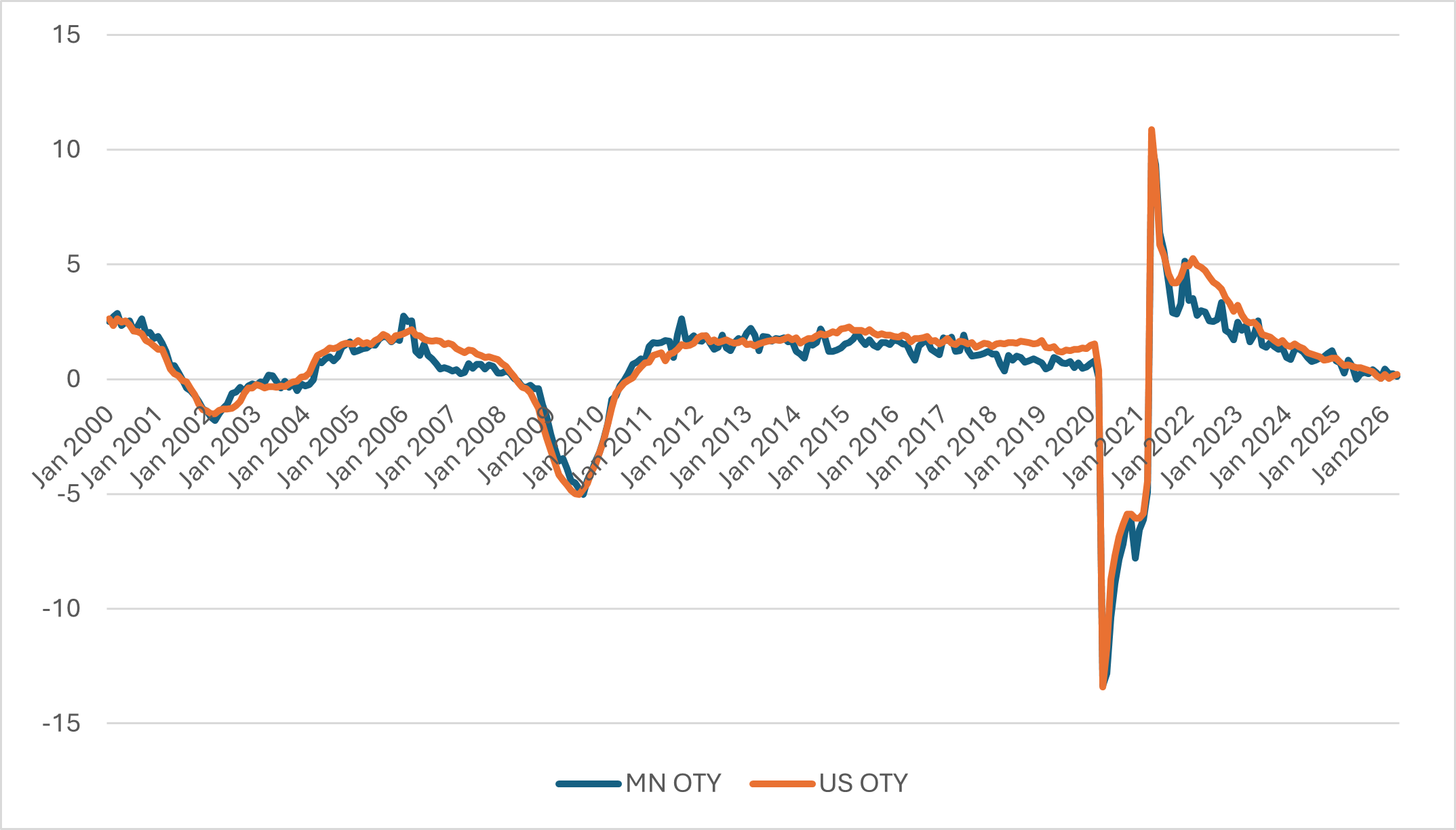
Both Minnesota and United States over the year (OTY) employment growth slowed to less than 0.5% and has stayed below that level for multiple months in late 2025 and early 2026. As Figure 1 shows, each of the last three times this has happened it either preceded or included stretches of negative employment growth. However, in each of those recessions, the lowering employment growth turned to job losses within a few months, while as of April 2026 we have seen eleven consecutive months of low, but positive, annual growth, with Minnesota sitting at 0.1% OTY growth and the U.S. at 0.2% growth.
Figure 1: Minnesota and United States Over-the-Year Percent Growth
Source: Current Employment Statistics
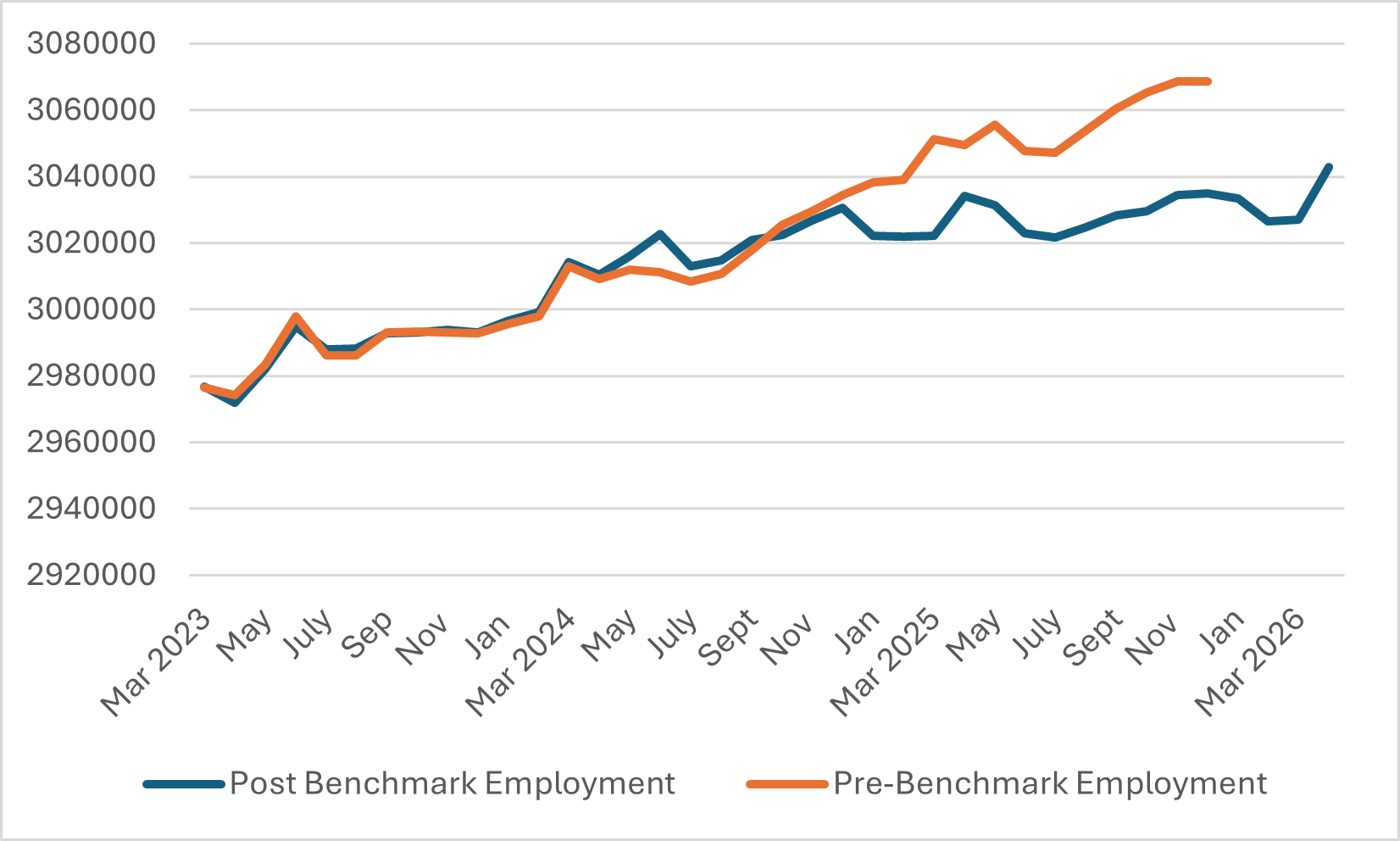
As Figure 2 shows, 2025 employment estimates were largely revised downward with the end-of-year benchmark, with the reference month of March 2025 seeing downward revision of 1.1%. The year ended with December employment revised down by 33,500 jobs, to 3,035,000. Over-the-year growth was revised down for every published supersector in December, and in every Metropolitan Statistical Area.
Figure 2: Total Non-Farm Employment Pre-and Post-Benchmark
Source: Current Employment Statistics
Despite the downward revisions and slowing annual growth, positive overall job growth has persisted through 2025 and early 2026. On a seasonally adjusted basis, employment is up overall from January 2025 through April of 2026, with 0.7% growth during that period. However, Table 1 shows that this growth has not been consistent across industries. Construction and Education and Health Services in particular have posted strong growth, up 5.75% and 3.52%, respectively, over that period. Information employment was down 7.09%, and Financial Activities was down 2.23%.
| Industry Code | Industry Name | January 2025 | April 2026 | Percent Change |
|---|---|---|---|---|
| 00000000 | Total Nonfarm | 3022200 | 3042900 | 0.68 |
| 05000000 | Total Private | 2587400 | 2601900 | 0.56 |
| 06000000 | Goods-Producing | 462200 | 471000 | 1.87 |
| 10000000 | Mining and Logging | 6500 | 6400 | -1.56 |
| 20000000 | Construction | 139400 | 147900 | 5.75 |
| 30000000 | Manufacturing | 316300 | 316700 | 0.13 |
| 08000000 | Private Service Providing | 2125200 | 2130900 | 0.27 |
| 40000000 | Trade, Transportation and Utilities | 532500 | 526100 | -1.22 |
| 50000000 | Information | 42300 | 39500 | -7.09 |
| 55000000 | Financial Activities | 188200 | 184100 | -2.23 |
| 60000000 | Professional and Business Services | 371000 | 368900 | -0.57 |
| 65000000 | Education and Health Services | 601500 | 623500 | 3.53 |
| 70000000 | Leisure and Hospitality | 272900 | 270300 | -0.96 |
| 80000000 | Other Services | 116800 | 118500 | 1.43 |
| 90000000 | Government | 434800 | 441000 | 1.41 |
| Source: Current Employment Statistics | ||||
Wage Growth
Wage growth, which was improving relative to inflation through much of 2024 and early 2025, also began showing signs of weakness in late 2025 and early 2026. As Figure 3 shows, the Consumer Price Index (CPI) has been increasing again in recent months, while annual growth in wages has been decreasing. The first quarter of 2026 saw a steady decrease in earnings as a proportion of CPI.
Recent months have also brought a weakening of wage growth independent of inflation. In November of 2025, annual growth in hourly earnings dipped below 3% for the first time since May 2023, and in April 2026, hourly earnings decreased over the year for the first time since June 2015 (down 1.36% from April 2025). This stands in contrast to national private sector hourly earnings, which have maintained strong OTY growth through the first four months of 2026, with April earnings up 3.48% over April 2025. Minnesota continues to outpace the nation in private average hourly earnings overall, sitting at $38.53 versus the nation's $37.49.
Figure 3: Over the Year Growth in Hourly Earnings and Consumer Price Index

Labor Force
Through April 2026, the most recent month available, the size of the labor force, comprised of workers who are either employed or unemployed and actively seeking work, has declined by 0.7% over the year in both Minnesota and the U.S. However, in Minnesota the percent decline in employment was 1.5% and the percent increase in unemployment was 22.1% (see Figure 1), while nationally, the percent decline in employment was 0.8% and the percent increase in unemployment was 2.9%. So, while the big picture, a decline in the size of the labor force, was the same in Minnesota and nationally, the past year through April 2026, has brought more negative change to Minnesota's workforce situation than was experienced nationally.
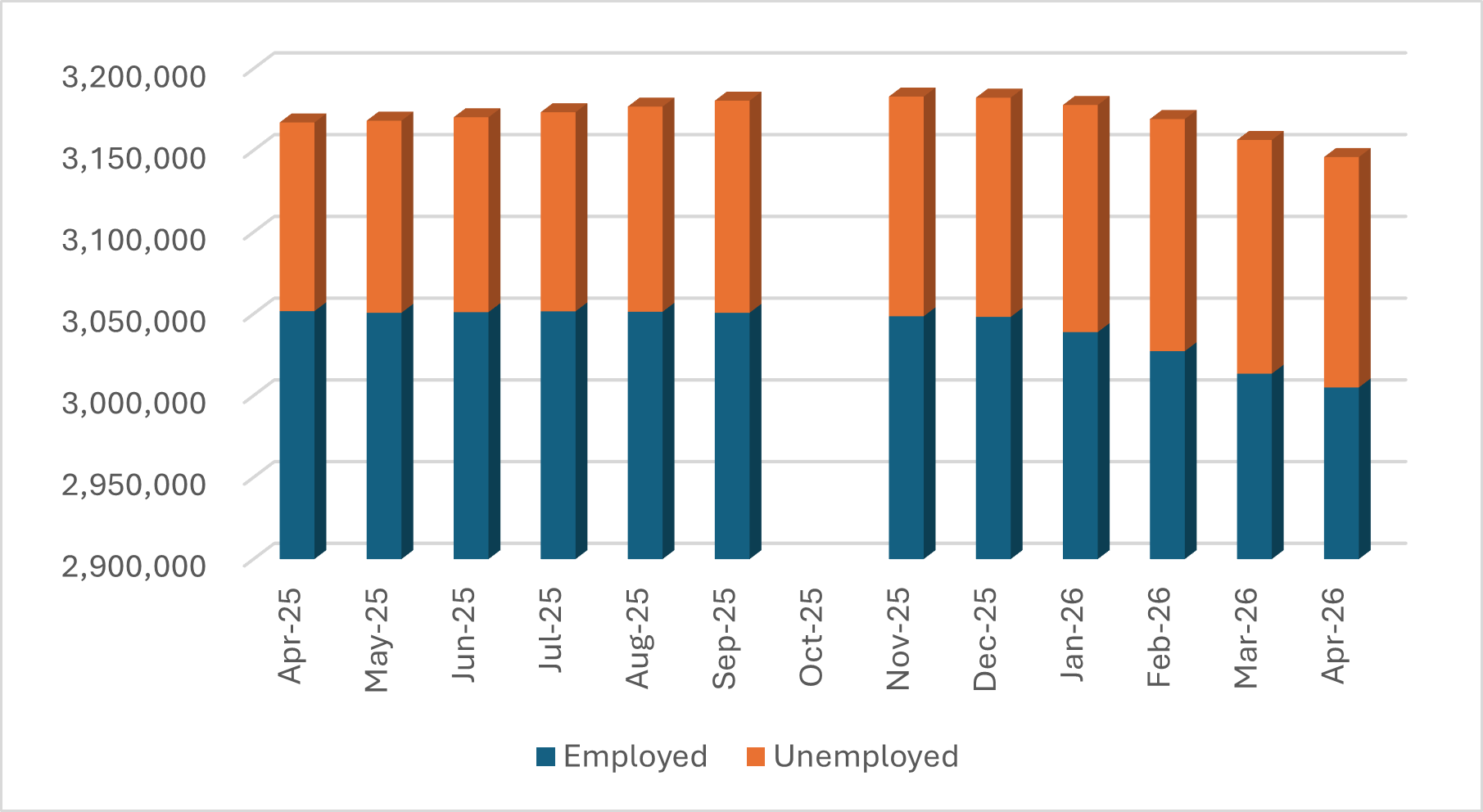
Figure 4 illustrates the pattern in Minnesota. While the number of unemployed workers increased in each of the last 12 months, that increase accelerated in January 2026. At the same time, the number of employed workers was level through December 2025 but fell in every month, January through April, in 2026.
Figure 4: Minnesota Employed, Unemployed and Total Labor Force Size, April 2025 to April 2026
Source: Local Area Unemployment Statistics, BLS. Note, October 2025 data are missing due to the 2025 Federal shutdown.
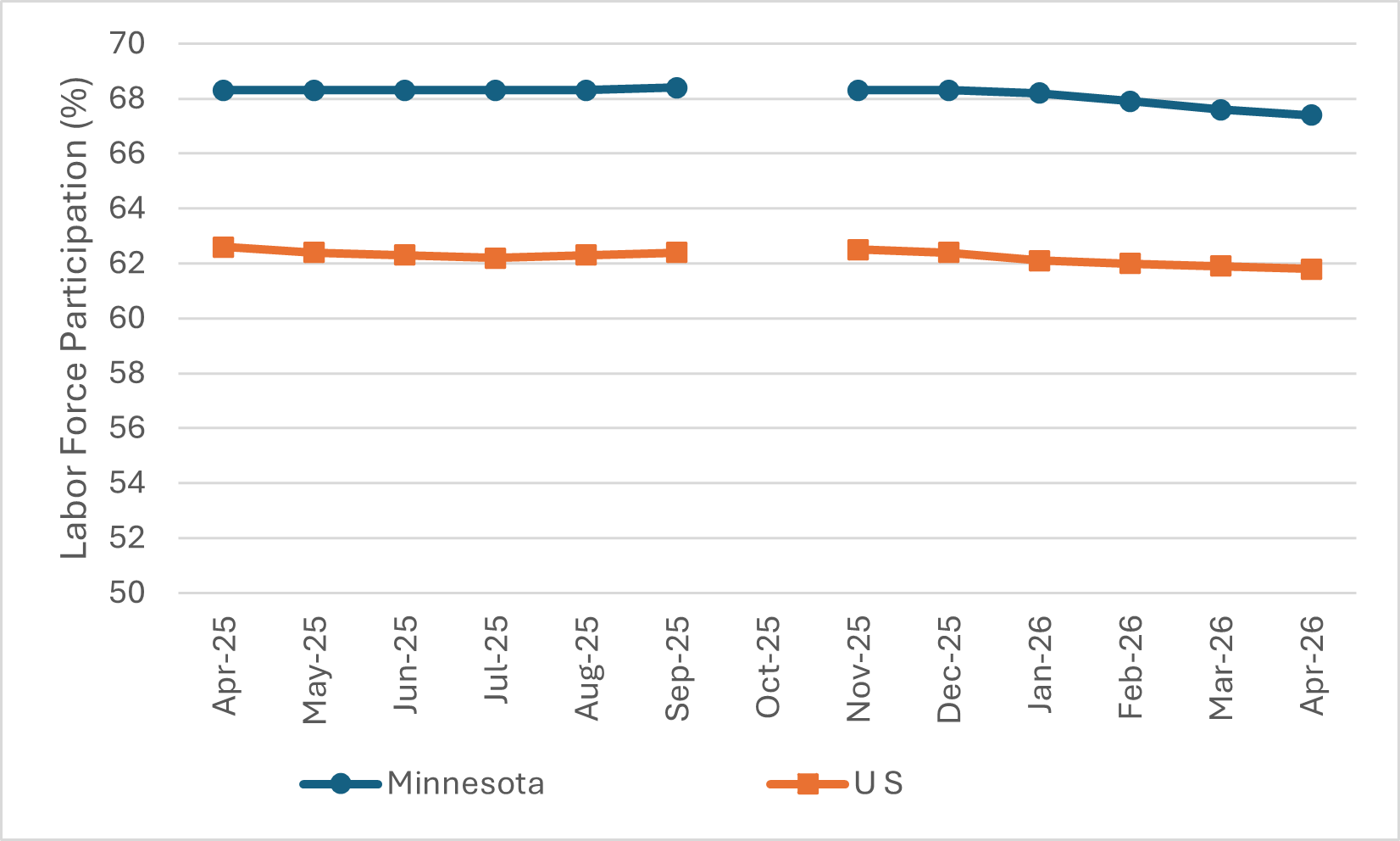
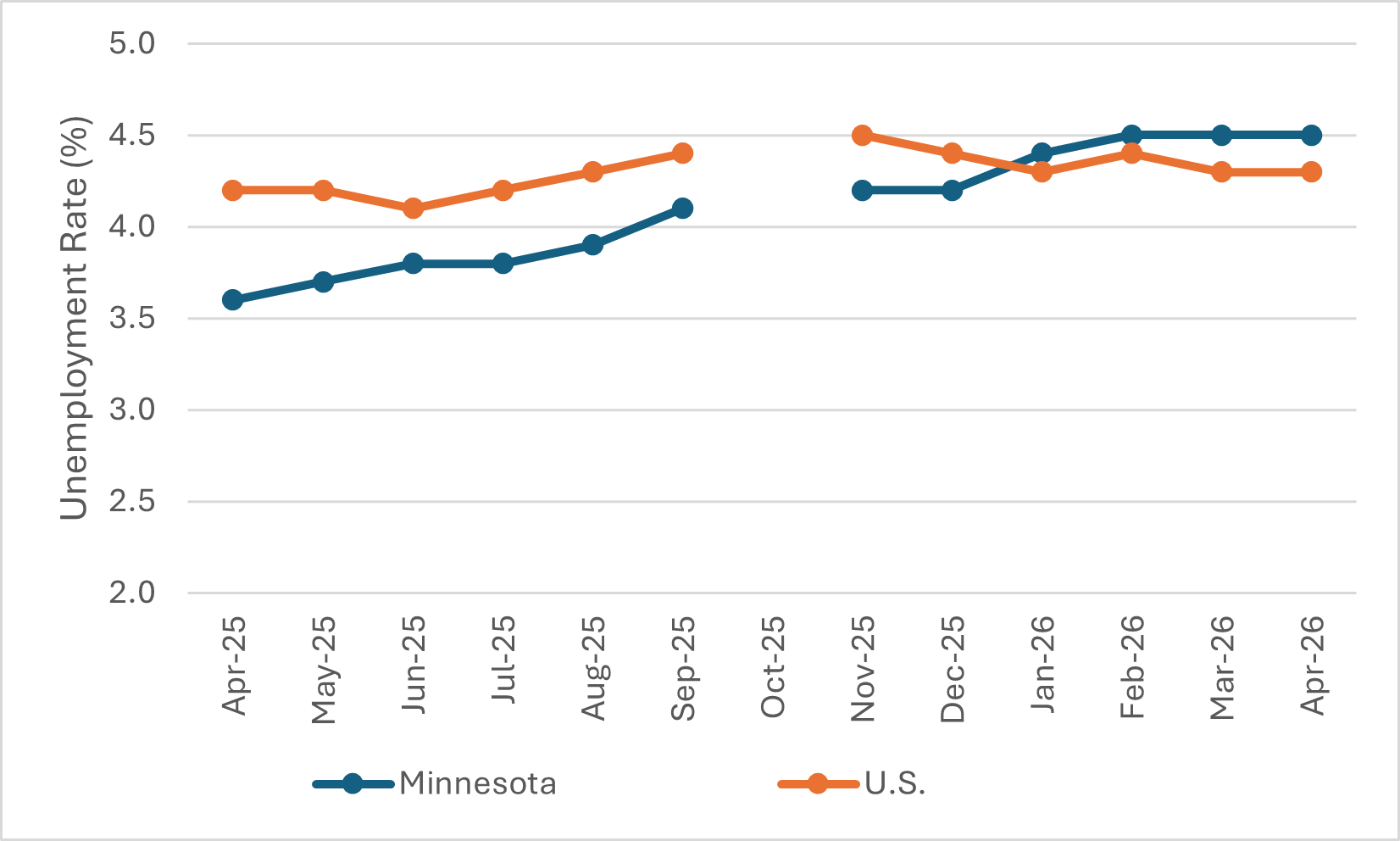
In line with this pattern, Minnesota's labor force participation rate fell by 0.9 percentage points to 67.4% in April 2026, while our unemployment rate increased by 0.9 percentage points to 4.5% over the year. Again, while the general trend is the same at the national level, the increase in the unemployment rate was only one-tenth of a percentage point, bringing it to 4.3% in April 2026 (see Figure 5).
Figure 5: Minnesota and U.S. Labor Force Participation Rates, April 2025 to April 2026
Source: Local Area Unemployment Statistics, BLS. Note that October 2025 data are missing due to the 2025 Federal shutdown.
Since January 2026, Minnesota's unemployment rate has been higher than the national unemployment rate, which is unusual. In fact, this happened only one other time (going back to 1978). In May 2007, a few months before the official start of the Great Recession, Minnesota's unemployment rate was 4.5% while the U.S. unemployment rate was 4.4% (see Figure 5). In 2026, part of the explanation for this unusual pattern may be the unprecedented level and violence of ICE activity in Minnesota and its impact on workers who were unable to go to work due to safety concerns and shuttered businesses.
Figure 6: Minnesota and U.S. Unemployment Rates, April 2025 to April 2026
Source: Local Area Unemployment Statistics, BLS. Note that October 2025 data are missing due to the 2025 Federal shutdown.
While no data yet exists to document the long-term impact of ICE activities on Minnesota's labor force, a pattern of lower immigration to Minnesota since the COVID-19 pandemic has already put a damper on labor force growth. Estimates put the population of undocumented immigrants in Minnesota at between 78,000 and 95,000 in 2022. This group has a predominantly working age population and higher labor force participation than other groups. (Macht, March 2025) It is also the group that was most impacted by the ICE activity in Minnesota and may have been most likely to leave Minnesota as a result. A decline in the number of undocumented immigrants, fewer documented immigrants entering the country since 2020, and more recently a smaller number of foreign students coming to Minnesota, could have a lasting impact on the size of Minnesota's workforce.
A divergence between the monthly labor force data and the monthly jobs data has developed in 2026. The Current Population Survey (CPS) generates the monthly workforce numbers (employed, unemployed, labor force, unemployment rate, labor force participation rate, etc.), while the Current Employment Statistics (CES) survey generates monthly payroll employment by industry count. It is not unusual for these two surveys to move in different directions for a few months, but in this case, the divergence has continued for four months and counting. While the CES continues to show slowing job growth, the CPS has shown workforce contraction since January 2026. Since a job, by definition, involves a worker, conceptually these surveys should not diverge over a period of more than a few months. However, because they are two different surveys, involving two different methodologies and they survey two different populations (employers in the case of CES and households/workers in the case of CPS), they can, and sometimes do, diverge.
This of course raises the question of which survey is providing a more accurate picture of the labor market right now. Unfortunately, we won't be able to answer this question until the January 2027 numbers are available. This is because both sets of numbers, CES monthly job count and CPS monthly employment count, are revised based on more accurate data. The revision is published with the January data.
One explanation for the divergence may be that the CPS labor force estimates are picking up a more current, downward trend than CES estimates. CES tends to lag slightly as an economic indicator especially when the economy is changing direction, which is why the revisions are so important. This year, the revisions to the 2025 estimates showed slower growth in Minnesota. At the national level, both preliminary and final revisions were downward for 2025, making national headlines. Larger revisions, both upward and downward, in CES are not unusual when the economy is turning a corner.
An increase in multiple job holding can also increase the CES job count without changing the CPS employment count. Recently multiple job holding has been trending up, although the sample is small, which makes the data series less reliable than is ideal.
Workforce by Demographic Group
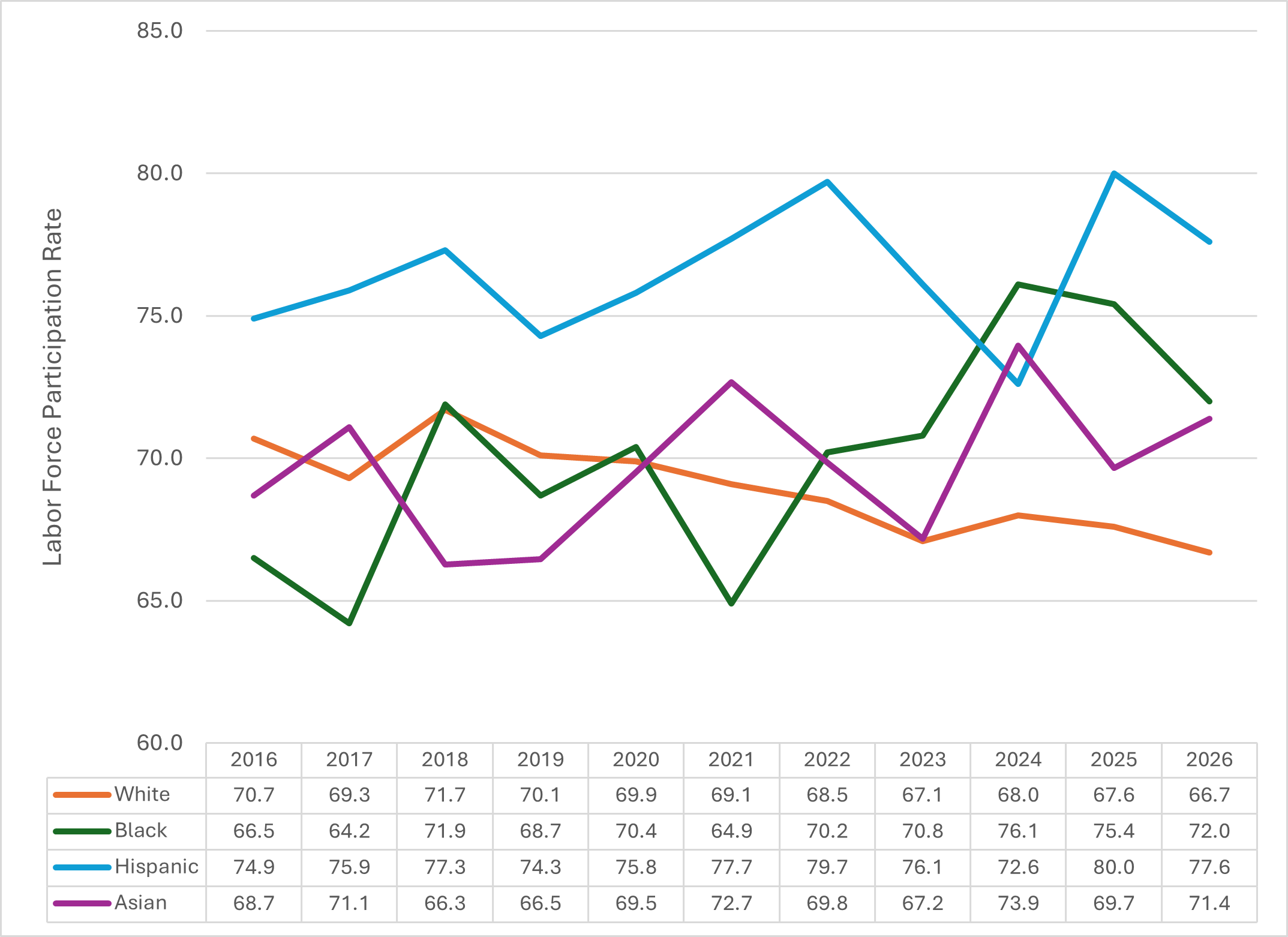
As Figure 7 shows, labor force participation rates are down for white, Black and Hispanic workers and up slightly for Asian workers in Minnesota over the year in April 2026. Hispanic workers followed by Black Minnesotans have the highest labor force participation rates, at 77.6% and 72.0% respectively in April 2026, followed closely by Asian workers at 71.4%. White workers have the lowest participation rate at 66.7% in April 2026. Age demographics play an important role in this: white Minnesotans are by far the oldest racial group in Minnesota, with a median age of 39.5 (see Table 2).
Figure 7: Labor force participation rates by race or ethnicity, April 12-month moving averages, 2002 to 2026
| Race or Ethnicity | Median Age |
|---|---|
| Asian | 26.7 |
| Black | 25.9 |
| Hispanic | 26.6 |
| White | 39.5 |
| Source: American Community Survey, Census Bureau, Tables B01002 | |
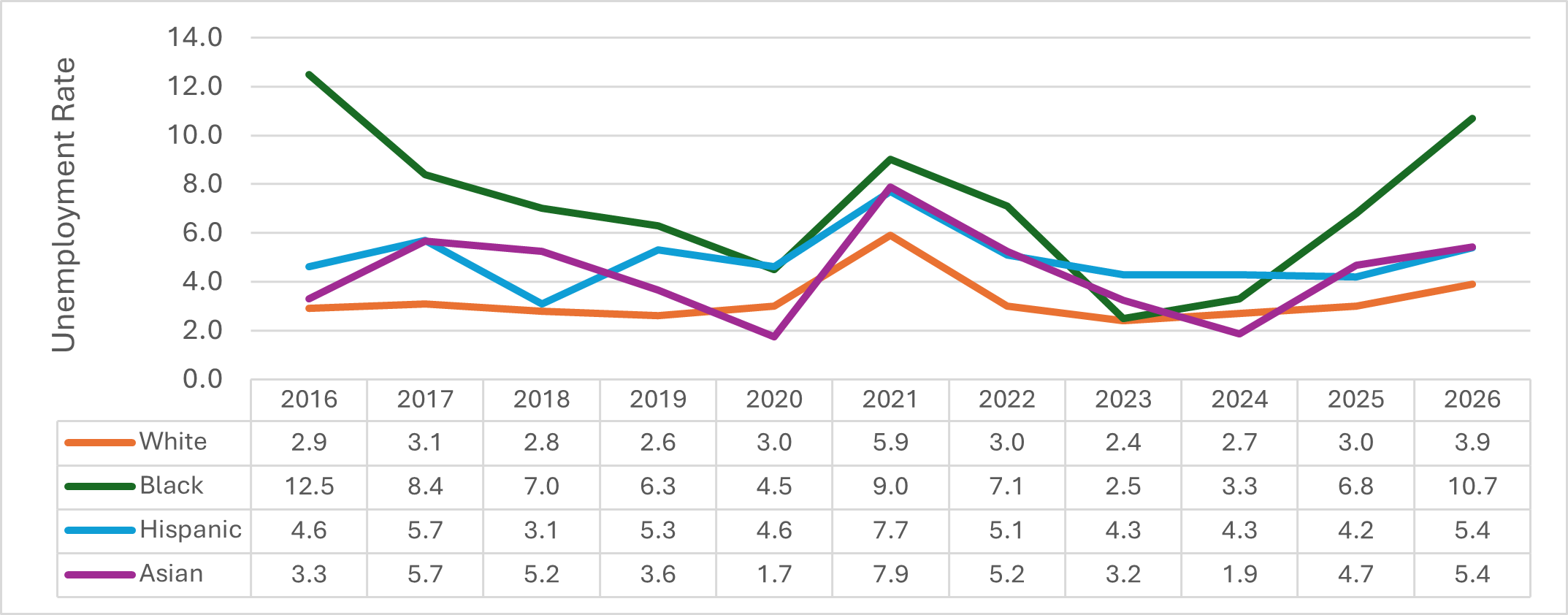
Figures 8 and 9 show how the decline in employment and the increase in the unemployment rate for the total labor force break down by race/ethnicity. All race/ethnic groups for which Demecon data exists show a decline over the year in employment to population ratio with the exception of Asian workers, with the white employment to population ratio at 64.1%, the lowest among the race/ethnic groups published in the Demecon data from the CPS (see Figure 5). At the same time, all race/ethnic groups show an increase in unemployment (see Figure 6) over the year, with Black unemployment at 10.7% in April 2026.
Figure 8: Employment to population ratios by race/ethnicity, April 12-month moving averages, 2002 to 2026
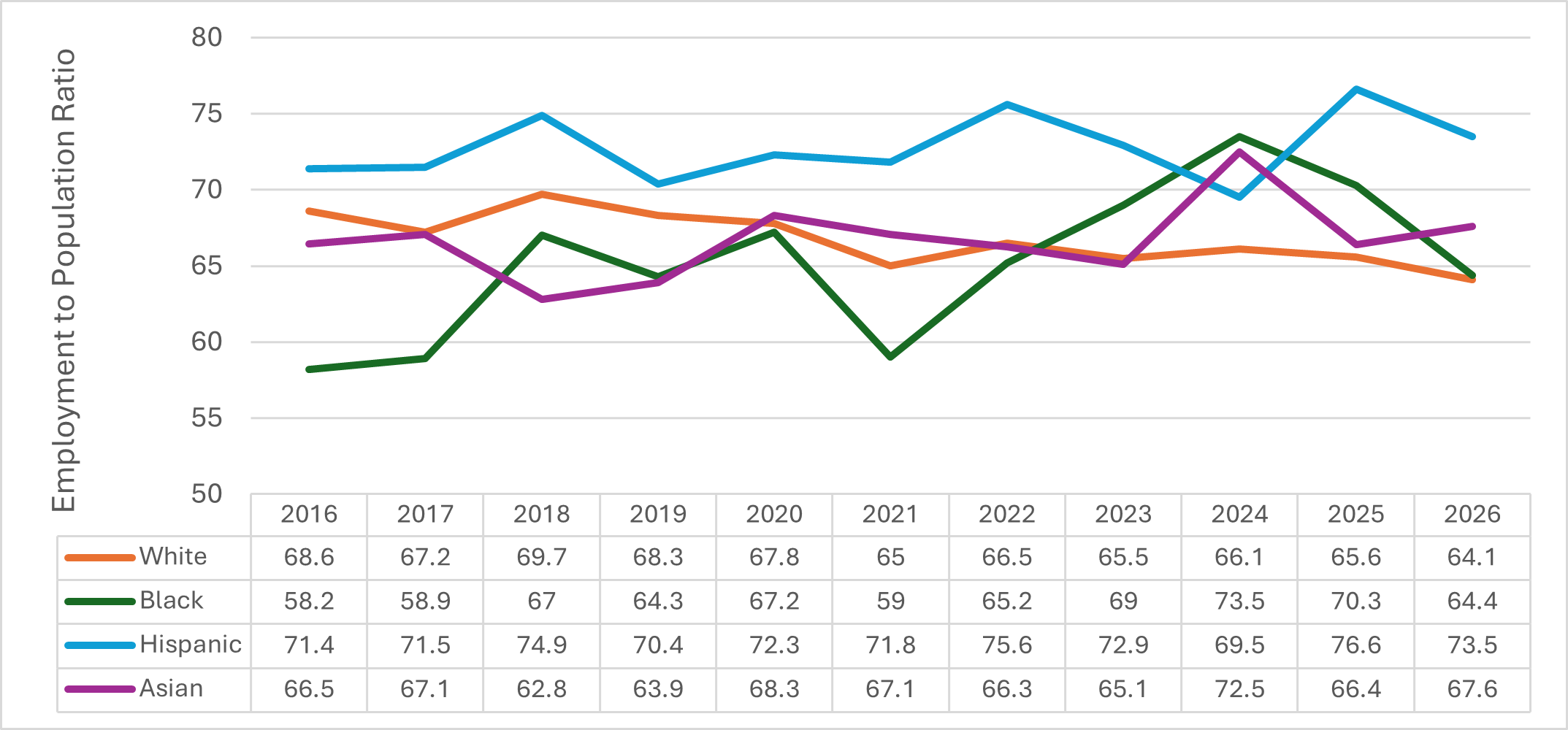
Figure 9: Unemployment rate by race or ethnicity, April 12-month moving averages, 2002 to 2026
Conclusion
Overall, the labor market showed signs of weakening over the past year, both nationally and statewide. Employment growth slowed but remained positive through late 2025 and early 2026. Wage growth in Minnesota slowed relative to inflation over the past year, with hourly earnings down OTY in April. The workforce shrunk both statewide and nationally, with the unemployment rate increasing as the employment contracted.
While these trends of declining workforces and stagnating job growth were present both statewide and nationally, the drop off has been steeper in Minnesota. Our state unemployment rate was higher in early 2026 than that of the nation, the first time that has happened since 2007. The increase in unemployment was experienced across all recorded demographic groups in the state.