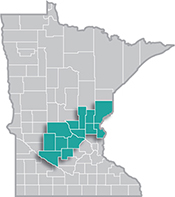
 Central Minnesota is a manufacturing stronghold, with several global manufacturing firms operating there.
The region is especially well known for its expertise in food processing, printing, furniture manufacturing, appliances, machinery and heavy equipment manufacturing.
View our latest blogs on CareerForce. Want the freshest data delivered by email? Subscribe to our regional newsletters.
Understanding what careers students are interested in can help educators, workforce partners and employers better prepare for the future workforce.
3/19/2026 1:18:28 PM
Luke Greiner
Understanding what careers students are interested in can help educators, workforce partners and employers better prepare for the future workforce. Recent survey responses from students across Minnesota – including those in Central Minnesota – provide insight into the types of career fields young people are considering.
Across Minnesota, Healthcare and Human Services stands out as the most popular career field intention. Nearly 28% of students statewide selected this field as their top interest. Students in Central Minnesota an even slightly stronger interest, with 29% identifying Healthcare and Human Services as the career field they are most interested in pursuing. This aligns closely with the region's strong demand for healthcare workers, as roughly 18% of employment in the region is in Health Care and Social Assistance.
The Construction trades also rank highly among student interests. Statewide, 9% of students selected Construction, while 10% of Central Minnesota students expressed interest in the field. This slightly higher local share reflects the region's strong Construction sector, where 8% of total employment is in Construction compared to 5% statewide.
While some career fields attract strong student interest, others that play an important role in the regional economy appear to have less visibility among students. For example, Advanced Manufacturing received interest from only about 4% of respondents, despite being a major employer across Central Minnesota, providing 15% of regional employment and average wages nearing $70k per year. Similarly, fields such as Marketing and Sales, Supply Chain and Transportation, and Hospitality and Tourism drew interest from relatively small shares of students, despite having lots of jobs.

For industries facing persistent workforce shortages, increasing student awareness may be just as important as increasing training opportunities. These results do not necessarily mean that students would not pursue careers in these industries, but they may suggest that many students are less familiar with the opportunities these fields offer.
In regions like Central Minnesota, where Manufacturing and Retail Trade play a critical employment role in the economy, increasing student awareness of these career pathways may be especially important. Efforts such as career exploration programs, employer classroom visits, facility tours, internships, job shadows and youth apprenticeships can help students better understand the variety of opportunities available in these industries.
Identifying where student interest is strong – and where awareness may be limited – can help educators, workforce partners, and employers focus outreach efforts to ensure students are exposed to the full range of career opportunities available in the region. I welcome educators, administrators and community members who are interested in learning what their students think to contact me – we can analyze the results and work on ways to increase career awareness.
For more information about student interests and career exploration in Central Minnesota, contact Luke Greiner at Luke.Greiner@state.mn.us.

