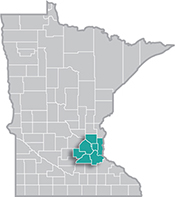
 The Minneapolis-St. Paul metropolitan area is a national leader in finance, advanced manufacturing, agriculture and retailing.
Medical devices, electronics and processed foods are strong suits recognized globally.
Want the freshest data delivered by email? Subscribe to our regional newsletters.
When visiting the Labor Market Information Office website, you’ll discover about two dozen distinct data tools.
2/20/2026 10:43:22 AM
Tim O'Neill
When visiting the /deed/data/index.jspLabor Market Information Office website, you'll discover about /deed/data/data-tools/index.jsptwo dozen distinct data tools. About half of these tools have some aspects of educational data embedded in them, including the following:
Through these tools, users can begin to understand the role of education in countless career pathways and outcomes. For example, users of DEED's /deed/data/data-tools/oid/index.jspOccupations in Demand tool can learn about what occupations are in the most demand in the Twin Cities Metro Area and what type of education those occupations typically require for entry. Users of DEED's /deed/data/data-tools/career-pathways-tool/index.jspCareer Pathways tool can view this same type of information while additionally learning what career clusters they are in. Meanwhile, users of Quarterly Workforce Indicators can look at the changing educational attainment trends of jobholders by industry.
DEED also has a slate of newer educational tools that specifically analyze outcomes in the labor market. These tools include Graduate Employment Outcomes, Graduate Earnings & Cost Calculator, High School Technical Education Pathways & Outcomes, College Major to Career Connector and College Major to Industry of Employment.
Let's look at the newer /deed/data/data-tools/college-major-tool/index.jspCollege Major to Industry of Employment tool. Aptly named, this tool answers the following questions: What industries employ graduates by major and how much are new graduates paid in these industries? Answering these questions can help students determine if the program they are considering matches their career expectations. Using this tool, users can select a field of study, a major, a degree level and a region of the state (just added!).
In an example, let's look at the Health Professional & Related field of study, specifically majoring in Nursing Assistant/Aide & PCA/Aide along with Nursing Practice. We'll view these majors from the broadest level, or all degree levels, and zoom in upon the Twin Cities Metro (Figure 1).
For Nursing Assistant/Aide & PCA/Aide the College Major to Industry of Employment reveals that about 60% of recent grads find work in Nursing & Residential Care Facilities, Hospitals, in Social Assistance or Clinics & Home Health Care Services. Typical hourly wages in these industries ranged from $18.55 to $22.77.
For Nursing Practice grads, nearly half find work in Hospitals with another third finding work in Clinics & Home Health Care Services or Nursing & Residential Care Facilities. Typical hourly wages in these industries ranged from $43.84 to $66.25.
Using just these two examples in this one tool, users can begin to understand the realities of employment, typical wages, education requirements and possible career progression. Different programs prepare people for different careers, and those careers provide different employment opportunities that lead to different wages.
If you're a student aiming to learn more about educational and career pathways, a parent hoping to be more informed, career seekers looking to make their next move in the job market or if you're just generally curious about education and educational outcomes in Minnesota, check out DEED's various data tools and resources on education. Additional resources can be found through the Minnesota Department of Education, the Office of Higher Education and the Statewide Longitudinal Education Data System (SLEDS).
Figure 1. College Major to Industry of Employment Example
Nursing Assistant/Aide & PCA/Aide and Nursing Practice

To discover more about the Twin Cities Metro Area, Contact Tim O'Neill, Labor Market Analyst, at Timothy.ONeill@state.mn.us

