

Abstract nodes connecting
Two MNIT technology leaders earned recognition among the region’s top IT executives as finalists for the 2026 Minnesota ORBIE Awards. Chief Information Security Officer (CISO) John Israel was selected as a finalist in the CISO Large Enterprise category, while Deputy Chief Information Officer George McNulty was named a finalist in the Large Enterprise CIO category. The ORBIE Awards recognize executive leadership, innovation, and excellence in technology, honoring leaders who drive organizational impact and inspire their teams. Their nominations reflect Minnesota’s continued leadership in public-sector technology and the dedication of the teams advancing secure, innovative digital services for Minnesotans.


MNIT’s Office of Accessibility marked Global Accessibility Awareness Day (GAAD) by hosting “Navigating Maps with a Screen Reader: A Conversation,” featuring retired Digital Accessibility Coordinator and audio description consultant Lolly Lijewski and Jason Ewert, Geographic Information Systems (GIS) Application Analyst with MNIT partnering with the Minnesota Pollution Control Agency (MPCA).
The virtual discussion explored how people who use screen readers experience digital maps and shared practical strategies for making geospatial information more accessible. The event reinforced MNIT’s commitment to designing inclusive digital services that improve access to information for all Minnesotans.
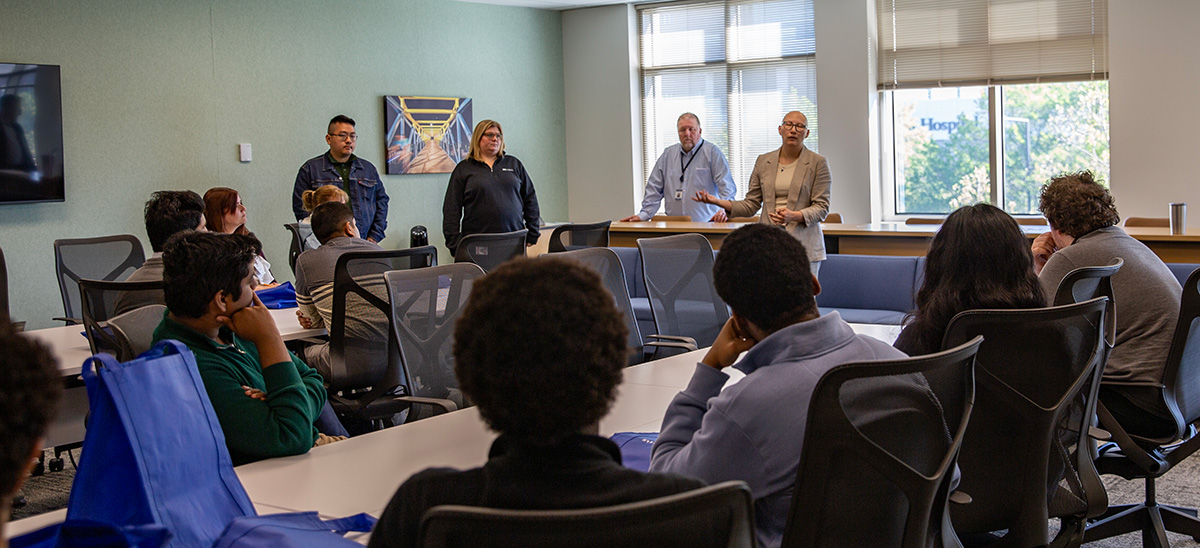
Students and teachers from Wayzata Public Schools visited MNIT to explore the wide range of career opportunities in technology and cybersecurity within state government. The visit gave students a firsthand look at how IT professionals protect digital systems, build accessible services, and use data and innovation to improve how state government serves Minnesotans.
Technology careers in state government include software development, cybersecurity, data science, user experience, IT infrastructure, as well as governance, risk, and compliance. These fields offer meaningful, mission-driven work that makes a difference every day.
Technology connects Minnesotans to essential services that support children, families, older adults, and communities. Many of the systems behind those services have served the state for decades, but they no longer meet today’s expectations for security, flexibility, or customer experience.
This quarter, Minnesota took a significant step forward. With unanimous bipartisan support from the legislature and the governor’s signature, the Human Services Systems Modernization law established a long-term strategy to modernize the technology that powers many of the state’s largest public programs.
The new law recognizes that meaningful modernization requires more than replacing aging systems. It creates a framework for longterm planning, sustained investment, and shared governance across state agencies, counties, Tribal Nations, and other partners. A new Human Services Systems Modernization Advisory Council will help guide priorities, while ongoing Tribal consultation will ensure modernization efforts reflect the needs and perspectives of Tribal communities.
The legislation also establishes the Technology Modernization Fund for Human Services, providing dedicated funding to replace legacy systems, strengthen cybersecurity, improve data sharing, and deliver more reliable digital services. Future modernization efforts will focus on creating technology that is more secure, easier to maintain, and better equipped to adapt as policies and resident needs evolve.
For MNIT, the legislation reflects years of collaboration with the Minnesota Department of Human Services (DHS), the Department of Children, Youth, and Families (DCYF), the governor’s office, county partners, Tribal Nations, and legislators from both parties. Together, these partners built a shared vision for modernizing the technology that supports some of Minnesota’s most essential public services.
While this legislation marks an important milestone, the work is just beginning. Over the coming months, MNIT and its partners will begin developing a multiyear modernization roadmap, establish advisory governance, and continue working across government to build technology that better serves Minnesotans for decades to come.

Modernizes the technology supporting critical human services programs.

Establishes longterm governance with state, county, and Tribal participation.

Provides dedicated funding for modernization, cybersecurity, and system improvements.

Creates a multiyear roadmap to improve service delivery, interoperability, and resident experience.
Positions Minnesota to deliver more secure, reliable, and responsive human services in the years ahead.
MNIT and the Department of Human Services (DHS) have taken on a large-scale project to modernize how Minnesota delivers long-term services and supports (LTSS). A 2024 legislative change extends assessment validity from 60 days to 365 days — reducing frequent reassessments and streamlining eligibility.
To put this change into action, MNIT and DHS updated the state systems that determine eligibility and manage services. They have simplified how the system calculates eligibility, updating notifications, and aligning timelines and processes across programs.
This work drives immediate efficiency. Fewer reassessments and manual updates reduce administrative burden for counties, Tribal Nations, and state staff — freeing resources for direct service delivery. It also reduces duplicative data entry, improving data quality, and system reliability.
For Minnesotans, this means faster, more consistent access to critical services. Fewer delays and more accurate eligibility help people get the support they need, when they need it — while reducing long-term costs and modernizing a critical system.
Millions of Minnesotans rely on DNR licenses and permits to enjoy the state’s outdoor recreational opportunities, while supporting conservation efforts. MNIT partnered with DNR to modernize the state’s Electronic Licensing System (ELS), making it easier, faster, and more reliable to buy, store, and access licenses. Launched in early June 2026, the new system and mobile app lets customers manage their licenses directly from their phone.
Through several years of collaboration with DNR and a broad network of internal and external partners, MNIT delivered a modern licensing platform designed to meet today’s customer expectations and replace an aging system.
Customers can purchase licenses through the mobile app, online, or from a license agent, then carry them as a paper copy, PDF, or directly in the app. Even without cell service, customers can access stored licenses and register harvests, making the system especially useful in remote areas.
Once fully implemented, ELS will process more than 3 million transactions each year across more than 400 license and permit products. Revenue generated through the system helps support fish and wildlife management, habitat restoration, stream restoration, and invasive species prevention throughout Minnesota.
The initial release focuses on licenses and permits. A second phase will expand the platform to include vehicle and watercraft registration, giving Minnesotans a single, modern system for more DNR services.
June 6 launch through July 6
58,000+
Mobile app downloads
$6.5M+
Sales processed
193,000
Transactions completed
248,600+
Products sold
MNsure helps connect Minnesotans to quality, affordable health insurance through the state’s official health insurance marketplace. In June, Minnesota launched a new eligibility and enrollment platform, completing a major phase of the state’s ongoing effort to modernize human services technology.
The work extended well beyond launching a new application. Project teams completed a major cloud migration, implemented a modern identity and access management platform, and coordinated the deployment of multiple interconnected enterprise systems — all while preparing for a seamless production cutover.
Teams from MNsure, MDH, MNIT, vendor partners, and business organizations spent years planning, designing, securing, testing, and preparing the new platform. Their collaboration and expertise enabled the state to complete this complex enterprise transformation while maintaining continuity for the Minnesotans who rely on these critical services.
The new platform gives Minnesota a stronger, more secure technology foundation for delivering health coverage and other essential services. It reduces reliance on aging infrastructure, strengthens security, improves reliability and resiliency, and positions the state to continue modernizing human services technology. This achievement also demonstrates how strong partnerships, disciplined execution, and a shared commitment to public service help Minnesota deliver complex technology transformations that improve digital services for Minnesotans.
The Minnesota Department of Corrections (DOC) is expanding access to higher education by introducing secure, purpose-built Chromebook laptops from Justice Tech Solutions for incarcerated students enrolled in postsecondary programs. Through a new Device as a Service (DaaS) initiative, eligible students will receive secure devices designed specifically for correctional environments, giving them access to digital tools similar to those used in colleges and workplaces outside the facilities.
A proof of concept launched in the second quarter with 40 students at the Shakopee women’s facility. After the success of the pilot, the rollout has expanded to include 240 students at the Faribault, Lino Lakes, and Stillwater men’s facilities. Planning is underway to further expand the program to approximately 500 incarcerated students statewide in fall 2026.
Our Enterprise Service Desk provides 24/7 IT support and services for Minnesota state government, including:


(1-5 scale)

The Minnesota Geospatial Information Office (MnGeo) coordinates geographic information systems (GIS) within the state, creating connections between state agencies and other partners from government and nongovernment organizations. Leveraging geography to guide decisions and shape outcomes enhances public safety, informs transportation planning, improves access to health services, supports the preservation of natural resources, and much more.
The Geospatial team manages the Minnesota Geospatial Commons — a collaborative public platform where publishers share, and users access, geospatial resources such as data, maps, services, and applications. The Minnesota Geospatial Commons is supported by an operational team that includes staff from the Minnesota Department of Transportation, the Metropolitan Council, and MNIT staff partnering with Minnesota Department of Natural Resources, Minnesota Department of Education, Minnesota Department of Agriculture, and Minnesota Pollution Control Agency.
23
Projects supported and hosted by MnGeo
34
Organizations sharing data on the Minnesota Geospatial Commons
964
Resources on the Minnesota Geospatial Commons
57,088,809
Hits on the geospatial image server
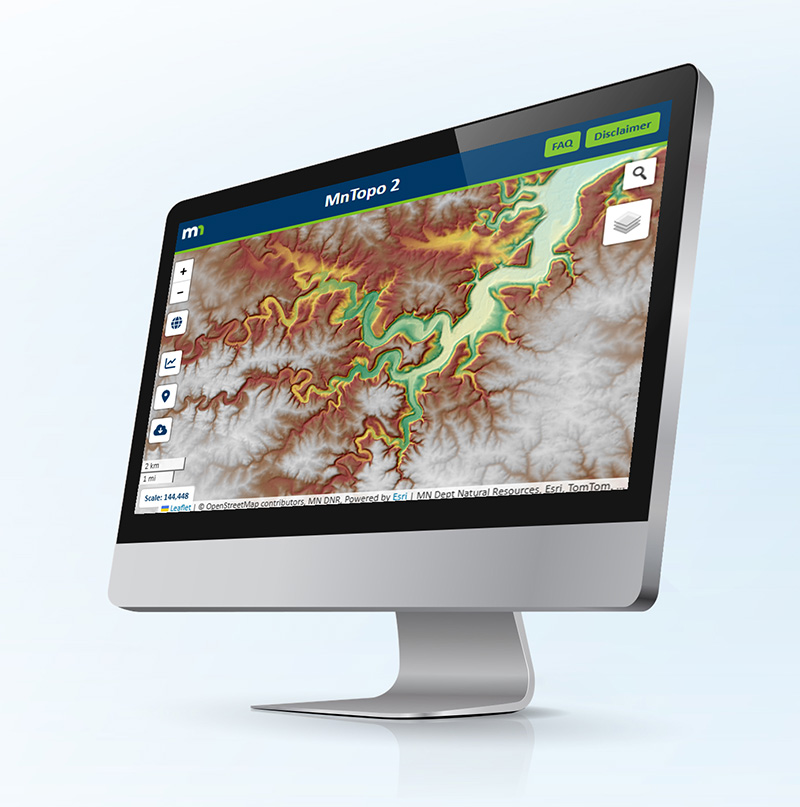
MnGeo launched MnTopo 2, a modern web application that makes Minnesota’s high-resolution lidar elevation data easier to explore and use. The updated platform provides faster performance, improved visualization tools, and access to secondgeneration lidar data, giving users a clearer view of Minnesota’s landscape for planning, engineering, natural resource management, emergency response, and other geospatial applications.
Built on a cloud-based platform, MnTopo 2 supports interactive elevation profiles, seamless digital elevation models, and additional data products as they become available. The launch advances Minnesota’s long-standing leadership in geospatial innovation while making authoritative elevation data more accessible to government agencies, local partners, researchers, and the public.
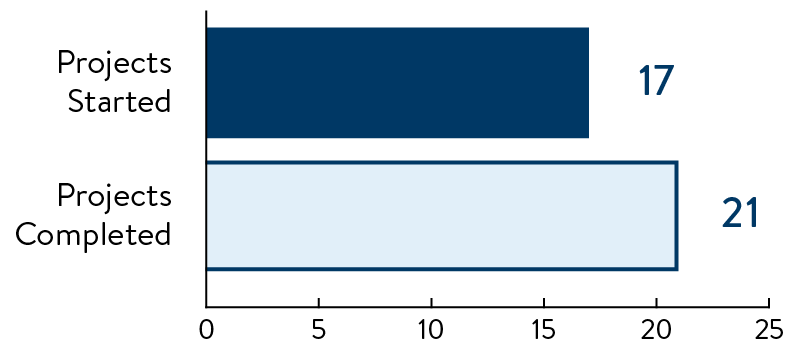
MnGeo reached an important milestone in the Public Land Survey System (PLSS) Monument Grant Program, with the first 27 of 34 funded projects completed and the remaining projects moving forward under approved extensions.
The program helps counties restore and preserve Minnesota’s public land survey infrastructure by funding the restoration of survey corners, digitization of historic records, and other improvements that support accurate land records, mapping, and property boundaries. Through continued investment in this foundational geospatial data, MnGeo helps ensure reliable information for surveyors, local governments, engineers, and the public.
Minnesota joined the MidAmerica GIS Consortium (MAGIC), strengthening regional collaboration among geospatial professionals across the Midwest. MnGeo and the Minnesota GIS/LIS Consortium represent the state in the consortium, helping advance the sharing of best practices, innovative GIS solutions, and professional development opportunities across member states.
Through MAGIC, Minnesota’s GIS community gains new opportunities to collaborate with neighboring states, exchange ideas, and strengthen the use of geospatial technology to support government decision-making and better serve communities across the region.
Over the quarter, MNIT’s Office of Transformation, Accessibility, and Strategy Delivery tracked 273 projects across Minnesota’s executive branch agencies, boards, commissions, and councils
This TMF investment will accelerate the onboarding of public-facing applications to the statewide LoginMN identity platform. Replacing fragmented authentication systems and improving security, accessibility, and consistency across digital services will create a unified digital experience for millions of Minnesotans.
With all public-facing applications required to transition to LoginMN by July 1, 2027, a dedicated onboarding team and standardized migration tools will streamline adoption and reduce long-term costs. Without acceleration, agencies risk continued service fragmentation, elevated cybersecurity exposure, and non-compliance with the statewide requirement.
To deliver secure, modern, and accessible digital services, the Minnesota legislature established the Technology Modernization Fund (TMF) with a $40 million investment over four years starting in 2023. Managed by MNIT, the TMF supports projects that modernize technology, strengthen cybersecurity, and improve the digital experience for Minnesotans. A cross-agency steering team reviews proposals and oversees progress.
TMF projects focus on:
181
Total requests across 25 agencies/groups
3
Approved requests in Q2
$37.1 M
Distributed to agencies/groups
Minnesota strives to be the best state for residents, businesses, and visitors. Achieving that goal requires continuously improving how people find information, access services, and interact with state agencies. Through a holistic approach, PACE seeks to improve products and services by bringing together people, processes, and technology. PACE helps state agencies put the people they serve at the center of their work to make services easier to find, apply for, and receive.
Through its learning cohorts and direct agency engagements, PACE provides product, agile, and customer-experience coaching that helps teams better understand user needs, improve processes and focus technology investments on measurable outcomes. Current work includes partnering with DCYF, MNIT, Department of Education, Department of Human Services, Department of Revenue, Direct Care and Treatment, and Minnesota Management and Budget.
In Q2, we piloted a new training program for agency IT and business leaders on managing IT project portfolios to directly support each agency’s strategic goals. Participants from the Department of Education and Department of Veterans Affairs gained practical knowledge and tools to streamline intake process, prioritize high- impact tech projects, and speed up decision-making. For Minnesotans, this translates to state services that are more reliable, efficient, and aligned with community needs.
The Educators Delivering Growth and Experience (EDGE) program leverages internal experts to train state employees in practical skills-like project and product management best practices, running efficient meetings, and leading under pressure. By engaging participants to learn directly from experienced peers rather than costly external trainers, over 200 workers have built real-world capability. For Minnesotans, better-skilled state teams translate to faster project delivery, lower operating costs, and smoother public services.
MNIT released new Web Content Accessibility Guidelines (WCAG) 2.1 role-based resources to help state employees incorporate digital accessibility into their everyday work. Developed in partnership with accessibility experts across state government, the resources provide targeted guidance for roles such as content authors, developers, GIS professionals, quality assurance staff, and data visualization specialists.
The new training and reference materials help employees understand how WCAG 2.1 applies to their responsibilities, supporting the State of Minnesota’s digital accessibility standards while making government services more accessible for all Minnesotans.
2,790
Downloads of the Office of Accessibility guidance documents
4,118
Subscribers to the Office of Accessibility monthly newsletter
2,961
Downloads of the Digital Accessibility Quick Cards
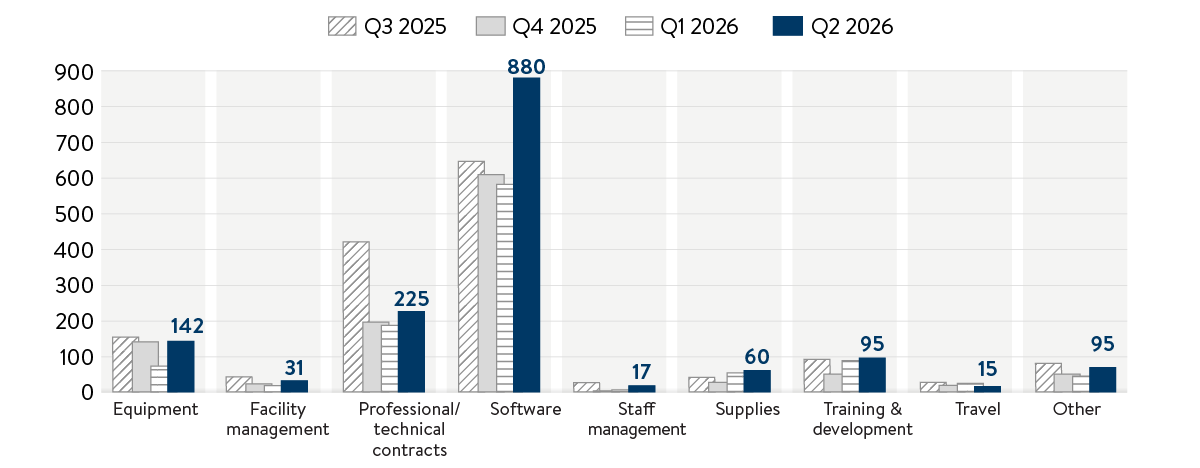
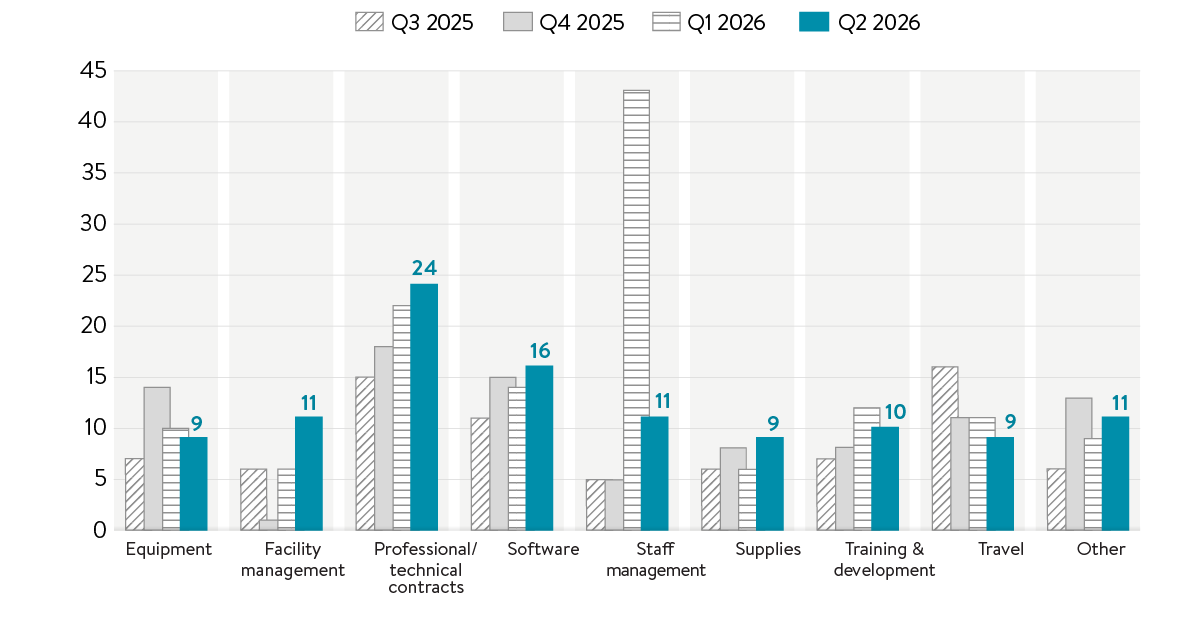
The Procurement Division processes requests to purchase a variety of items such as IT hardware, software, and mobile devices, as well as to pay contractors who assist on projects and initiatives.
1,540
Purchase request volume
12
Average purchase request processing time (days)
To keep state government running and protect Minnesotans’ private data, we must continually work to secure Minnesota’s IT systems. Cybersecurity is one of the most critical functions that MNIT is tasked with, and it functions best when we are all working together, from the individual resident to our state agencies, and even to our legislators; that is how we can help protect the 35,000 users of our systems and 5.7 million Minnesotans who have private data secured by the state.
We serve Minnesotans by connecting all 87 counties, 300 cities, and 200 public higher education campuses across the state through MNET — Minnesotan’s dedicated public sector network. This network provides broad visibility into cyber activity occurring across the state. From April through June 2026, our Security Operations Center (SOC) detected or received reports of 474 potential cyber incidents.
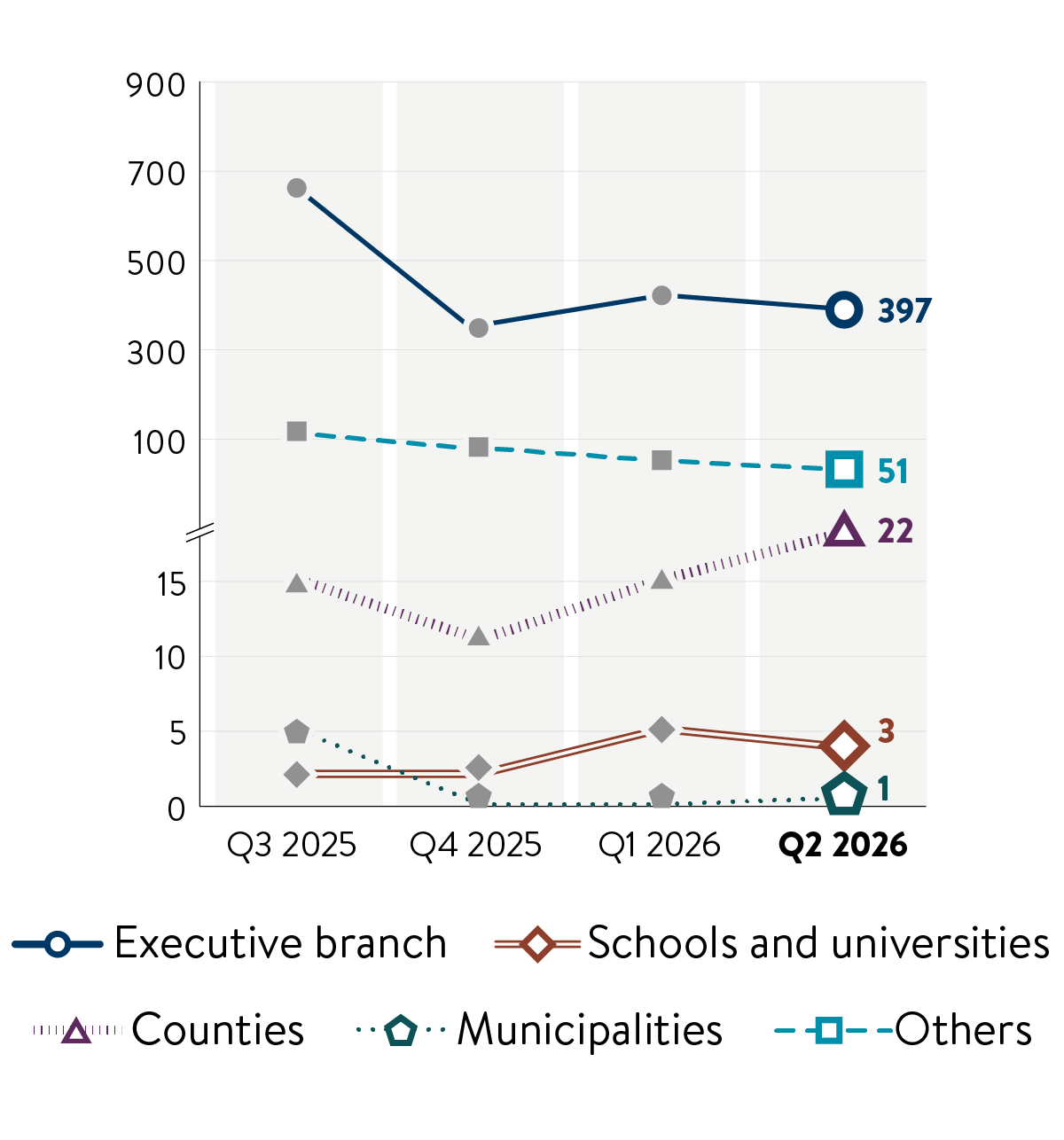
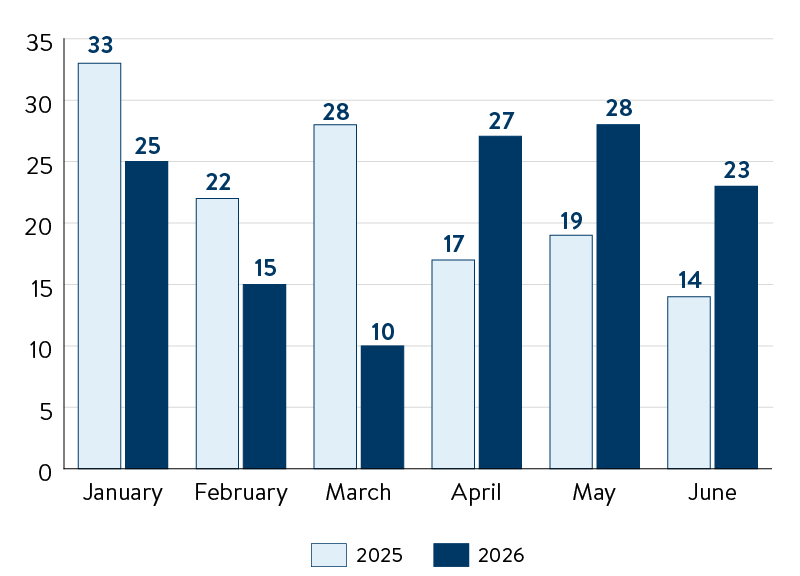
Minnesota's Cybersecurity Incident Reporting law (effective December 2024) continues to strengthen cyber resiliency across the state by providing a secure, centralized system for collecting cyber threat reports from public entities. The data gives MNIT and its partners a clearer picture of who is being targeted, which threats are emerging, and how attacks impact operations — providing the insight needed to strengthen defenses across the state. Read more in the 2025 Cybersecurity Incident Report.
MNIT received 128 cybersecurity incident reports from January through June 2026, compared to 133 during the same time in 2025. However, MNIT saw an increase in the number of reports in Q2 2026 compared to Q2 2025. MNIT received 78 reports in April, May, and June combined, compared to 50 during the same time last year.
MNIT uses these cyber threat reports and other data to deliver timely advisories, support rapid response, and share insights that help Minnesota local governments defend against similar attacks and other evolving threats. Working alongside federal officials, as well as state and local partners, Minnesota remains committed to protecting public data and strengthening our shared infrastructure.
New security vulnerabilities come out on a daily basis, so vulnerability and patch management is an ongoing and necessary process for organizations. MNIT’s Threat and Vulnerability Management Unit (TVMU) uses sophisticated tools to continuously scan for new software or hardware flaws on state accounts and devices — including a range of computing platforms, desktops, servers, and network devices. After TVMU identifies flaws or security vulnerabilities, MNIT works with state agencies to help remediate these issues and reduce agencies’ cybersecurity risks. MNIT resolved 1,785,168 million security vulnerabilities across the executive branch in Q2 2026. This proactive work helps reduce the risk of security breaches, data loss, and other security incidents.
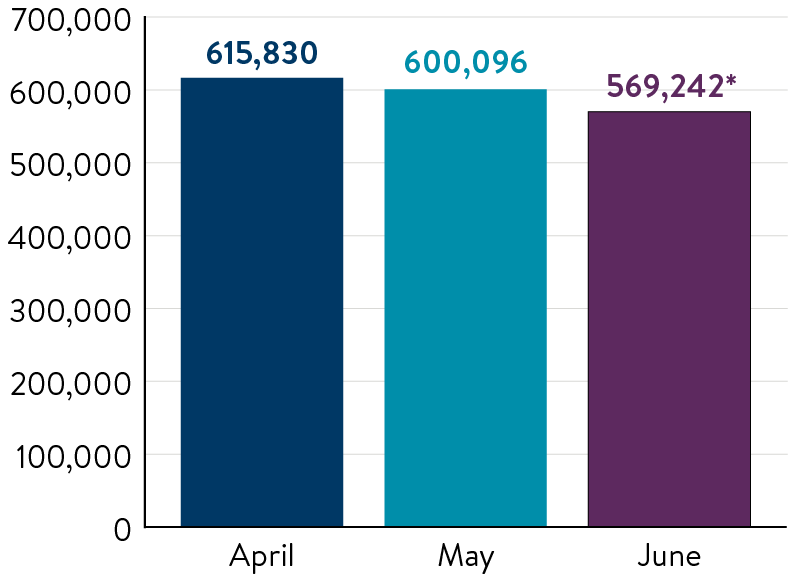
With Minnesota experiencing a rise in cyberattacks — both in frequency and sophistication — MNIT continues to strengthen its partnerships at the federal, state, and local levels to help prevent and detect threats, as well as to respond and recover from attacks.
MNIT engages with federal officials such as the Federal Bureau of Investigation (FBI) and Cybersecurity & Infrastructure Security Agency (CISA), as well as with state partners, including the Bureau of Criminal Apprehension, Minnesota Fusion Center, and Minnesota National Guard to coordinate efforts before, during, and after cyber events.
Together in Q2, they identified and tracked cybersecurity incidents across the state and responded with resources and tools to ensure continuity of vital services and the safety and security of residents.
MNIT serves as a vital link connecting the state’s counties, cities, townships, public schools, critical infrastructure, and Tribal governments. We share information, offer resources, provide support, and help create a safer cyber environment for Minnesotans. MNIT’s Cyber Navigator Team works closely with local governments to help them manage their cyber risks and enhance their cyber resiliency.
MNIT continues to strategically modernize security efforts and expand collaboration with federal, state, and local partners. Together, we safeguard data and systems, and mitigate risk.
Through Minnesota’s Whole-of-State Cybersecurity Plan, MNIT offers advanced cybersecurity services to local government entities. These services help them detect, block, and respond to cyber threats through fully managed monitoring. The plan includes managed detection and response, internal and external vulnerability scanning, log collection and event monitoring, malicious domain blocking, threat intelligence, and information sharing.
MNIT’s services help local governments strengthen their cybersecurity defenses to present a united front against cyber threats. The following services are available to local government entities, including counties, cities, townships, K-12 school districts, and Tribal Nations unless otherwise noted:
A cloud-based solution that uses technology to prevent IT systems from connecting to harmful web domains and limit infections related to malware, ransomware, phishing, and other cyber threats.
A 24/7 solution that looks for the types of attacks that could lead to data breaches, ransomware, or other major events and blocks those attacks.
This solution collects and aggregates log data from multiple sources, centralizing information for faster detection, analysis, and response. Available to MNIT’s MDR partners for an additional cost.
Enterprise-class vulnerability tools use scanning technology to identify, assess, prioritize, and remediate security vulnerabilities. Available to counties, port cities, and Tribal Nations.
A combination of attack-surface management and vulnerability scanning tools perform external scans to assess an entity’s threat and vulnerability posture from an outside perspective. Available to counties, port cities, and Tribal Nations.
MNIT’s Cyber Navigator Team at CN.MNIT@state.mn.us can answer questions, provide resources, and help local governments sign up for services.
During Q2, MNIT’s cloud modernization project continued to make strong progress. Building on the momentum established in Q1, project teams worked closely with agency partners to complete the remaining production migrations, exceeding the original target of migrating 70% of on-premises workloads to the cloud by June 30, 2027.
The initiative modernizes the state’s technology infrastructure by moving targeted, on-premises workloads to secure, cloud-based environments. This achievement strengthens the reliability, scalability, and security of critical government systems while reducing reliance on aging infrastructure and positioning the state to deliver digital services more efficiently.
As the project reaches its final phase, MNIT continues to deliver long-term value for agency partners and Minnesota taxpayers. The cloudbased environment reduces the need for costly hardware, provides greater flexibility to meet changing business needs, and enables agencies to innovate more quickly while maintaining a secure and resilient technology foundation.
| Progress metric | CY2024 | CY2025 | Q1 - CY2026 | Q2 - CY2026 | Total |
|---|---|---|---|---|---|
| Production migrations completed | 83 | 314 | 228 | 184 | 809 |
| Migration assessments completed | 176 | 602 | 271 | 102 | 1,151 |
| Migration planning completed | 156 | 572 | 232 | 176 | 1,136 |
| Dev environment migrations | 83 | 299 | 33 | 30 | 445 |
| Test environment migrations | 86 | 201 | 88 | 44 | 419 |
| Workloads delivered | 545 | 1,179 | 644 | 367 | 2,735 |
| Apps migrated | 206 | 732 | 216 | 96 | 1,250 |
Note: These are volumes from our primary cloud migration partner. Some MNIT teams continue to migrate servers to the cloud on their own.