

Abstract nodes connecting
In the first quarter of 2026, Minnesota IT Services (MNIT) announced leadership transitions that reinforce continuity and ongoing service delivery for Minnesotans.
After nearly seven years of service, Commissioner Tarek Tomes announced his departure to serve as Chief Information Officer at the University of Minnesota. Under his leadership, MNIT advanced enterprise cybersecurity, accelerated cloud and infrastructure modernization, and strengthened digital services that millions of Minnesotans rely on every day.
Building on that foundation, Governor Walz appointed Jon Eichten as Commissioner and State Chief Information Officer, effective March 16, 2026. Eichten brings deep institutional knowledge and a strong track record of cross-agency collaboration, positioning MNIT to continue delivering results while navigating a dynamic technology landscape.
To further support this work, Brandon Hirsch was named Deputy Commissioner. Hirsch, the longtime Director of Government Relations, will help lead enterprise operations and strengthen partnerships across state government, ensuring alignment on priorities and execution.
Together, this leadership team reflects MNIT’s continued focus on stability, service delivery, and innovation — advancing technology that works better for the people of Minnesota



The Office of the Legislative Auditor (OLA) recently completed a performance audit of Minnesota IT Services’ cloud-based information technology services, examining how the state governs, manages, and secures its growing use of cloud solutions.
The audit found that MNIT has established a strong foundation for cloud adoption, including enterprise standards, security controls, and centralized oversight that support agencies as they move to cloud environments. These efforts help improve system reliability, strengthen cybersecurity, and enable more flexible and scalable digital services for Minnesotans.
The audit included one recommendation: MNIT should include all cloud-related Microsoft Azure support and maintenance costs in future cloud progress reports. The recommendation focused on strengthening financial reporting and ensuring cloud cost reporting reflects the full scope of enterprise cloud operations.
MNIT has already taken steps to address the finding and continues advancing its enterprise cloud strategy. Strengthening cloud reporting practices will support greater transparency, improve long-term planning, and help the state manage cloud services effectively and responsibly.
For Minnesotans, this work matters. A mature and well-managed cloud environment supports more reliable digital services, faster response to emerging needs, and stronger protection of sensitive data—helping ensure government services remain accessible, secure, and resilient.
The Technology Advisory Council (TAC) released its 2025 report, outlining progress and recommendations to strengthen Minnesota’s technology strategy across state government.
The TAC brings together leaders from the private sector, state agencies, local government, and labor unions to advise the State of Minnesota on enterprise technology priorities. In 2025, the Council continued monthly engagement with MNIT, advancing recommendations that make government more secure, efficient, and responsive to the needs of Minnesotans.
The report reflects a shift from foundational planning to execution, with focused work in four priority areas: cybersecurity, artificial intelligence (AI), data sharing and governance, and product and customer experience.
Recommendations emphasize strengthening a whole-of-state cybersecurity model, advancing responsible AI governance, improving secure data sharing, and adopting product-based approaches to modernize service delivery.
The report also recognizes a leadership transition, as Rick King stepped down as Chair. The Council acknowledged his role in building a strong public-private partnership and collaborative foundation for the TAC’s work.
Looking ahead, the TAC will continue supporting MNIT and executive branch agencies as they scale modern technology practices across the enterprise.

Governor Tim Walz appointed Vince Cabansag as Chair of the TAC, reinforcing the state’s commitment to strong public-private collaboration on enterprise technology strategy.
Cabansag brings extensive leadership experience in technology, strategy, and innovation. As Chair, he will guide the TAC’s work to advise MNIT and executive branch agencies on priorities that strengthen cybersecurity, advance responsible AI, improve data sharing, and enhance customer experience.
In addition, the Council welcomed two new members: Stacie Christensen, Deputy Commissioner at the Department of Administration, joined as a state representative, and Jamie Thingelstad, Chief Technology Officer at SPS Commerce, joined as a business representative.
The TAC continues to play a key role in shaping how Minnesota delivers secure, efficient, and responsive digital services. Under Cabansag’s leadership, the Council will build on its momentum and support efforts to scale modern technology practices across state government.
The Minnesota Climate Innovation Finance Authority (MnCIFA) built a modern, accessible website to establish its digital presence and support its mission to advance clean energy financing and climate innovation across the state.
As a newly formed state authority, MnCIFA needs a clear and reliable way to connect with partners, communities, and the public. This project delivers a user-friendly website that serves as a central hub for information on programs, funding opportunities, and resources. The design prioritizes accessibility and ease of use, helping people quickly find what they need and engage with MnCIFA’s work.
By creating a streamlined digital experience, MnCIFA makes it easier for partners to collaborate, for communities to access funding opportunities, and for Minnesotans to understand how the state is investing in a more sustainable future.

MNIT and the Department of Human Services (DHS) have taken on a large-scale project to modernize how Minnesota delivers long-term services and supports (LTSS). A 2024 legislative change extends assessment validity from 60 days to 365 days — reducing frequent reassessments and streamlining eligibility.
To put this change into action, MNIT and DHS updated the state systems that determine eligibility and manage services. They have simplified how the system calculates eligibility, updating notifications, and aligning timelines and processes across programs.
This work drives immediate efficiency. Fewer reassessments and manual updates reduce administrative burden for counties, Tribal Nations, and state staff — freeing resources for direct service delivery. It also reduces duplicative data entry, improving data quality, and system reliability.
For Minnesotans, this means faster, more consistent access to critical services. Fewer delays and more accurate eligibility help people get the support they need, when they need it — while reducing long-term costs and modernizing a critical system.
The State of Minnesota advanced its commitment to more transparent and accessible government purchasing with the continued rollout of a unified procurement portal through MN Buys.
The platform creates a single, centralized place for vendors to explore business opportunities across government. Instead of navigating multiple systems, businesses can now find solicitations posted in SWIFT — and, over time, opportunities from cities, counties, and other public entities — all in one location.
Developed through a partnership between MNIT and the Department of Administration’s Office of State Procurement, the portal modernizes how government connects with vendors. It simplifies the process for agencies and political subdivisions to post opportunities, while making it easier for vendors to discover, track, and respond to them.
This approach reduces barriers to entry — especially for small and local businesses — and increases competition by broadening visibility into public contracting opportunities. It also strengthens consistency and transparency across procurement processes statewide.
As adoption grows, MNIT and partners will continue to track usage and outcomes to measure impact and guide future enhancements.
For Minnesotans, this work delivers real value. A more open and efficient procurement process helps government secure better outcomes, supports economic opportunity, and ensures public dollars are spent effectively.

This summer, MNIT will replace its legacy enterprise IT service management tool. Customers will benefit from a more reliable way to request support and track their tickets, while IT support staff will experience improved standardization and automation of processes. The move to the new platform will also help MNIT strengthen enterprise risk management across the organization.
The first phase of implementation is scheduled to go live mid-June and will migrate current tool capabilities that support both back-end facing IT activities and the customer-facing Minnesota Service Hub. As part of this phase, a new self-service portal — the Minnesota IT Service Center — will replace the Minnesota Service Hub.
The new platform offers potential to expand beyond IT operations and drive cross-functional collaboration. As a scalable platform, it can extend to business processes and workflows across human resources, customer service, facilities, and legal. Advanced analytics and reporting will provide real-time insight into service performance and bottlenecks, helping leaders identify issues early and make data-driven improvements.
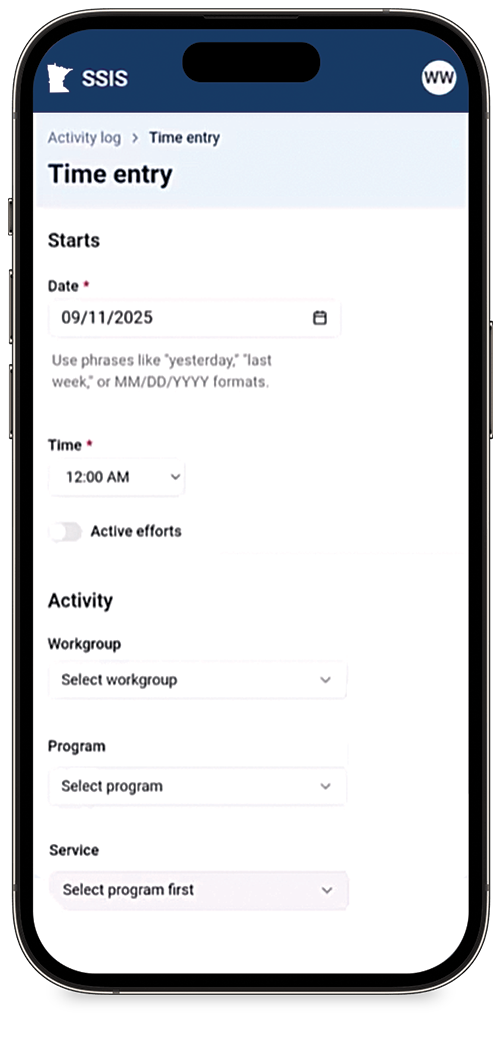
Minnesota child welfare workers now spend more time with families and less time on documentation. The State’s Time Entry Transformation (TET) delivers a fast, reliable, mobile-friendly way to record case activity — saving workers one to two hours per week, with some saving up to five.
MNIT, in partnership with the Department of Children, Youth, and Families (DCYF), delivered TET iteratively over 14 months. More than 650 workers across 80 agencies now use the tool, submitting over 11,500 records. Nearly half (45%) access TET from mobile devices — meeting workers where they are.
The team engaged more than 75 workers through interviews, site visits, and usability testing — building the tool with the people who use it every day.
TET improves performance without changing workflows. Faster load times, autosave, and a simplified login eliminate delays, crashes, and rework — making documentation more reliable in the field. Every hour saved on documentation allows workers to spend more time supporting children and families.
Our Enterprise Service Desk provides 24/7 IT support and services for Minnesota state government, including:


(1-5 scale)

The Minnesota Geospatial Information Office (MnGeo) coordinates geographic information systems (GIS) within the state, creating connections between state agencies and other partners from government and nongovernment organizations. Leveraging geography to guide decisions and shape outcomes enhances public safety, informs transportation planning, improves access to health services, supports the preservation of natural resources, and much more.
The Geospatial team manages the Minnesota Geospatial Commons — a collaborative public platform where publishers share, and users access, geospatial resources such as data, maps, services, and applications. The Minnesota Geospatial Commons is supported by an operational team that includes staff from the Minnesota Department of Transportation, the Metropolitan Council, and MNIT staff partnering with Minnesota Department of Natural Resources, Minnesota Department of Education, Minnesota Department of Agriculture, and Minnesota Pollution Control Agency.
23
Projects supported and hosted by MnGeo
48
Organizations sharing data on the Minnesota Geospatial Commons
1,057
Resources on the Minnesota Geospatial Commons
56,677,891
Hits on the geospatial image server
In Q1, MnGeo launched the modernized Minnesota Geospatial Commons platform — marking a major milestone after nearly two years of development to improve how agencies and partners access and share critical geospatial data.
The Geospatial Commons is a collaborative public platform where publishers share — and users access — geospatial resources such as data, maps, services, and applications. It serves as Minnesota’s central hub for location-based information and supports hundreds of thousands of users each year. State agencies, local governments, researchers, and planners rely on the platform to inform decisions that shape transportation, public safety, environmental protection, and economic development.
The new platform delivers a more flexible and user-friendly experience. It offers expanded map services, built-in data previews, and streamlined navigation that make it easier to find and use data. MNIT also transitioned the platform to a modern, cloud-based web service model, improving performance, strengthening security, and reducing manual maintenance.
Publishers are actively migrating datasets from the legacy system, with full transition expected by June 30, 2026. During this period, users may see datasets move in phases, but the new platform will provide a more reliable, scalable, and accessible experience.
Once migration is complete, the state will retire the legacy site and automatically redirect users to the new Commons. This work delivers immediate value. Agencies can share and access geospatial information more efficiently, reduce duplication, and accelerate decision-making. For Minnesotans, that means better-informed policies, faster response to emerging needs, and improved services powered by accurate, real-time data.
Supported by the Technology Modernization Fund, the project demonstrates how targeted investments modernize critical systems, strengthen collaboration, and improve the digital experience across state government.
The Office of Accessibility oversees the implementation of accessibility standards for all executive branch employees and state agencies.
3,582
Downloads of the Office of Accessibility guidance documents
4,040
Subscribers to the Office of Accessibility monthly newsletter
4,527
Downloads of the Office of Accessibility Quick Cards
Minnesota continues to lead in digital accessibility as new federal requirements take shape. Updated rules under ADA Title II require state and local governments to ensure websites, mobile apps, and digital services meet modern accessibility standards.
The compliance deadline has been extended to April 2027 for larger public entities, including Minnesota. While the extension provides additional time, it does not change expectations for the State.
Minnesota has positioned itself well. The State’s Digital Accessibility Standard aligns with Web Content Accessibility Guidelines (WCAG) 2.1 and goes further — covering both public-facing and internal systems. MNIT continues to support agency partners with tools, training, and guidance to build accessibility into digital services from the start.
Accessibility goes beyond compliance. It strengthens customer experience, reduces risk, and ensures all Minnesotans can access the services they rely on.
Over the quarter, MNIT’s Office of Transformation and Strategy Delivery tracked 275 projects across Minnesota’s executive branch agencies, boards, commissions, and councils
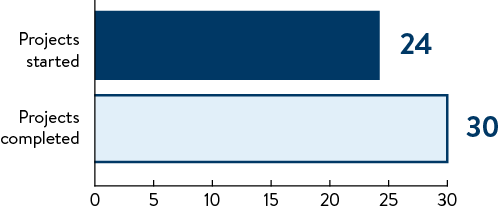
To deliver secure, modern, and accessible digital services, the Minnesota legislature established the Technology Modernization Fund (TMF) with a $40 million investment over four years starting in 2023. Managed by MNIT, the TMF supports projects that modernize technology, strengthen cybersecurity, and improve the digital experience for Minnesotans. A cross-agency steering team reviews proposals and oversees progress.
TMF projects focus on:
181
Total requests across 25 agencies/groups
78
Approved request
$36.2 M
Distributed to agencies/groups
Minnesota Department of Health
Implement an AI-enabled solution to automate document redaction and analyze citation data for emerging compliance trends. This approach reduces time-intensive manual work, improves accuracy, and supports timely responses that protect legal rights and vulnerable individuals. It also turns citation narratives into actionable insights — strengthening provider compliance, increasing transparency, and informing data-driven strategies to enhance public protection.
Minnesota Management and Budget
Implement SmartRecruiters, a modern hiring platform selected through cross-agency collaboration to meet enterprise needs and improve the job applicant experience.
Minnesota Tax Court
Modernize its outdated case management system, which no longer meets operational needs and poses significant risks due to lack of vendor support and high upgrade costs. Transitioning to a modern, cloud-based solution will improve efficiency, accessibility, and service delivery — especially for underserved communities — while reducing long-term costs and ensuring compliance with evolving legal and data standards.
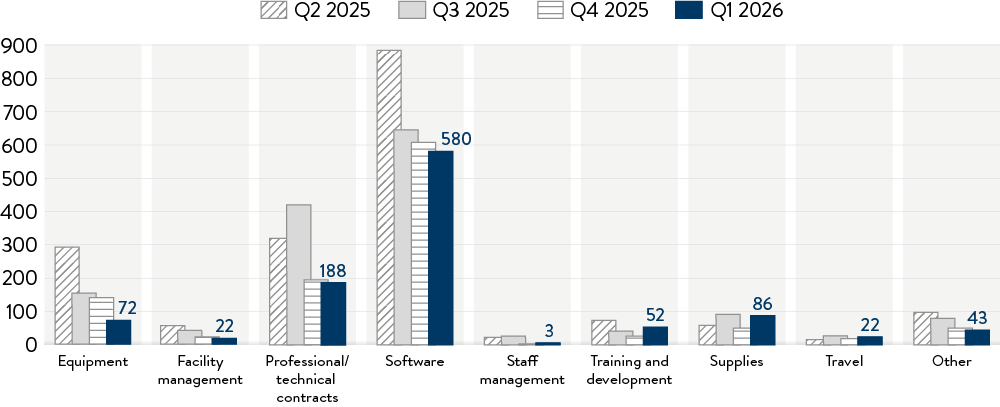
The Procurement Division processes requests to purchase a variety of items such as IT hardware, software, and mobile devices, as well as to pay contractors who assist on projects and initiatives.
1,512
Purchase request volume
11
Average purchase request processing time (days)
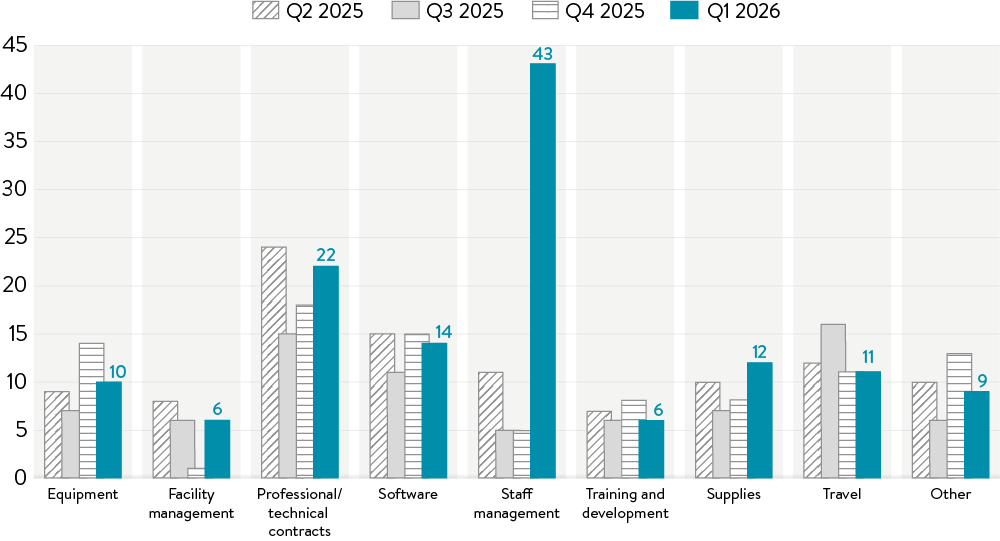
To keep state government running and protect Minnesotans’ private data, we must continually work to secure Minnesota’s IT systems. Cybersecurity is one of the most critical functions that MNIT is tasked with, and it functions best when we are all working together, from the individual resident to our state agencies, and even to our legislators; that is how we can help protect the 35,000 users of our systems and 5.7 million Minnesotans who have private data secured by the state.
We serve Minnesotans by connecting all 87 counties, 300 cities, and 200 public higher education campuses across the state through the Minnesota Network for Enterprise Telecommunications (MNET), a public sector internet service provider.
From January 1 through March 31, 2026, our Security Operations Center (SOC) detected or received reports of 504 potential cyber incidents.
Security incidents investigated by MNIT in Q1 for all Minnesota government partners
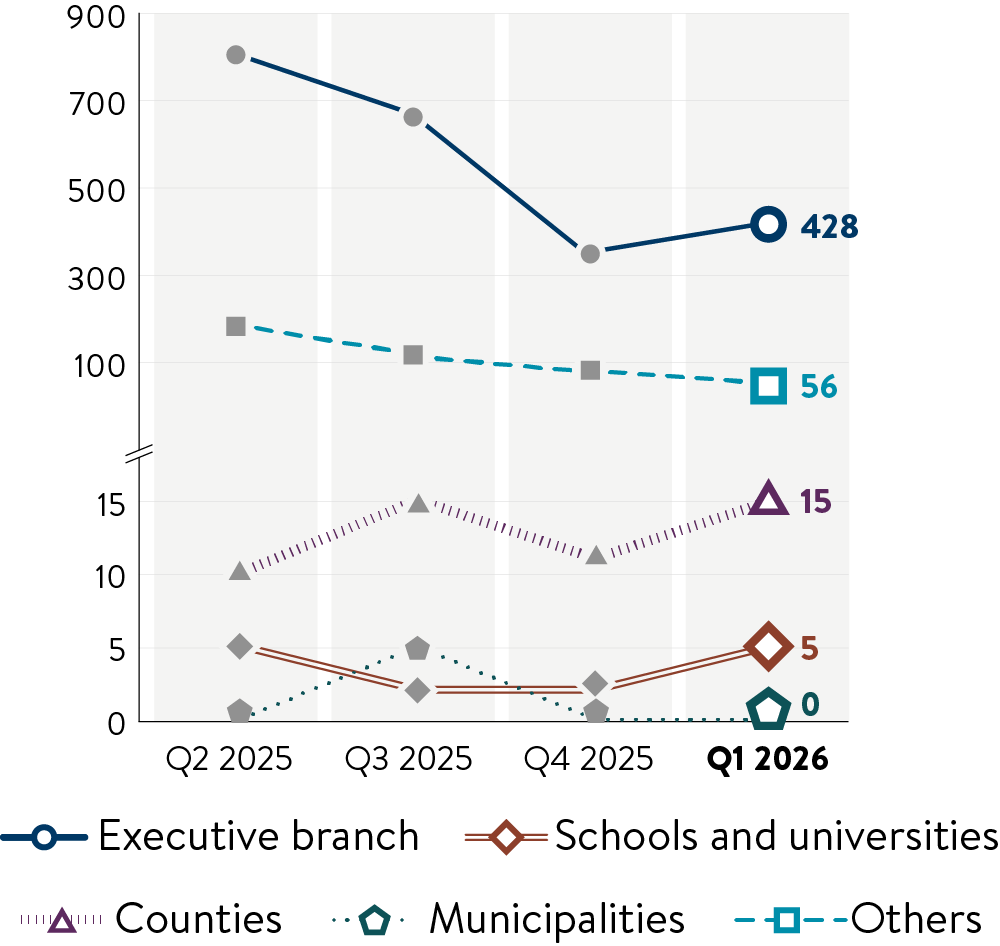

MNIT released Minnesota’s first statewide Cybersecurity Incident Report in January 2026, marking a significant step forward in transparency, collaboration, and statewide cyber readiness. The inaugural report offers a statewide view of cybersecurity incidents affecting public-sector and critical infrastructure partners across Minnesota. It reflects growing cyber defense maturity and underscores the importance of a whole-of-state approach to protecting the services Minnesotans rely on every day. The report also fulfills requirements of the Minnesota Cybersecurity Incident Reporting Law, which established a framework for reporting significant incidents and strengthened the state’s ability to identify trends, coordinate response, and improve preparedness against cyber threats.
The report details how shared security tools, intelligence-driven defenses, and coordinated communication strengthen resilience across state agencies, local governments, Tribal Nations, and critical infrastructure partners. By bringing incident data and trends together for the first time, the report supports shared learning, improves preparedness and response, and helps guide future investments in cyber defense. The Cybersecurity Incident Report also reinforces MNIT’s commitment to collective defense — ensuring organizations of all sizes can benefit from enterprise-grade security capabilities without duplicating cost or expertise.
MNIT partners with the Minnesota Cybersecurity Task Force to strengthen cybersecurity protections statewide under the guidance of the Whole-of-State Cybersecurity Plan, funded by state and federal initiatives. Following MNIT’s launch in late 2025 of two new enterprise-grade services for Minnesota’s local governments, entities showed strong interest in Q1 for the Next-Generation Security Information and Event Management (Next-Gen SIEM) and Malicious Domain Blocking and Reporting (MDBR) tools.
More than 60 entities are onboarding to Next-Gen SIEM and more than 125 entities signed up for MDBR. MNIT offers these and three other security services at a subsidized cost through grant funding. These security services strengthen local governments’ cybersecurity defenses to protect Minnesotans’ data.
To complement these technical services, MNIT maintains a dedicated Cyber Navigator team — including a threat intelligence analyst — who provide expert guidance, threat intelligence, and operational support throughout the cybersecurity lifecycle.
Cyber navigators, along with the SOC, serve as advisers to state, local, Tribal, and K-12 public school partners. They help entities interpret evolving threats, assess risks, and understand the actions necessary to strengthen their cyber posture.
During cybersecurity incidents, MNIT staff offer timely, coordinated assistance — answering technical and strategic questions, supporting decision making, and ensuring clarity during high impact events. When needed, they can deploy on site to provide hands on expertise and work directly with local teams to stabilize and remediate incidents.
Together, MNIT’s enterprise services and the Cyber Navigator team form a cohesive whole-of-state capability that increases cyber readiness, reduces risk, and ensures Minnesota’s public entities have the tools and guidance necessary to safeguard the information entrusted to them
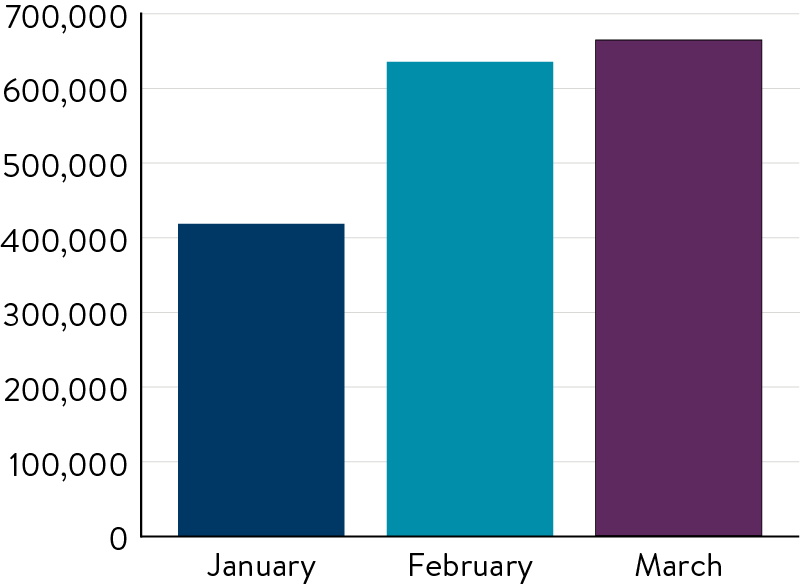
New security vulnerabilities come out on a daily basis, so vulnerability and patch management is an ongoing and necessary process for organizations. MNIT’s Threat and Vulnerability Management Unit (TVMU) uses sophisticated tools to continuously scan for new software or hardware flaws on state accounts and devices — including a range of computing platforms, desktops, servers, and network devices. After TVMU identifies flaws or security vulnerabilities, MNIT works with state agencies to help remediate these issues and reduce agencies’ cybersecurity risks. MNIT resolved 1,716,362 million security vulnerabilities across the executive branch in Q1 2026. This proactive work helps reduce the risk of security breaches, data loss, and other security incidents.
MNIT continues to advance enterprise modernization efforts to future-proof the State’s technology by phasing out legacy systems and reducing costs for partner agencies. A key milestone is retiring the current virtualization platform by June 30, 2026, as systems transition to modern cloud-based and on-premises environments.
This shift supports long-term cost management as expenses for legacy infrastructure and data center leases continue to rise. As the decommissioning deadline approaches, MNIT teams continue to make progress on coordinated work across data centers, virtual desktop environments, and edge sites.
Together, these efforts modernize core systems, reduce long-term cost exposure, and improve resilience and service delivery across the State of Minnesota.
Two of six planned migration events across on-premises systems are complete. Teams have also completed 399 new environment builds to support agency transitions and future workloads. These builds help align systems with modern infrastructure and prepare agencies for future operations.
MNIT has been migrating virtual desktop infrastructure, including virtual desktops and hosted applications, to new environments. This work reduces dependency on legacy infrastructure and improves scalability and performance.
Some agencies need to store their systems locally to keep services closer to end users. Approximately 95% of these edge site servers have been migrated to a more modern on-premises solution. Remaining work focuses on final migrations and stabilization to meet the June deadline.
MNIT built on strong momentum from 2025 and accelerated its cloud modernization efforts throughout Q1. Demonstrating progress and effective coordination across agencies, the project team completed 228 production migrations — more than half of the total completed in calendar year (CY) 2025. The team also reached a 64% completion rate for on-premises to cloud-based migrations in Q1 and forecasts 80% completion by the end of Q2, surpassing the project’s 70% goal.
With the project on track to meet the June 30 deadline, MNIT’s cloud modernization initiative continues to deliver cost efficiencies for agency partners and Minnesota taxpayers. Throughout the project, MNIT remains committed to building strong agency partnerships and creating a more modern, secure, and cost-effective technology foundation for Minnesota.

| Progress metric | CY2024 | CY2025 | Q1 - CY2026 | Total |
|---|---|---|---|---|
| Production migrations completed | 83 | 314 | 228 | 625 |
| Migration assessments completed | 176 | 602 | 271 | 1,049 |
| Migration planning completed | 156 | 572 | 232 | 960 |
| Dev environment migrations | 83 | 299 | 33 | 415 |
| Test environment migrations | 86 | 201 | 88 | 375 |
| Workloads delivered | 545 | 1,179 | 644 | 2,368 |
| Apps migrated | 206 | 732 | 216 | 1,154 |
Note: These are volumes from our primary cloud migration partner. Some MNIT teams continue to migrate servers to the cloud on their own.