9/16/2026 9:30:00 AM
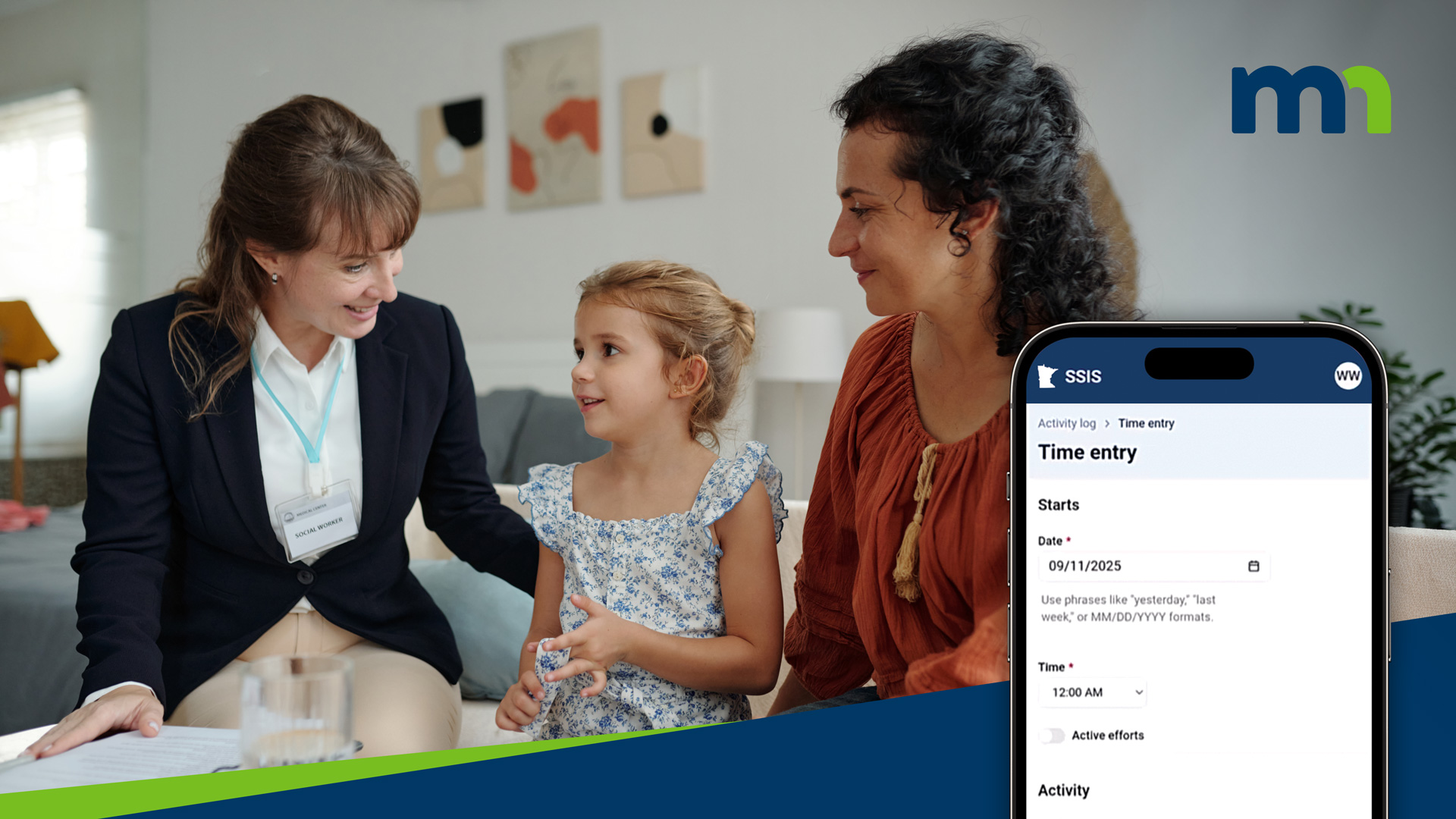
Minnesota earned national recognition as a finalist for the Optimal Experience Award for Research for Social Good. The international award is given to projects that protect research participants and result in delivering better outcomes.
Using Optimal Workshop’s tools, MNIT conducted research for the Time Entry Transformation (TET) project, including testing prototypes to learn what time-tracking interventions would help the state’s child welfare workforce. Their work advanced a collaboration between MNIT and Department of Children Youth and Families (DCYF) to modernize a critical administrative piece of the Social Services Information System (SSIS).
Child welfare workers across Minnesota’s counties and Tribal Nations rely on SSIS to document their work with children and families. But the aging, Windows-based application became slow, prone to crashes and limited to Windows devices. Workers improvised with workarounds — drafting notes in Word, reentering work after system failures, and losing time they could have spent supporting families in crisis.
Every hour lost to failing technology is an hour not serving children and families.
The project replaces the case notes and time tracking portion of the 20 year old desktop system with a faster, accessible, responsive web application. Workers can now document from anywhere — on any device — and complete tasks in real time, without waiting to return to the office. The resulting time savings allow them to focus more on supporting families.
We grounded this work in human-centered design and ethical research practices. More than 75 child welfare workers participated in interviews, usability tests, and on-site observations. Using OptimalWorkshop, we captured nearly 1,000 individual insights, creating a clear evidence base that informed decisions.
We protected participants throughout the process:
Optimal Experience Award judges praised the team for protecting participants sensitive information and using their findings effectively to improve TET for child welfare workers.
Case workers did not want to reinvent their workflows. They wanted reliable technology that supported the way they already worked. So, we preserved familiar fields and processes while modernizing the technology behind them.
TET gives child welfare workers immediate relief while Minnesota continues to modernize its Comprehensive Child Welfare Information System (CCWIS). Instead of asking workers to wait years for improvements, Minnesota delivered a tool that makes their work easier today.
The research methods, designs, and worker feedback that shaped TET will contribute to the broader modernization effort — ensuring Minnesota builds the future of child welfare technology with workers, not just for them.
Digital Government
Technology
Citizen Services
Modernization
App
Apps and Mobile Sites

