MNIT partnered with MDH to set up community vaccination sites across the state
7/28/2021 3:42:35 PM

Minnesota IT Services (MNIT), in partnership with the Minnesota Department of Health (MDH), set up the technology needed to run community vaccination sites across the state. Each community vaccination site allowed workers to securely connect to the internet, withstand severe weather, and ensured that Minnesotans could efficiently receive the COVID-19 vaccine.
Dave Firkus, a service management supervisor for MNIT MDH, worked with his team to develop a process for providing the IT needs for vaccination sites across the state, modeled off their support of COVID-19 community testing sites, which began in Spring 2020.
The community vaccination site on the Minnesota State Fairgrounds ran from April 14-June 8, and during that time, over 60,000 Minnesotans received a dose of the COVID-19 vaccine. Some of Minnesota’s community vaccination sites ran for long periods of time, like the State Fair site, while others were held in pop up locations, like at U.S. Bank Stadium and at the Minneapolis-St. Paul International Airport. Minnesota’s community vaccination strategy also included traveling vaccination clinics, which used Metro Transit buses to bring the vaccine to specific community events. Workers at each of these locations needed to be able to connect to vaccination records, scheduling systems, printers, and so much more to help Minnesotans receive vaccines.

Dave Firkus (left) at the State Fair community vaccination site.
When COVID-19 vaccines first became available for distribution at state community vaccination sites, MNIT staff repurposed a process they used to connect COVID-19 testing sites to the internet and made sure that they met all of the technology needs for operating the sites. Before each vaccination site opened, MNIT sent or brought along portable bins, which included laptops, WiFi hot spots, cabling, walkie talkies, and any other technology or telecommunications equipment that helped to run the site. These bins allowed MNIT to quickly deliver technology tools to set up sites across the state of Minnesota. As of June 2021, MNIT teams set up over 300 vaccination sites (many of these sites were used multiple times) and 22 different MNIT employees staffed the sites.

Rolling bin with laptops.
The portable WiFi hotspots that MNIT provided to vaccination sites allowed individuals staffing the sites to stay online, whether vaccination sites were in St. Paul, Bemidji, or Mankato. MNIT also deployed new technology to ensure that vaccination sites could reach all of Minnesota’s populations. A Language Line Translation service was installed on every computer and tablet to increase access and ensure equitable vaccine distribution.

WifFi hotspot.
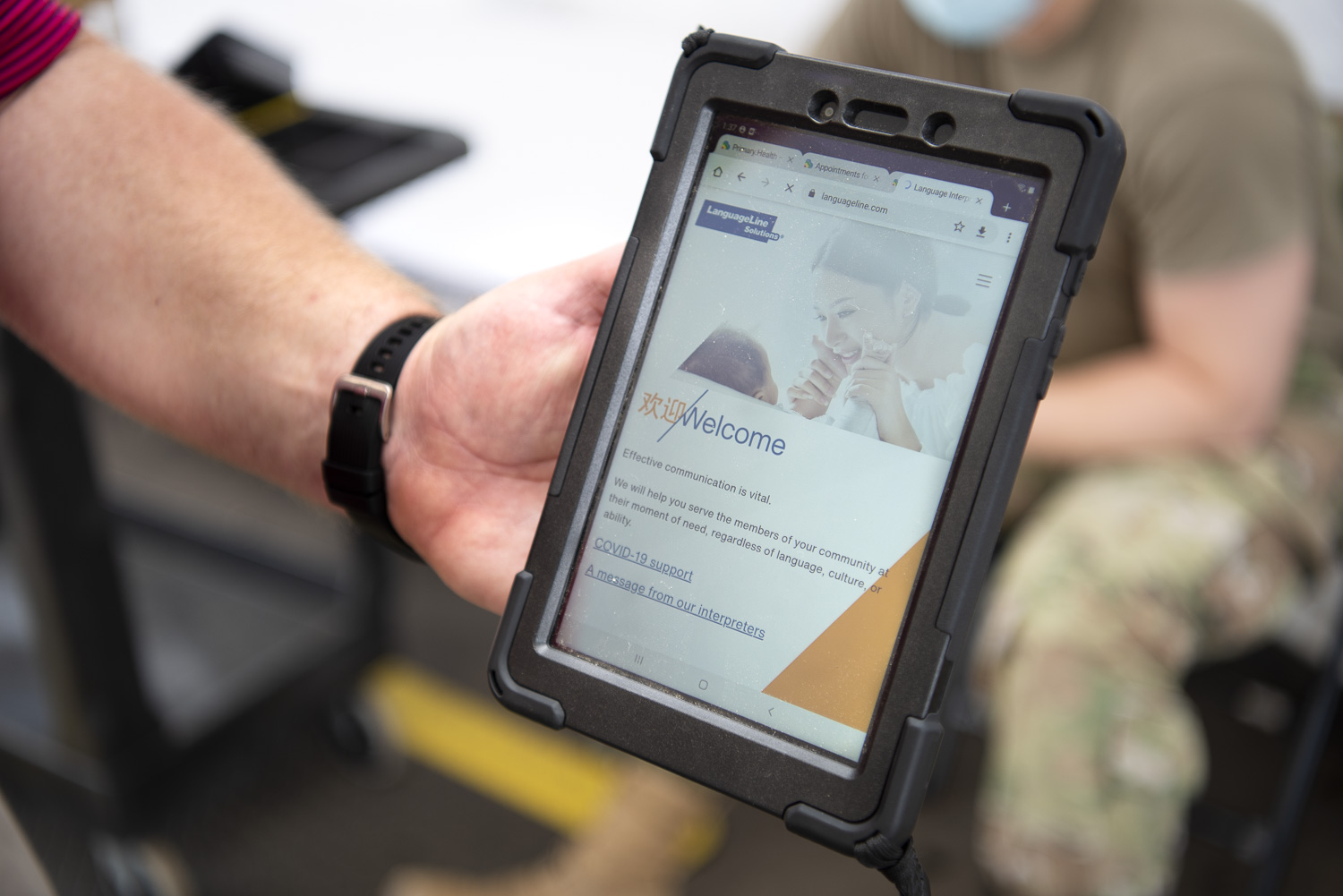
Tablet with Language Line translation service.
Andrew Schuster, an Information Technology Specialist at MNIT MDH, staffed the State Fair vaccination site during our visit. MNIT staff worked on site at many vaccination clinics in case any IT or technology issues arose. The staff also prepare for IT responses to unexpected events, like severe weather.
The State Fair community vaccination site was set up through a partnership between the State of Minnesota and the Federal Emergency Management Agency (FEMA). The site was located in huge tents, and MNIT staff needed to weather-proof the areas that held IT equipment. The MNIT teams worked with FEMA and Homeland Security and Emergency Management (HSEM) to set up a back-up location if they needed to move to a different location quickly due to weather.
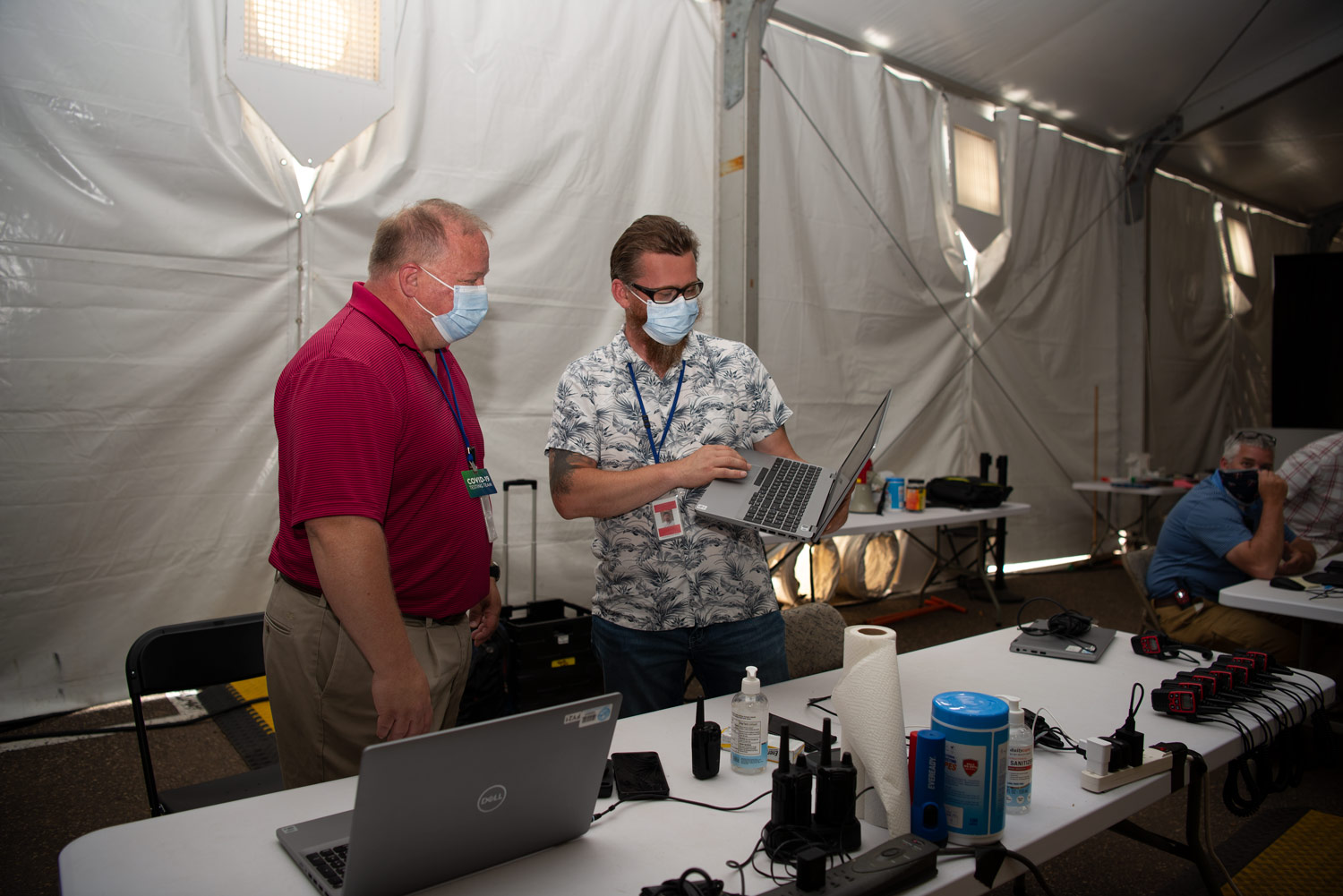
Firkus (left) and Andrew Schuster (right) at the MNIT staff table.
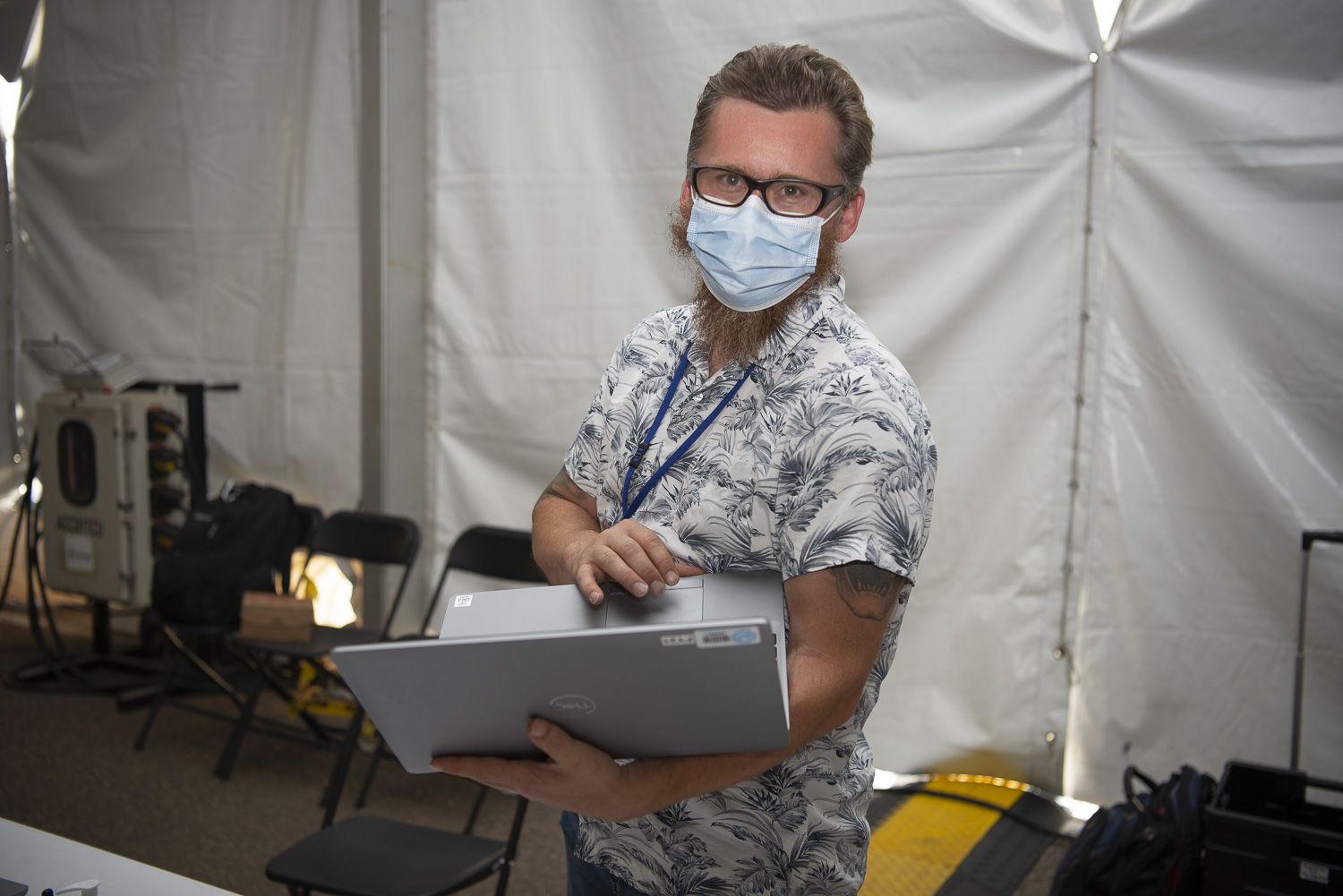
Schuster working at the State Fair site.
MNIT provided telecommunications tools and support, which were used when vaccination sites were at their busiest. The radios allowed FEMA workers to move people through the site, direct cars and traffic, help get interpreters where they were needed, and coordinate any other immediate needs.

Radios used at COVID-19 community vaccination sites.
Digital Government
Technology
Technology
Laptops

