
80 Years Later
The WWII Sinking of the USS Indianapolis as Told by Survivors Comes Alive in an Audio Documentary
7/21/2025 9:00:00 AM
 On July 30, 2025, the nation will mark the 80th anniversary of the sinking of the USS Indianapolis — an event that is considered the worst sea disaster in U.S. naval history. A new audio documentary, The Sinking of the USS Indianapolis and the Atomic Bomb: The Price Paid for Liberty, brings this harrowing chapter of World War II to life through the voices of four survivors and one historian.
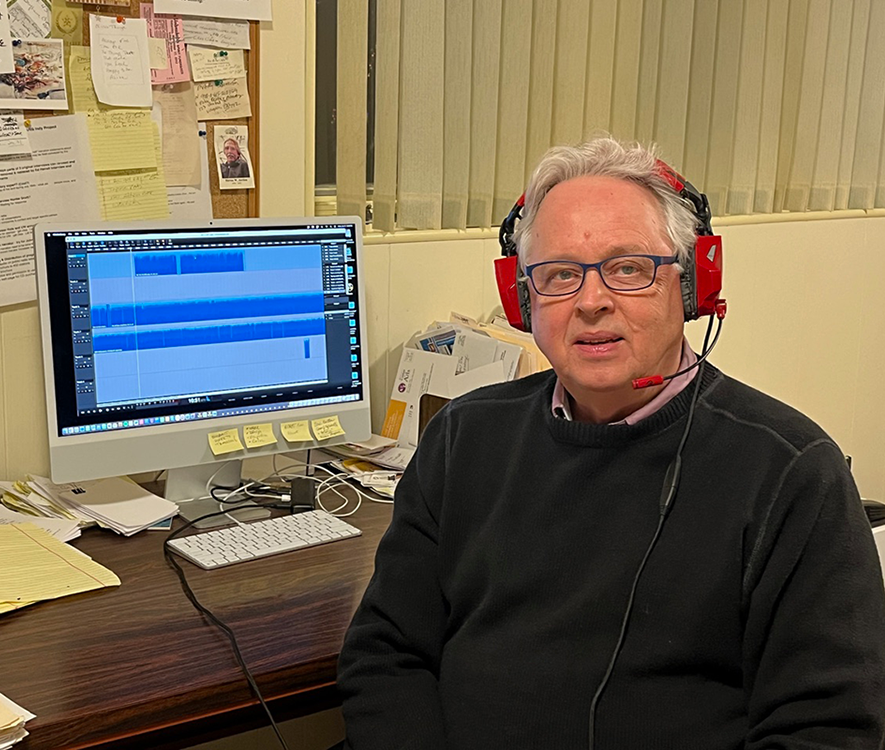
Produced by Minnesota-based audio storyteller Ron Duffy, the one-hour podcast has been in development for over 20 years. Duffy began the project in 2005 after being introduced to two Minnesota men who had served aboard the Indianapolis. Duffy later interviewed two additional survivors, capturing firsthand accounts of the ship’s final mission, its catastrophic sinking, and the agonizing days that followed.
The USS Indianapolis played a pivotal yet largely unrecognized role in ending World War II. On July 26, 1945, under orders from President Truman, the ship successfully delivered components of the atomic bomb to Tinian Islands, about 100 miles north of Guam. Just days later, that bomb was dropped on Hiroshima. At the time, not even Captain Charles McVay knew the nature of the cargo—only that it was a “secret weapon.”
Returning from its mission, the Indianapolis was struck by two Japanese torpedoes shortly after midnight on July 30. The ship sank within 12 minutes, leaving 1,195 men in peril. Roughly 300 went down with the vessel; the remaining crew were left floating in the Philippine Sea, scattered across 25 miles of open water. Over the next five nights and four days, 579 men died from injuries, dehydration, drowning, hypothermia, and shark attacks. Only 316 survived.
Finding the lost men at sea was a matter of chance. On the fourth day, Navy pilot Chuck Gwinn was on a routine flight patrol and attempting to fix a broken antenna in the bottom of his plane when he looked down and spotted an oil slick. Assuming it was a Japanese submarine in trouble he descended to around 1,000 feet preparing to make a bombing run. Instead, he and his crew spotted the men of the Indianapolis bobbing in the water. Without dropping down closer to inspect the oil slick, the chances of Gwinn seeing the survivors in the water were slim to none. Breaking protocol, a rescue plane landed in 12-foot swells and recovered 56 men, dangerously overfilling the aircraft. Other heroic efforts were made in the rescue operation that spanned nearly 18 hours.
Despite the heroism of the Indianapolis crew and the success of their mission, the Navy placed blame on Captain McVay, court-martialing him for “hazarding” his ship. Survivors and advocates spent decades fighting to clear his name. In 2000, Congress and President Bill Clinton posthumously exonerated McVay, acknowledging that the sinking was caused by a series of intelligence failures and leadership missteps beyond McVay’s control.
The documentary explores these failures in depth, including the Navy’s decision to send the Indianapolis into hostile waters without sonar equipment or knowledge of nearby enemy submarines. It also examines the communication breakdowns that delayed rescue efforts and left families demanding answers.
Duffy’s production, supported by a 2024 Minnesota State Arts Board grant, uses enhanced sound design created by co-producer Jack Doepke to immerse listeners in the experience—from the explosion and chaos of the sinking to the eerie silence of the open sea. Commentary from author and historian Sara Vladic adds historical context to the survivor narratives, weaving together a gripping account of courage, sacrifice and injustice.
To listen to the one-hour podcast of The Sinking of the USS Indianapolis and the Atomic Bomb: The Price Paid for Liberty, go to ronduffyart.com and click on the “USS Indianapolis Podcast” link. You can also listen to an extended two-part, two-hour program at the Public Radio Exchange.
