

Left Sidebar
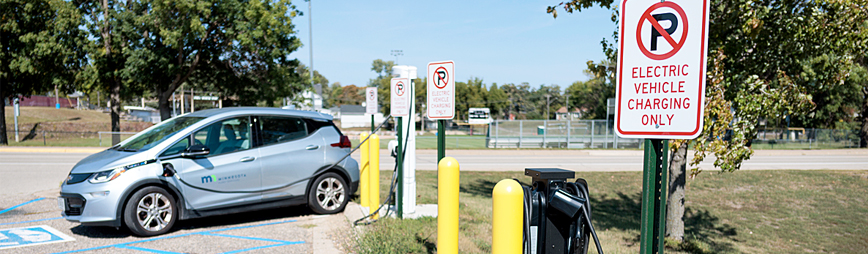
Electric vehicles (EVs) are cars that use an electric motor and a battery pack to power their movement. There are two main kinds of EVs:
Battery Electric Vehicles (BEVs) This is the most common type of EV, where the vehicle is ONLY powered by electricity. These cars do not use gasoline at all, and like your phone and other electronics, need to be plugged in to recharge.
Plug-in Hybrid Electric Vehicles (PHEVs)
PHEVs have both an electric motor with battery pack AND an internal combustion engine. Having both systems means the car can be powered by electricity, gasoline, or a combination.
You can compare models and find an electric vehicle that’s right for you on ElectricForAll.org.
Using electricity as a fuel allows EVs to have several benefits over cars powered by internal combustion engines.
Low Cost
When considering the total cost of EV ownership compared to gas cars, both the purchase price and the cost of fueling and maintenance need to be considered. While gas cars are still cheaper to purchase, EVs are cheaper to drive than gas cars because of lower fuel costs and less maintenance. An Atlas Policy study of 2025 vehicle models shows that over the life of a car, EVs save about 40% compared to an equivalent gas car on maintenance costs and between 43-68% on fuel costs. For sedans, SUVs, and most other types of cars (except pick-up trucks) this means the electric version of a car saves an owner thousands of dollars over the life of the vehicle, even with a higher upfront cost.
Use the Department of Energy’s vehicle cost calculator to understand the cost of ownership for the cars you’re interested in.
Reduced Emissions
Driving an EV reduces greenhouse gases emissions and other harmful criteria air pollutants. That’s even when accounting for the manufacturing of the EV and its battery.
A recent study indicates that in just two years of driving an EV, the carbon dioxide reductions from using electricity instead of gas make up for a more energy-intensive manufacturing process.
Responsive
EVs can accelerate faster than gas cars despite being heavier vehicles. This is because EVs have immediate access to their power through the battery, while gas cars need to inject and ignite the gasoline before the car can speed up.
Additionally, EVs can be easier to maneuver in Minnesota’s winters. With their immediate access to power and the battery’s weight producing a lower and heavier center of gravity to the car, EVs can get traction fast even on snowy or slippery roads.