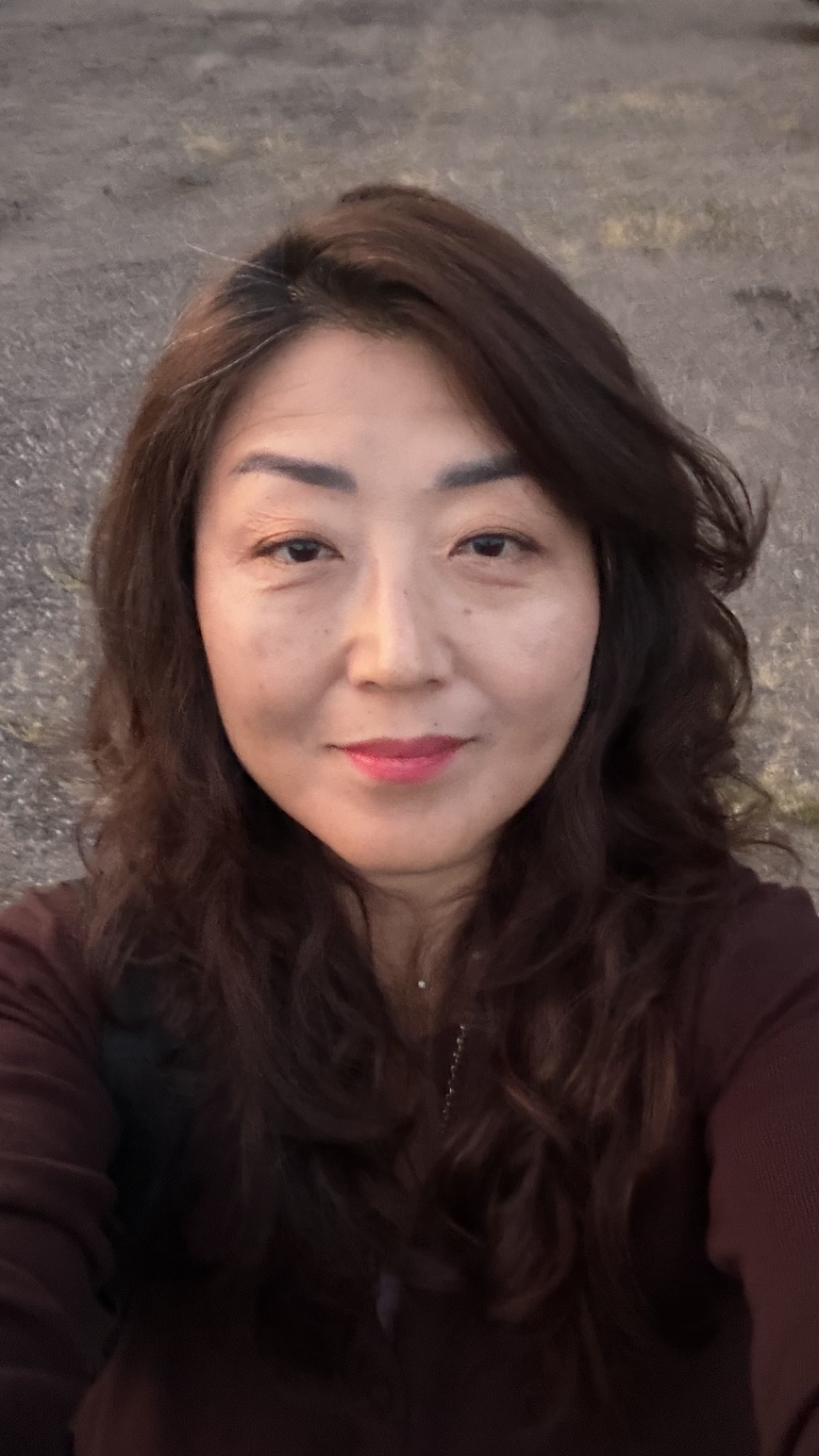
Rania Johnson
Rania Johnson grew up in Champlin, Minnesota and currently calls Woodbury, Minnesota home. Rania was born in Korea where she was found abandoned on the roads when she was one year old. It was then that her deafness was discovered, lived in an orphanage, then she was adopted by a Deaf couple through the Bread of Life Deaf church. She grew up in Minnesota as an only child. She was mainstreamed within the self-contained Deaf and Hard of Hearing program at the K-12 schools in Coon Rapids. Primarily, she started out in the self-contained DHH unit most of the day, and as the years went on, she transitioned into mainstreamed classrooms.
Upon graduation, she attended Gallaudet University. But “Gallaudet wasn’t my first choice. I wanted to go to California: I applied to California State University Northridge (CSUN). For some reason, my intuition prompted me to go there. My parents were upset about how the Deaf family usually stays close to each other. They didn’t want me to go to Gallaudet (because of the location). They were racist. They made comments about Asian people (a large population in California), not recognizing that I am an Asian, which influenced my upbringing.” Rania ended up attending both the University of Minnesota and Gallaudet University.
“I felt I was bound by duty, to honor my parents’ wishes and abide by the old stereotypical gendered roles: women staying home to cook (domestic duties) while men went to work. By the beliefs, my parents were old-fashioned.” She had to abide by the duty by returning to Minnesota to take care of her dad. She completed her bachelor’s degree at Metro State University. “I felt right at home, especially with my experiences mainstreaming. At Gallaudet, I didn’t feel challenged enough in the academics. MSU gave me that educational challenge I craved.”
Graduating with a BA, she then attended University of Minnesota, majoring in the Deaf Education graduate program. “The program wasn’t my major in K-12 per se, I took classes through the program to apply to my degree in higher education. I wasn’t interested in getting K-12 teaching licensure.” Rania focused on communication and community connections. Her bachelor’s degree was in Mass-Cultural / Intercultural Communications, a degree program that she designed for the specialty area. She received a master’s degree in education focusing on teaching communication. She also worked at the University of Minnesota as an ASL instructor for a long time. It was during this time that Rania switched over to American Sign Language after being brought up with the Total Communication method, using sign and spoken English simultaneously. Her bilingual skills between ASL and English skyrocketed once she understood the linguistic dynamics of both. Those experiences led her to teaching at the St. Paul College’s ASL certification program and worked there for the next fifteen years before deciding to resign for personal reasons.
Nowadays Rania works as a freelance Deaf interpreter. And also works part time as a docent at Walker Art Center. Rania’s interpreting journey led her to working more with Deaf Blind individuals, as there was a high demand for it over the time. She recently attended the Usher Syndrome conference in Bloomington, where she was exposed to a wide range of Deaf Blind individuals from different backgrounds and experiences. “It was a rich experience - I got to meet so many amazing Deaf Blind individuals who shared their stories, their experiences, their communication styles. I’m still learning about the newest communication strategies and preferences, and I’ve come to realize that the interpreting programs did not teach further upon any of those areas.” Rania is currently learning Braille as it reinforces the touch philosophy of the Deaf Blind community along with tactile and ProTactile. “It’s important to me to meet their language choices, to immerse myself into their communication.”
At the Walker Art Center, Rania works as a part-time docent. Before working there, she assumed that Walker was “just an art gallery solely. But that was not the case. It’s a community education based on the art space where the community is learning and integrated into the art.” Now her teaching projects blend (four stands) art with STEAM, English Language & Reading, Social Studies, and Contemporary Arts for K-12. She truly enjoys working there, and her responsibilities include developing activities for Walkers’s First Free Saturday program. She researches the background of the artwork, combines it with the four strands of educational activities, and finds ways for the community to connect through the activity. She also works on Sensory Friendly Sunday program as well. “That one focuses on children and adults who might have a range of sensory-related disabilities or barriers, who might be neurodivergent, on the autism spectrum, or over simulated by the regular set-up. ”The activities are specifically designed for SFS that differ from the “free-for-all” approach of First Free Saturday (FFS) every month.
Some of the challenges Rania faces in her work include communication barriers. “At Walker, I worked with staff who wanted to learn ASL, so we incorporated that into our training and activities. They embrace language diversity there.” As a matter of fact, Walker is currently hosting an art exhibit by the Deaf artist, Christine Sun Kim. Rania worked closely with the Walker staff and with Christine Sun Kim to integrate the art exhibit with the community art programs. That experience led Rania to be able to communicate with her co-workers on a basic level. She wonders how that will continue once Kim’s exhibit closes up and leaves Walker. “Does that mean I will be limited to working on certain projects? Nope, we have been holding discussions to see what other works I am capable of and go from there. We want to bring the Deaf community to Walker, so we will work on programming to integrate that too, and to make existing programming more accessible.”
One of Rania’s goals in life is to complete her doctorate focusing on empowering the Deaf community. She notes that she still sees elitism and microaggression happening in both Hearing and Deaf communities and wants to put an end to the perpetual cycle. Her focus is on Deaf Asian Americans, “who are often rendered invisible, not acknowledged that they have internalized struggles in a range of settings - educational, community, workforce, healthcare, and so on.” There’s work to be done and how to better integrate them into the community.”
Rania shares the following advice: “It is important to keep perseverance towards your goals in life. If you find yourself struggling to achieve that goal, look to the sides at the crossroads. Sometimes it takes more than one way of journey to arrive at that goal. Don’t let people tell you can’t do something. Don’t give up. She shares a personal experience of being Deaf in a hearing world, and growing up in a hearing world is not a disadvantage. “Instead, it is to my benefit that I grew up understanding how the hearing world rolls in life, and that in turn helped me understand the Deaf world and my role in the community.” All of us grow with multiple experiences, and “the more struggles we face in life, we learn from them and improve ourselves going forward. Don’t rush through life, but take your time, and embrace the journey itself.” Rania encourages folks to go out and travel and that traveling can “broaden your horizon and develop your empathy of how people live, their culture and language, and better understand the world out there.”
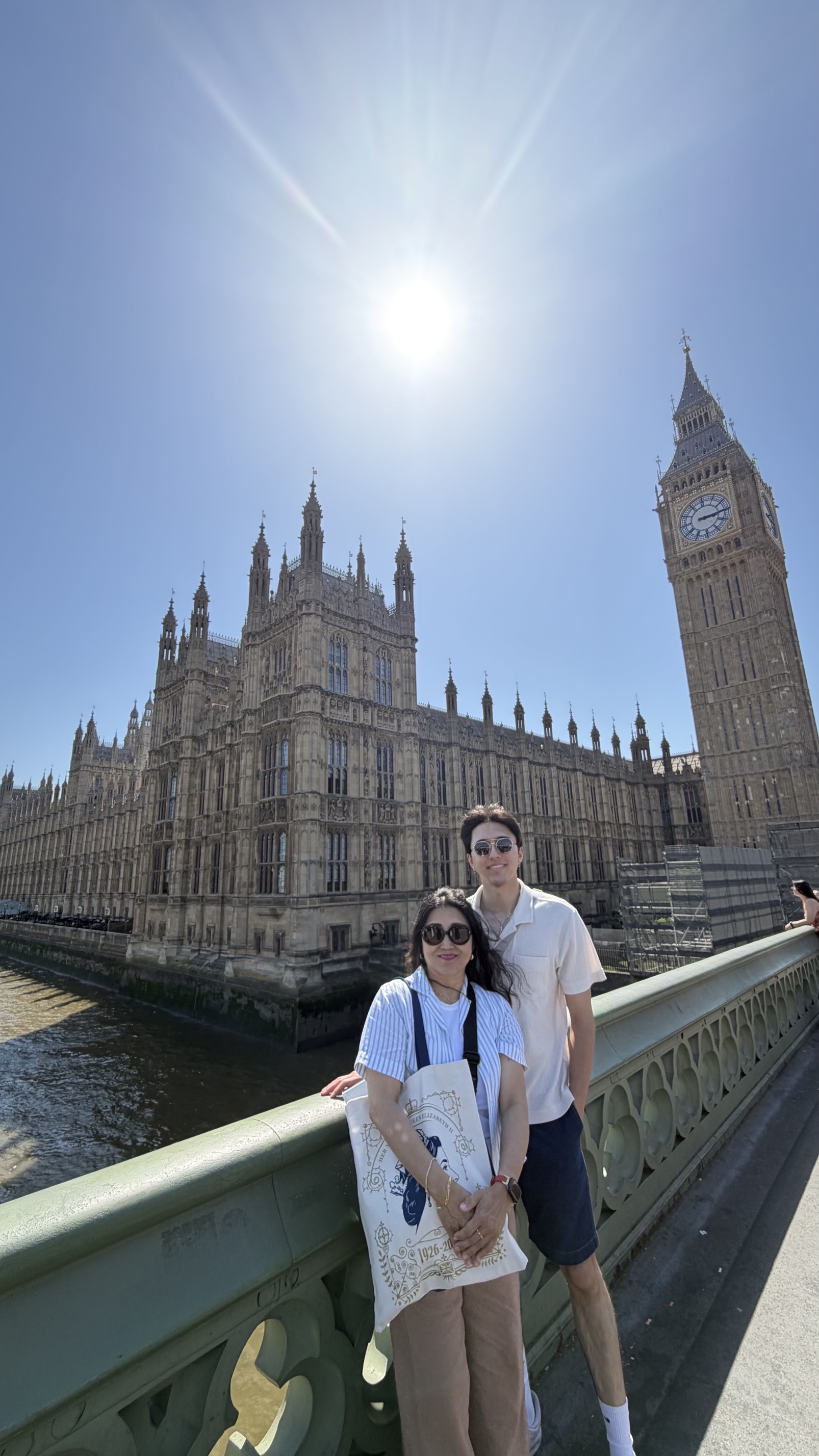
When not working Rania loves traveling and embraces learning as she travels. She shares that growing up, she didn’t care about learning in school, that it was a chore. But later on in life, she discovered that traveling was another form of learning by being out in the real world and outside one’s comfort zone. She shares that school learning set her up for failure, to place limits on her. Traveling, there are no limits, no pre-set expectations and that she was free to explore and learn on the journey. Her enjoyment time includes reading books and cooking for a group of friends.
In parting, Rania shares the following words: “Don’t be fixated on a one-way street to your goal. Be open and embrace the detours. Think positive. Allow yourself time and mind space to figure out your life and your goals.”
The #CanDoAnything campaign showcases people who are deaf, deafblind, or hard of hearing at work, giving them an opportunity to share what they do at their jobs and explain how communication access works for them. This campaign shows what our community can do, which is anything!”