Bob Harris
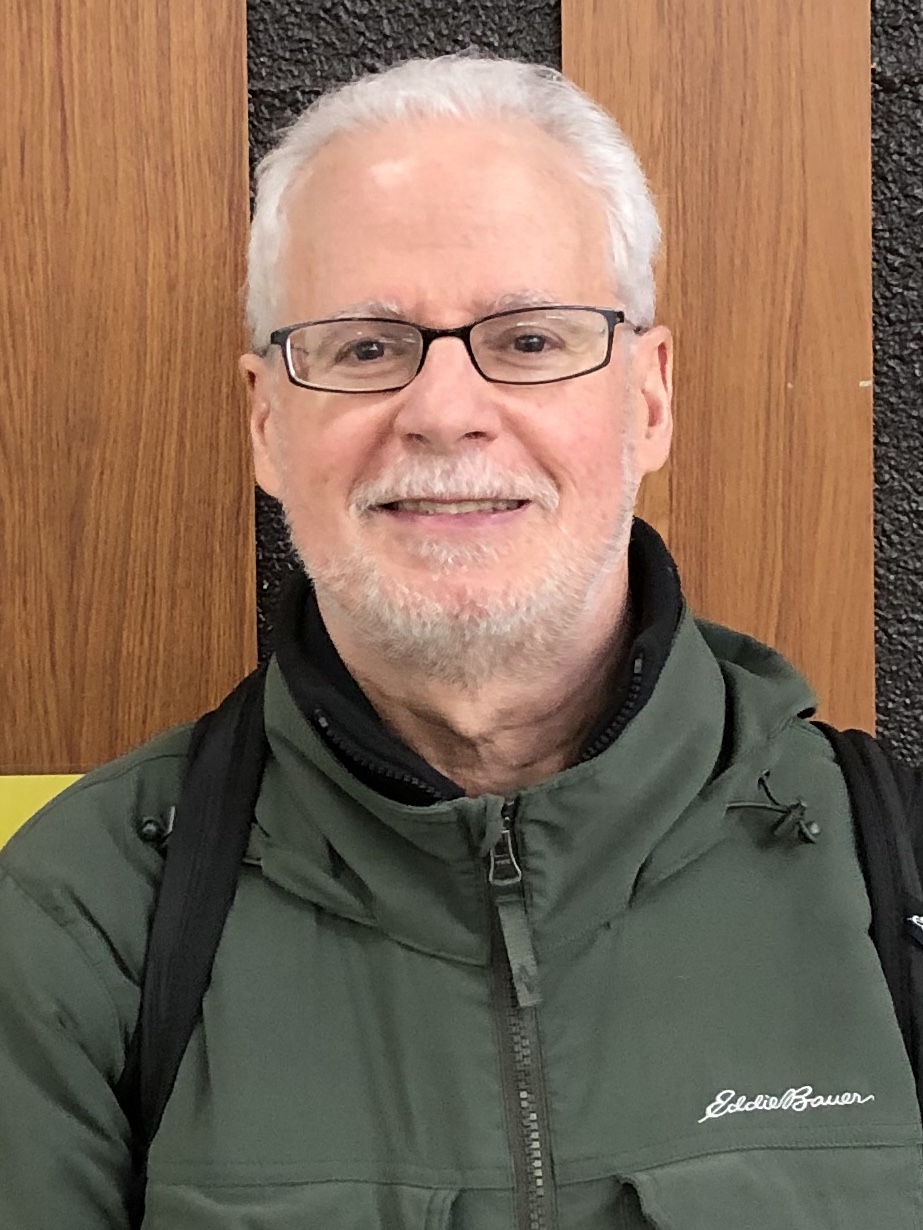
Robert “Bob” Harris, originally from Chicago and grew up in Milwaukee, Wisconsin, calls Eden Prairie, Minnesota home. Bob shares that he went through four different phases of identity. Bob grew up orally and shares that his first identity was sports. “Sports was my method of communication with hearing boys via easy words to speak and lipread and gestures.” That oral deaf identity came through exposure to successful deaf oral adults in his college years. His ASL deaf identity came later through private sign language classes as a pre-requisite for enrolling at Gallaudet College as a special student during his senior year, “which was the best investment I made in my life as it opened new doors for me to meet deaf people of all backgrounds.” 45 years later, Bob entered his fourth period of his time as a deaf Jewish individual via online deaf courses offered by a deaf rabbi and prominent Jewish educators. “As of now, I feel most comfortable as an ASL deaf adult. My ex-wife Evie joked that my style of signing is Bob’s sign language, aka BSL. What she meant was that I learned sign language in a quilt fashion. Basically, I move my mouth while signing and gesturing.”
As a little boy, Bob’s mother educated him via the John Tracy correspondence. Then he was orally educated at age four in a self-contained class for deaf kids. “At that time in the 50s and 60s, there were no such educational accommodations like what deaf children receive in the last 40 years, such as educational interpreters, note taking, etc. “ Bob was partially mainstreamed alone for math, art and physical education classes, then fully mainstreamed alone in both junior and senior high schools. For college, Bob told his father that he was fed up growing up in the hearing world and wanted to go to Gallaudet College. “I heard about it from Evelyn Zola who was giving a speech about inviting deaf students to sign up for tryouts for deaf Olympics and she mentioned the deaf college. My dad complied and called Gallaudet College to introduce ‘a deaf oralist’ to me when we visited the college. It did not work out because I did not feel connected with him.” His father took him to visit Illinois Institute of Technology where he thought that Bob should major in architecture and then work for him in his lumber yard business. “I did not want to do it with my hands.”
Bob’s father contacted the Alexander Bell Graham Association of the Deaf for information about what occupations that deaf people tend to work in. They gave him a four-page pamphlet of five successful deaf adults in their work: clinical psychologist, dentist, engineer, real estate developer and biochemist. Bob was attracted to the field of clinical psychology because he had extended family members in the field of mental health.
Bob enrolled at Lake Forest College, a private small liberal arts college in a northern suburb of Chicago. He had no access to accommodations. “The professors were willing to let me skip classes. After classes, I asked students for their notebooks. I wrote down the notes. If I did not understand some notes, I asked professors for one-on-one meetings.” His original major was chemistry. When Bob was required to take an intro psychology course, he fell in love with the field of psychology and rekindled his interest to work with deaf people as a psychologist. “I considered psychology as my soul search.” While in college, Bob became involved with deaf advocacy groups for “total communication” classes for deaf children. “Total communication 50 years ago has gone through evolutions to what is now known as bilingual education. I took a private sign language class with a wonderful deaf woman. She taught not only sign language but also deaf culture and stories about deaf leaders.”
After completing his sophomore year at LFC, Bob’s father took him to Milwaukee Technical College to take the Strong Vocational Interest test. “In the letter the chief psychologist wrote to my dad, he wrote as follows: It is interesting that to see that the highest score is in the field of law while a variety of interests are contained under the “B” column; namely, public administrator, WMCA Secretary, school superintendent, real estate salesman, life insurance salesman, and chamber of commerce executive. Interest in the sciences seems to be very limited.” Bob’s great uncle was his role model for many years and practiced as a chief justice for the federal court of appeals in Washington, D.C. Bob asked his great-uncle if he thought Bob could study to become an attorney. “Knowing the impact of my deafness on my ability to communicate with hearing people, he said I could work in the legal research department but would never work in a court. At that time, interpreting services were never heard of. And I decided not to pursue law school.”
As a senior, Bob went to Gallaudet College for a semester to learn further sign language via interacting with deaf students and deaf professors and deaf culture. He then returned to Lake Forest College to complete his bachelor degree in 1970. Afterwards, Bob attended New York University for a five-year doctoral program in clinical psychology. “For the first time in my life, I had access to interpreting services. It was a total blessing.” He spent a semester as a practicing counselor intern at New York School for the Deaf in Fanwood. Following that, he spent a semester as a counselor intern at the National Technical Institute for the Deaf in the summer of 1971. Bob heard about the University of Rochester Medical Center where they offer internships in clinical psychology. While completing the required courses in his third year of graduate study, Bob inquired with the Department of Psychology at the University of Rochester if they would be willing to let him apply for an internship. They responded positively. Bob successfully applied for a rehabilitation fellowship for a full time interpreter for a two-year internship and dissertation mentoring. “The best educational experiences I have received in all of life as a student.” For his dissertation, Bob tested two deaf groups: 274 deaf children of hearing parents and 50 deaf children of deaf parents to measure their level of impulse control in four different residential schools for the deaf. He successfully defended his dissertation and received a doctoral degree in 1976.
Bob worked for four years as a clinical psychologist in a mental health program for hearing impaired at St. Paul Ramsey Hospital with full access to interpreting services whenever such needs for interpreting services are warranted. He applied for a Bush Fellowship for 1980-1981 as a postdoctoral fellow to study further in the fields of special education, child psychology and abnormal psychology. The fellowship paid for interpreting services and monthly stipends. Upon completion of the fellowship, Bob returned to his position at St. Paul Ramsey Hospital. “Unfortunately, the program did not receive further grant monies for my position. As a result, I was laid off a year later.” He had a brief three month executive directorship position with soft monies for Deaf Education and Advocacy Foundation. “I did not succeed in securing further soft monies and was let go.”
Bob then secured a part-time position in Hennepin County Mental Health Program for 20 hours a week with deaf clients. He resigned in 1991 to focus full-time in his business, Harris Communications, selling assistive devices for deaf and hard of hearing as well as selling sign language books/videos and publications in deaf culture, deaf history, and biographical stories of successful deaf adults. Bob started his business in 1982 in his townhouse before moving to a small office on Hennepin Avenue in 1985. The business moved three more times for more office and warehouse space. Bob retired in 2016 after 34 years of business. His son Ray bought out the business. Ray changed the name of the company to Diglo for better online outreach to deaf and hard of hearing markets with more consumer-friendly tools to help them find products that help them to “live better no matter how you hear”.
Bob started his business alone as a salesman and a trade of all trades, such as bookkeeping, packing boxes to ship, inventory storing, answering the TTY and private relay answering service calls, designing ad prints for deaf news, attending deaf trade shows, etc. The business grew every year. “At the peak time of business growth, I had 33 employees and over 200 resellers.” The catalog was his best means of communicating with the public via annual bulk catalog mailings and promoting customers to call the customer service representatives. In addition, Bob was fully responsible for preparing bids for contracts and one-time bids. He also ran weekly staffing meetings and delegated responsibilities to different departments, such as warehouse, inventory management, purchasing, customer services, sales, finances, etc. “At that time, the internet entered the world, I was not computer savvy and did not do well in shifting gears into online promoting means. Fortunately, my son started to work for me in 2010 and became heavily involved in expanding means of consumer promotion vis online means.” Bob enjoyed being his own boss. “I enjoyed coaching employees in terms of providing excellent customer services. I enjoyed traveling to staff booths and showcased equipment to deaf people at national deaf conferences, deaf nation expos, etc. I enjoyed coming up with ideas to promote via print ads in deaf newspapers as well as annual bulk catalog mailings.” The source of inspiration for Bob to work in his business “was exposure to watching my dad running his business as a lumber yard and my maternal grandfather’s family business in selling paper products.”
Bob’s deafness imposed a significant barrier to his ability to communicate with hearing people who held government positions as purchasers of equipment, to prospecting potential hearing resellers, vendors, and the like. Bob worked out by hiring a full time interpreter. “It was a big help to have the interpreter at my fingertips so that I can make immediate calls asking the procurement officials for clarification on some ambiguous bidding requirements and regulations. In another example, with my interpreter, I called vendors and discussed how we both can work together to promote their products, etc.” In the beginning of Bob’s business, access to interpreting services was the primary need. “Over the years, emailing was becoming more and more popular which resulted in less need for a full time interpreter. As a result, her position was restructured to allow her to work in any task assigned to her other than just interpreting.” 20 years after the start of his business, video relay services was born, which significantly facilitated his efforts to communicate with hearing people as well as making it much easier for deaf customer service representatives to communicate with hearing people as well as communicating directly with deaf consumers and showing them the products via video chats. “Whenever we held staffing meetings or training workshops and the like, we contracted with an interpreter referral service agency for an interpreter for a couple of hours or longer when needed.”
Bob is heavily involved in the deaf community as an advocate for deaf people’s rights for equal access. He served in different positions as a board member for the following organizations: Minnesota Association of Deaf Citizens, the Minnesota Commission of the Deaf, DeafBlind and Hard of Hearing, RSC’s advisory council, State Technology and Access Council, Minnesota Council for the Handicapped, Vinland National Center, National Association of the Deaf, State Steering Committee for the Study of service needs for deaf and hard of hearing people, MSAD’s advisory council, Deaf Education and Advocacy Foundation, National Advisory Council for the Handicapped, State Steering Committee on the telecommunication needs of deaf people. Bob also served as a delegate to the White House Conference on the Handicapped via local elections in the Twin Cities at the Governor’s Conference on the Handicapped. Published several articles in professional journals, lectured numerous times in the field of mental health and deafness. He was heavily involved with the planning committee of many deaf people in setting up Minnesota’s first deaf leadership training program in Brainerd, Minnesota in 1976.
Bob shares the following advice: “Appreciate your journey of exploring what you would like to do for your living. Exploration takes many ways: entry level volunteer and/or job as a high school student, attending camps to meet new deaf campers and counselors, attending career education seminars for deaf students, learning what your parents and your friends’ parents do in their work, attending high school deaf students’ social gatherings. Reading biographical sketches of successful deaf people in their work, their profession, their advocacy work, their entertainment work(actor, writer, story teller, video blogger, artist, etc.). Attend deaf conferences to attend deaf presenters’ lectures, workshops, panels to learn more about what they do in their work.”
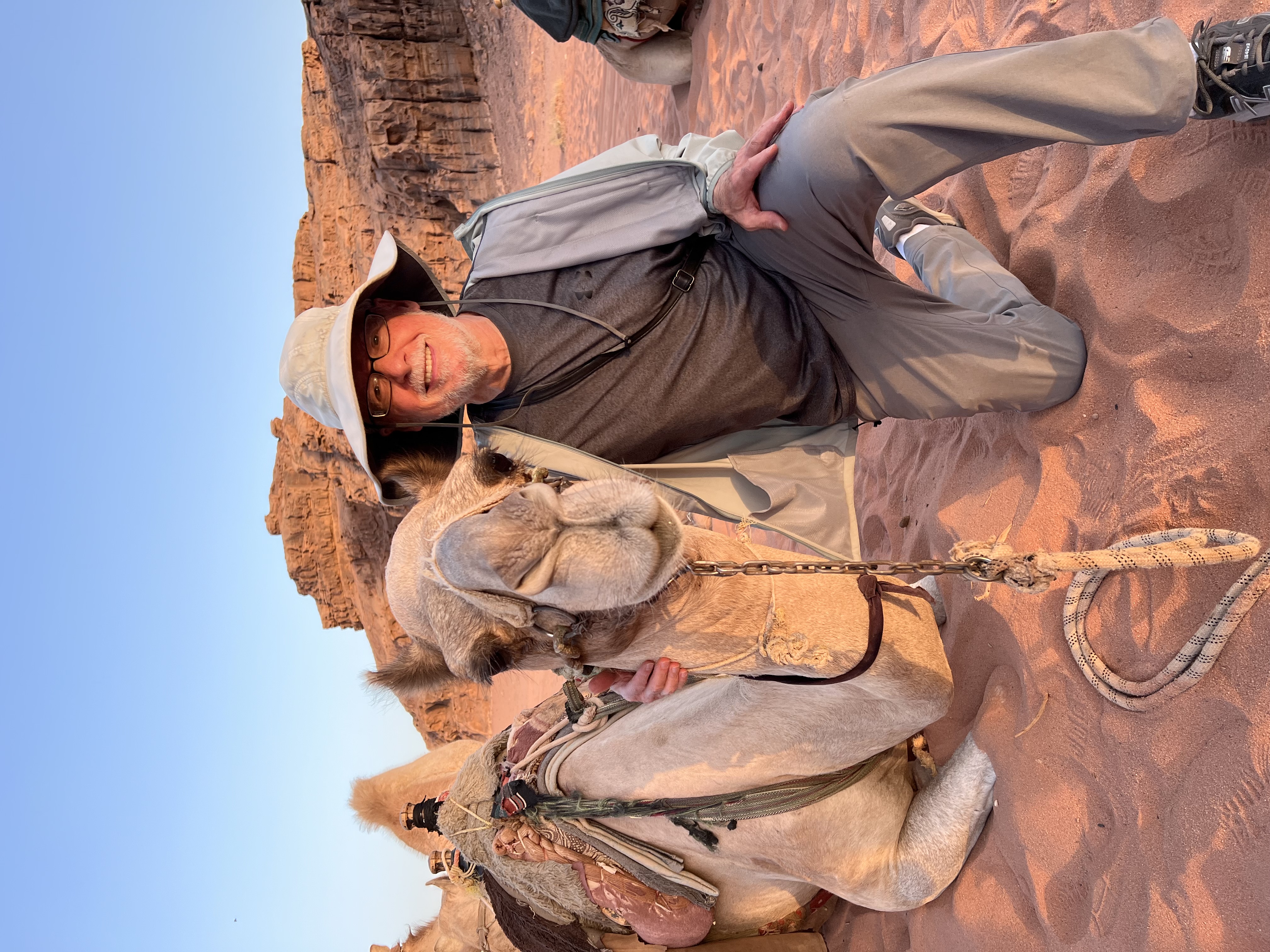
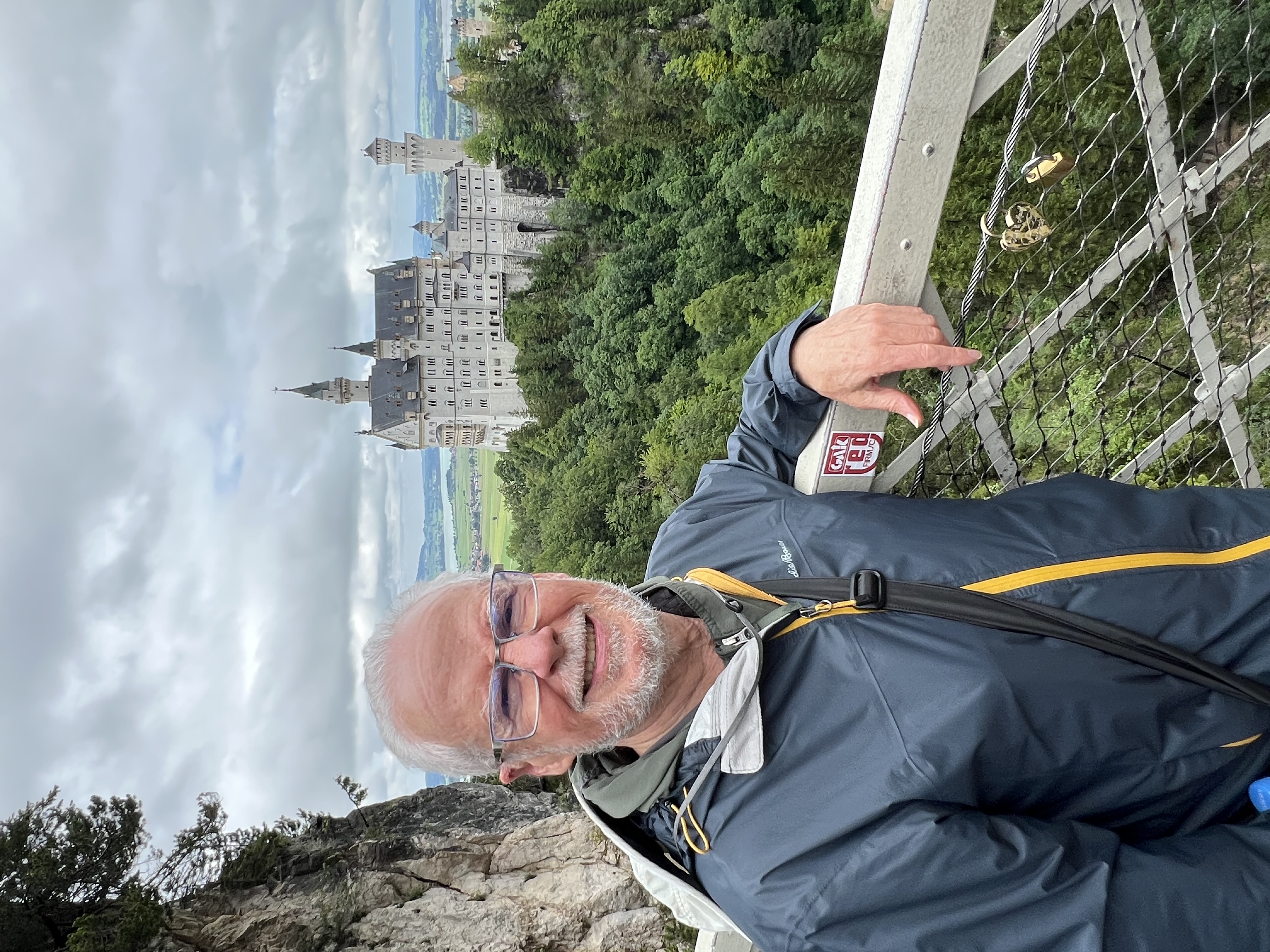
As a retiree in 2016, Bob loves being a “free bird”. He loves traveling globally via small deaf group tours and side trips as a sole traveler. Bob has visited 55 countries to date and more coming in the next few years. He made several photo memory books via Shutterfly and took many photos of picturesque places and set up online albums of each country visited. He is also continuing health exercises in preparation for overseas traveling as well as keeping himself in good shape as he enters his 80’s.
In parting, Bob shares a favorite quote from his travels: “In the United Arab Emirates, the former emir(king) quoted: ‘The sky is only the beginning ‘. The morale of the story is: Everyone says the sky is the limit. The emir challenged you to think out of the box by saying as quoted above.”
The #CanDoAnything campaign showcases people who are deaf, deafblind, or hard of hearing at work, giving them an opportunity to share what they do at their jobs and explain how communication access works for them. This campaign shows what our community can do, which is anything!