

2026 Heritage Month

Each year, our Heritage Month is an occasion to celebrate, spotlight, and educate others about the diversity and history of our communities. However, this year has been unique and, for many Asian Pacific Minnesotans, challenging. For this reason, we spoke with several members of our community who were directly affected by Operation Metro Surge. Throughout the month, we will be sharing these personal stories as well as interesting vignettes and fun facts from across our communities.
Week 1
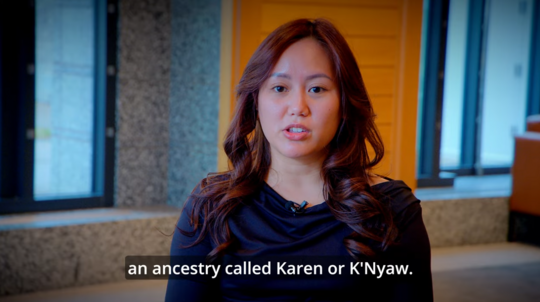
Kaziah's story
Kaziah and her family came from Burma, where ethnic clashes have long plagued the country. Known as the Karen (Kah-REN) people, or K’Nyaw, they are an ethnic minority who began being resettled as refugees in the United States in the mid-2000s. Under Operation PARRIS, Karen refugees who arrived in the United States during the Biden administration and whose legal status had not yet been adjusted to Permanent Legal Status were detained, even without criminal records.
Kaziah serves as co-director at the Urban Village, a Saint Paul nonprofit serving K’Nyaw/Karen and Karenni youth. She was also one of the co-founders of the K’Nyaw Rapid Response team during Operation Metro Surge and Operation PARRIS.
Interesting fact: Filipino service during WWII
Did you know that more than 250,000 Filipinos fought alongside American forces against Japanese occupation during World War II? At that time, the Philippines were considered a commonwealth of the United States. More than one million Filipinos died in the war.
In 1953, 12 University of Minnesota students came together to form the Fil-Minnesotan Association, a platform for celebrating and strengthening Filipino connections and culture in the early days after the war. After the Immigration Act of 1965, strict quotas on immigration from the Philippines were eased, allowing waves of professionals to settle in Minnesota. Today, Filipinos are the sixth-largest API community in Minnesota, with a population of over 22,000. Other Filipino-led organizations in the state include the Cultural Society of Filipino Americans, Philippine Nurses Association of Minnesota, Philippine Minnesotan Medical Association, Minnesotan Seniors Association, and Filipino American Women’s Network.
Week 2

Mel's story
In January, Immigration and Customs Enforcement (ICE) agents broke down the door of Melina Krushke’s uncle’s house. They pointed rifles, arrested him, and sent him to a detention center in El Paso less than 24 hours later. He was then deported—not because he posed a risk to society, but because of paperwork he had signed more than 20 years ago, after committing a crime and serving his time. At the time, he did not know what he was signing.
Her uncle's story mirrors that of many others in our Asian Pacific Minnesotan communities. As Mel describes, the impact of a few moments can echo through families for generations.

Interesting fact: South Korean adoptees in Minnesota
Minnesota is home to the largest community of South Korean adoptees in the country, standing somewhere between 15,000-20,000 people. As a whole, there are around 29,000 people of Korean ancestry in our state, making this the fifth-largest API community in Minnesota. South Korean transnational adoption began in the wake of US involvement in the Korean War. Over the past 70 years, two-thirds of all South Korean transnational adoptions have taken place in the United States.
A landmark report in 2025 revealed large-scale, decades-long corruption within South Korea’s transnational adoption practices. Several adoption agencies were found to have purposefully obscured the living family members of adoptees, falsified documents, and allowed private adoption organizations to assume guardianship and transfer custody of children to adopters in other countries. These practices have resulted in what is commonly understood to be the world’s largest diaspora of adoptees. In recent years, reforms have significantly changed the manner and number of transnational South Korean adoptions.
Researchers suggest that Minnesota became a central point of these adoptions due to its prevalence of faith-based resettlement and adoption organizations, as well as a populace that favored supporting children in need through the adoption process.
In response to the arrival of South Korean adoptees to the state, community resources slowly solidified in support of these new Minnesotans. More than 50 years ago, the Korean Institute of Minnesota was established to teach Korean language, culture and history. Culture camps were established to introduce children to Korean culture and language, such as Korean Culture Camp (KCC) of Minnesota, Kamp Kimchee, Camp Choson, and Camp Moon Hwa. Other foundational organizations include the Jangmi Arts dance group and Korean Quarterly newspaper.
As South Korean adoptees raised in the United States have grown older, community and social groups for adult adoptees have formed, creating spaces that cultivate belonging and shared history.
Sources: Minnesota Public Radio, Associated Press, Minnesota Historical Society, Minnesota Compass
Week 3
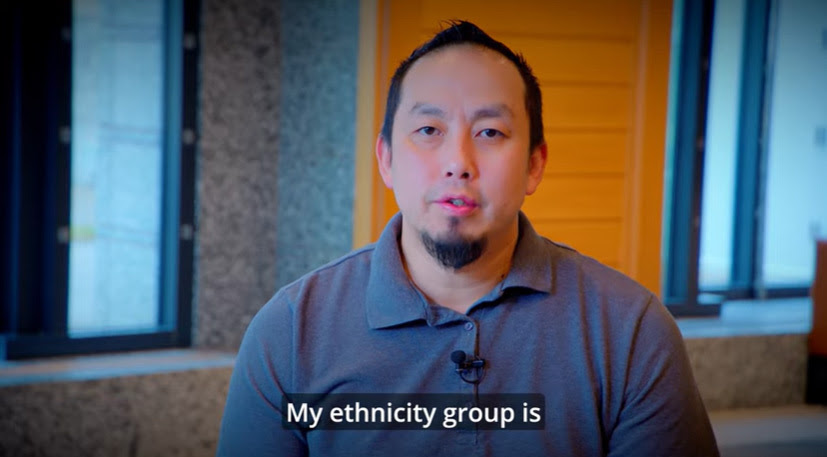
Va's story
Va Xiong’s story is similar to that of many in our Asian Pacific Minnesotan community: at the age of three, he came to the United States with his family and other Hmong who became refugees after the Secret War ended in 1975. Knowing nothing but life in America, he lived as Americans do—and made some of the same mistakes of youth.
Va experienced Operation Metro Surge through the lens of fear. He feared for himself, for his family, and for reliving the trauma he escaped as a child. In honor of #AANHPIHeritageMonth, we are sharing his story.

Interesting fact: Samoan Minnesotans
The term “API,” or Asian and Pacific Islander, is used to describe a large, diverse community of more than 40 distinct nationalities and ethnicities. But in Minnesota, the Pacific Islander community is often overlooked because of its small size in comparison to the many Asian communities found within our borders. Even within our Pacific Islander community, people of numerous distinct ancestry communities call Minnesota home.
Estimated at just 605 people, one of our smaller cultural communities are the Samoan Minnesotans. Samoans make up the second-largest Pacific Islander community in the United States after native Hawaiians. Samoans first began arriving in the United States in the late 19th and early 20th centuries after American Samoa became an official territory of the United States.
If you’re a sports fan, you’ve likely cheered for a Samoan Minnesotan. From 1992-1995, Esera Tuaolo played defensive tackle for the Minnesota Vikings. He is a published author, musician, and one of the first NFL players to publicly come out as gay. Alissa Pili, who is of Samoan and Inupiaq ancestry, played for the Minnesota Lynx from 2024-2025. As the first person of Samoan descent drafted by the WNBA, she was welcomed to the team with a traditional Samoan dance attended by both Esera Tuaolo and Minnesota Lieutenant Governor Peggy Flanagan, who is a member of the White Earth Nation. And friends of our Council may know Faamati Aumua Winey. A former member of the Council’s Board (2016-2023), she owns multiple metro-area Snap Fitness franchises, co-owns a rugby team (Youngbloodz 7s), and in 2012 was named high chief for her family’s village in Samoa.
Sources: American Community Survey, U.S. Census Bureau, Minnesota Star Tribune
Week 4
Thi Dua's story
 Thi Dua Vang and her family were among a minority in Vietnam who practiced Christianity—and were persecuted because of their faith. They arrived in Minnesota in 2023 as refugees via the U.S. Refugee Admissions Program.
 On January 8, 2026, the morning after a federal immigration agent shot and killed Renee Good, ICE took Dua as part of Operation PARRIS. This federal operation ordered extensive re-vetting of all refugees who arrived during President Biden’s administration and do not yet have Lawful Permanent status—otherwise known as a green card.
Dua was detained, flown to a detention center in Texas, and processed for deportation. A concerted effort to bring her home to Minnesota was successful.

Interesting fact: Afghans in Minnesota
In 2021, then-president Biden announced the conclusion of U.S. military involvement in Afghanistan. For Afghans, this meant the end of an era—20 years of U.S. oversight had delivered a generation of stability and hope for a future that evaporated with the immediate Taliban takeover.
At the time, an estimated 500 people of Afghan ancestry lived in Minnesota. The policy set in motion one of the largest-scale airlifts in global history, bringing 84,600 Afghans to U.S. soil from 2021-2022 in the scope of the short-term Operation Allies Welcome. Of those, 1,300 landed in Minnesota within a year, creating one of the fastest-growing communities overnight.
As of 2022, around 2,300 people of Afghan ancestry call Minnesota their home. Resources like the Afghan Cultural Society have proved invaluable for many of these individuals as they start a new chapter of their lives.
Sources: National Library of Medicine, Sahan Journal, Minnesota Compass, American Community Survey, KSTP, Minnesota Resettlement Programs Office
Closing statement
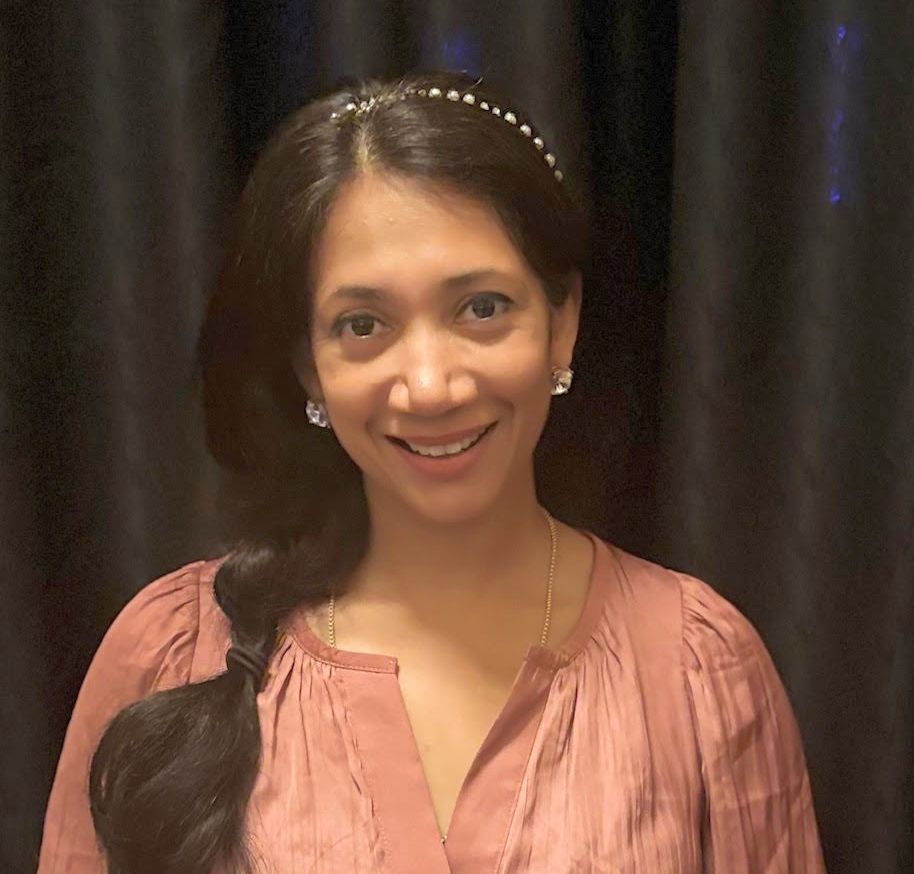 As we bid goodbye to May, this year’s Asian American, Native Hawaiian, and Pacific Islander Heritage Month has come to an end. It has been our honor to share with you a selection of lesser-known facts about our Asian Pacific Minnesotan communities along with a series of video interviews of community members directly affected by this year’s federal immigration enforcement in Minnesota.
 In Minnesota, the term “Asian and Pacific Islander” encompasses people from more than 40 distinct countries and far more unique ethnicities. For those of us who find ourselves under the API umbrella, it is natural—and deserved—to seek recognition of our specific, rich heritages. At the same time, we must find a way to rejoice in our cultural identity as well as our collective identity as Americans of API ancestries.
During AANHPI Heritage Month, and throughout the year, let us continue building on the historical contributions of those before us, honor our ethnic heritage and elders, and seek to better understand the lived experiences of others.
-Shwetha Vijayakumar