

Guidance Memo | GM-2025-07 (Updated Aug. 7, 2026)
Cannabis and hemp advertising guidance
12/31/2025 1:51:03 PM
Note: Guidance Memo 2025-07 is updated as of Aug. 7, 2026, superseding the version published on Dec. 31, 2025.
Background
Minnesota law requires that all advertisements for cannabis and lower-potency hemp edible (LPHE) products contain a warning developed by the Office of Cannabis Management (OCM). In consultation with industry and public health professionals, OCM has developed required warnings that accompany any published advertisement for a cannabis business, a hemp business or any cannabis product or lower-potency hemp edible product (including hemp beverages).
In response to the need for additional clarity on advertising and signage requirements for licensed operators, OCM is providing further clarification on requirements outlined in the original cannabis law. Note that these are not new requirements.
Required warnings
Minnesota Statutes, section 342.64, subdivision 1(7), states that "Cannabis businesses, hemp businesses, and other persons shall not publish or cause to be published an advertisement for a cannabis business, a hemp business, cannabis flower, a cannabis product, a lower-potency hemp edible, or a hemp-derived consumer product in a manner that does not contain a warning as specified by the office regarding impairment and health risks.”
This means that any advertisement (whether in print, radio, television, online, or through social media) for either a cannabis or hemp business, cannabis flower, a cannabis product, a lower-potency hemp edible, or a hemp-derived consumer product must contain the following warning language:
Cannabis businesses, cannabis flower and cannabinoid products
- Warning: Cannabis products are not for use by anyone under the age of 21. Cannabis use may cause drowsiness, affect focus, reaction time, and decision-making. These products are not evaluated or approved by the FDA. Pregnant people should avoid cannabis due to the risk of low birth weight, premature birth, stillbirth, and harm to fetal brain development.
Hemp businesses, lower-potency hemp edibles, and hemp-derived consumer products
- Warning: Hemp products containing THC are not for use by anyone under the age of 21. Using hemp products containing THC may cause drowsiness, affect focus, reaction time, and decision-making. These products are not evaluated or approved by the FDA. Pregnant people should avoid hemp products containing THC due to the risk of low birth weight, premature birth, stillbirth, and harm to fetal brain development.
An advertisement is defined in Minnesota Statutes, section 342.01, subdivision 5, as “any written or oral statement, illustration, or depiction that is intended to promote sales of cannabis flower, cannabis products, lower-potency hemp edibles, hemp-derived consumer products, or sales at a specific cannabis business or hemp business and includes any newspaper, radio, Internet and electronic media, or television promotion; the distribution of fliers and circulars; and the display of window and interior signs in a cannabis business.” Importantly, an advertisement does not include a fixed outdoor sign on the exterior of a cannabis or hemp business’s building that meets the requirements in Minnesota Statutes, section 342.64, subdivision 2(b).
Failure to include the required warnings may result in enforcement action against the license holder or business, up to and including penalties or license suspension/revocation. Complaints about business or license holder activities, including advertisements, may be submitted to OCM through the Enforcement Complaint Reporting form.
Additional hemp and cannabis advertising guidance
In an advertisement, under Minnesota Statutes, section 342.64, subds. 1 and 3, you may NOT:
- Use false or misleading statements.
- Use unverified health or therapeutic claims.
- Promote over-consumption.
- Depict a person under the age of 21 consuming cannabis.
- Use any image or design that is likely to appeal to anyone under the age of 21.
- Advertise on children’s programming or anywhere the audience is likely to be 30% or more persons under the age of 21.
- Use any image containing alcohol or people consuming alcohol.
- Fail to use required health and impairment warnings.
Pop-up advertising on the web for cannabis and hemp businesses is not allowed [Minnesota Statutes, section 342.64, subd. 4].
Age verification of 21+ must be used before sending any direct advertising including location-based advertising on devices [Minnesota Statutes, section 342.64, subd. 5].
Outdoor advertising, signage and billboards
Outdoor advertisements, including billboards and advertisements on benches or vehicles, for cannabis or hemp businesses are prohibited [Minnesota Statutes, section 342.01, subd. 58; Minnesota Statues, section 342.64, subd. 2(a)]. In addition, any window or door signage that is visible from outside the business is considered an outdoor advertisement.
Examples of other common outdoor advertisements that are not allowed:
- Hanging vinyl banners
- Feather flags or sandwich board signs
- Neon cannabis leaf or dispensary sign in window
- Inflatables
- Window wrapping or posters in window facing outward, displaying cannabis imagery or products
- Booths, banners or pop-up tents with business name or logo at a non-cannabis or non-LPHE event
Exceptions:
- A hemp or cannabis business may erect up to two fixed outdoor signs to the exterior of the building or property of a hemp or cannabis business. [Minnesota Statutes, section 342.64, subd. 2(b)].
- An example of excessive signage includes having the business name on the front door or a business sign on a pole in the parking lot in addition to two signs on the outside of the building.
- An LPHE business may use outdoor advertisements to promote other goods or services they offer, such as food or liquor, provided the advertisement does not include, depict or reference the manufacture or sale of LPHEs in any manner [Minnesota Statutes, section 342.64, subd. 2(c)].
- For example, a brewery that also manufactures LPHEs could use outdoor advertising for their brewery but could not advertise the LPHE products they make or sell.
Illustrations and descriptions of allowed/not-allowed signage and outdoor advertisements are below, including examples of outdoor signage/advertisement combinations that are compliant with state law.
/ocm/assets/Cannabis_and_Hemp_Advertising_Guidance-Outdoor_Advertising_Signage_and_Billboards_tcm1202-762943.pdfDownload a printable handout containing these illustrations and descriptions.
Cannabis advertising for health care practitioners under the medical cannabis program
In an advertisement, under Minnesota Statutes, section 342.64, subdivisions 7(a), you may NOT:
- Use false or misleading statements.
- Use colloquial terms to refer to medical cannabis flower or medical cannabinoid products, such as pot, weed, or grass.
- State or imply that the health care practitioner is endorsed by the office, the Division of Medical Cannabis, or the registry program.
- Include images of cannabis flower, hemp plant parts, or images of paraphernalia commonly used to smoke cannabis flower.
- Use medical symbols that could reasonably be confused with symbols of established medical associations or groups.
- Fail to use required health and impairment warnings.
A health care practitioner found by the office to have violated these advertising rules will be prohibited from certifying patients for medical cannabis [Minnesota Statutes, section 342.64, subd. 7(b)].
Examples of allowed/not-allowed signage and outdoor advertisements and allowed combinations
/ocm/assets/Cannabis_and_Hemp_Advertising_Guidance-Outdoor_Advertising_Signage_and_Billboards_tcm1202-762943.pdfDownload a printable handout containing these illustrations and descriptions.
Figure 1. Types of allowed/not-allowed outdoor signage and advertisements
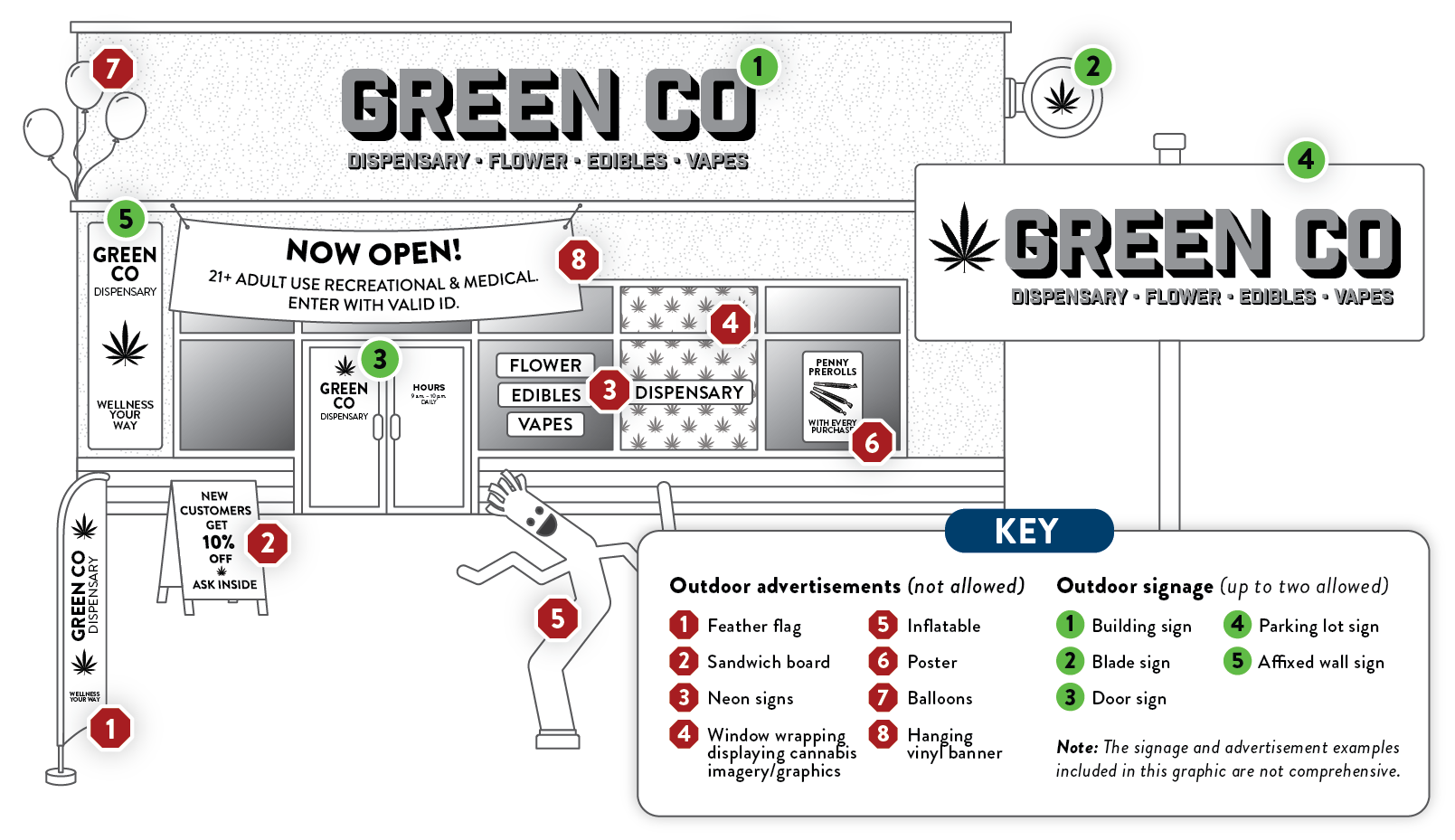
Figures 2-4 provide example combinations of allowed/not-allowed outdoor signage and advertisements that are compliant with state law.
Figure 2. Example A of allowable combination of outdoor signage and advertisements

Figure 2 shows an example of a business with one building sign and one door sign featuring the business name, in compliance with state law.
Figure 3. Example B of allowable combination of outdoor signage and advertisements
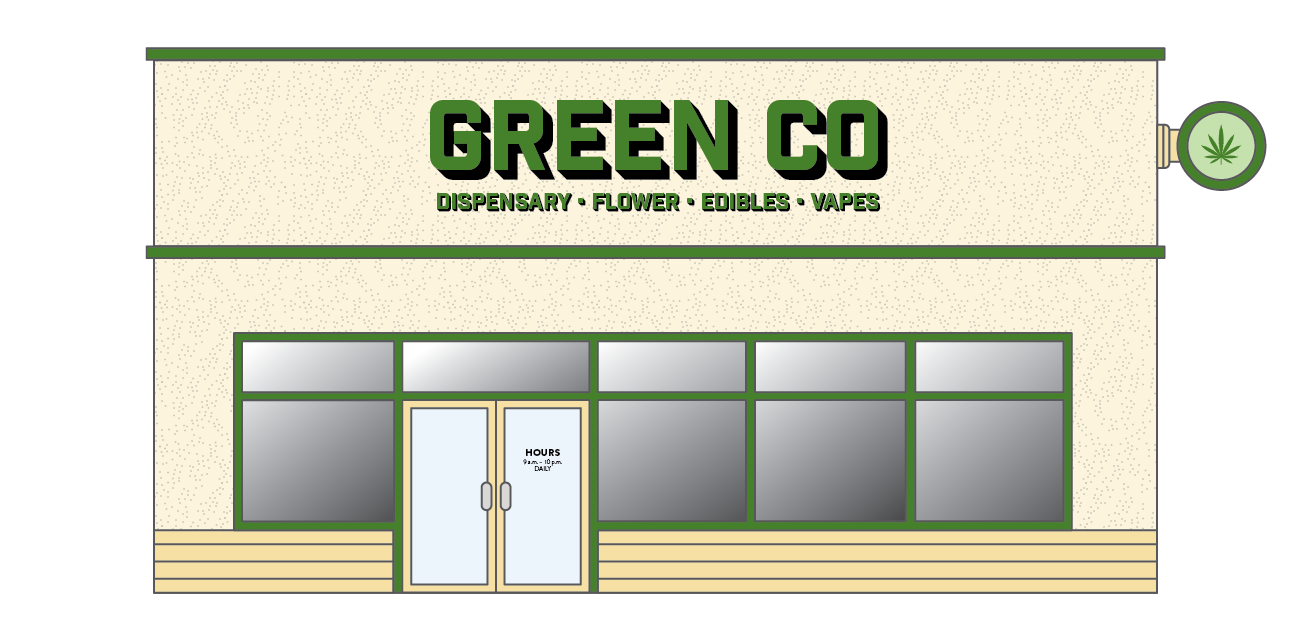
Figure 3 shows an example of a business with one building sign and one blade sign fixed to the exterior of the building, in compliance with state law.
Figure 4. Example C of allowable combination of outdoor signage and advertisements
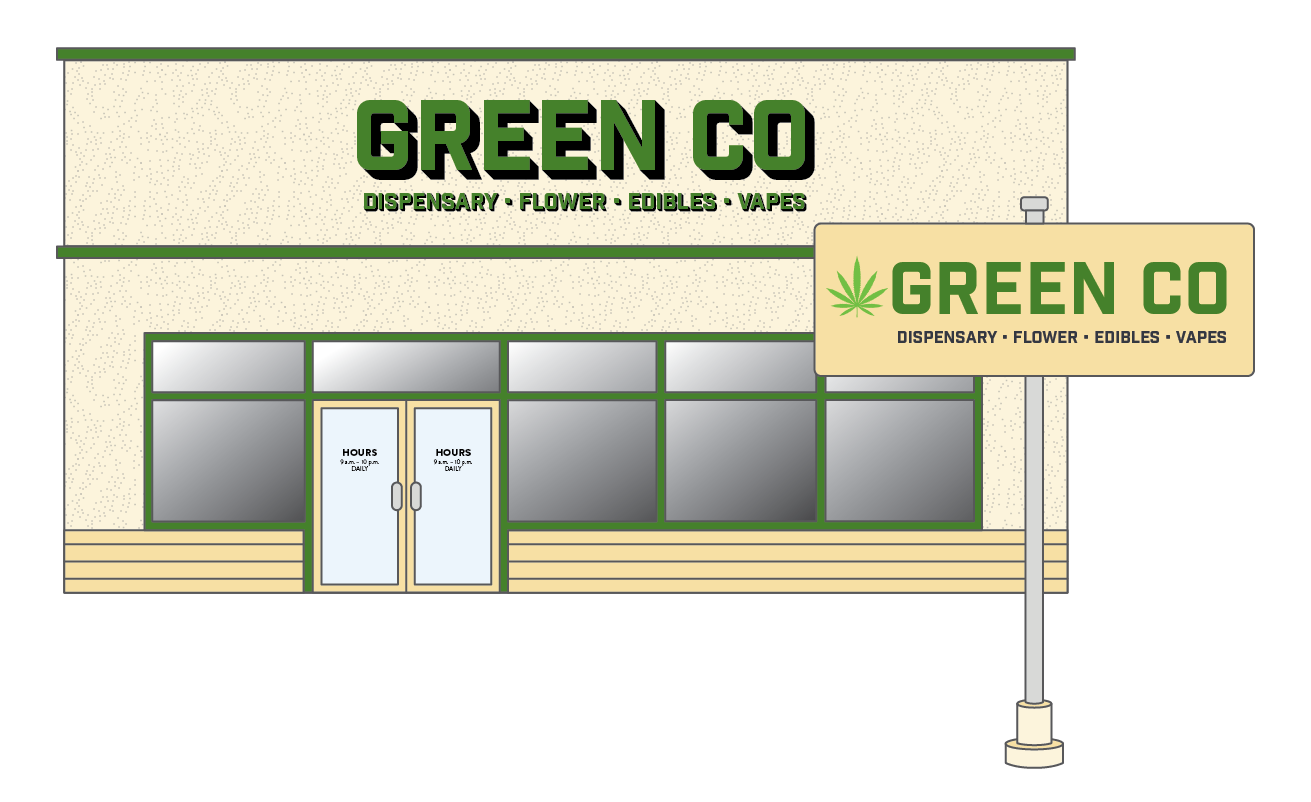
Figure 4 shows an example of a business with one building sign and one parking lot sign, in compliance with state law.