

Victim Engagement
|
Resources |
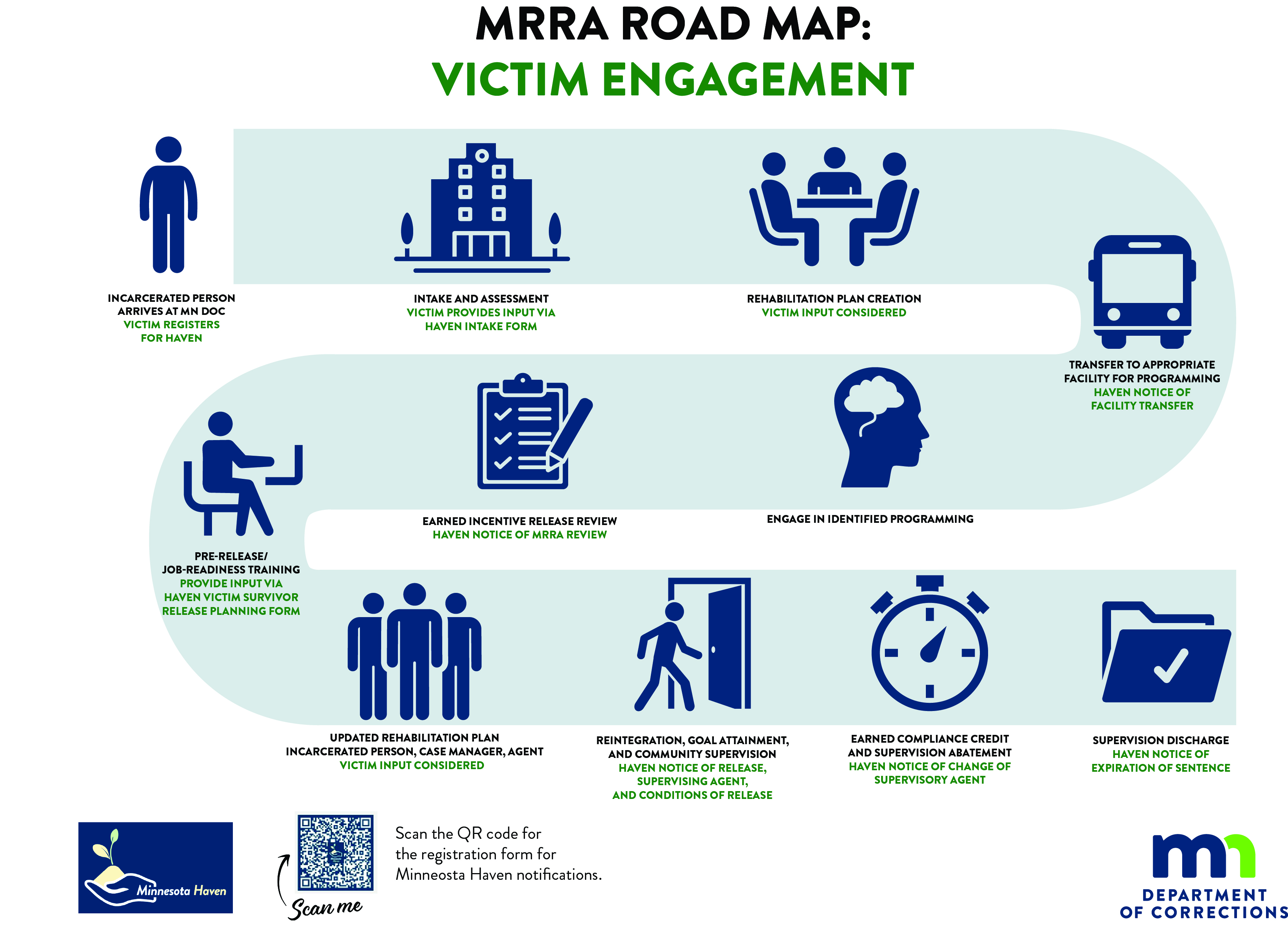
Victim Engagement in the MRRA ProcessThe Minnesota Rehabilitation and Reinvestment Act (MRRA) allows incarcerated individuals sentenced to the Minnesota Department of Corrections (DOC) to earn early release from prison and supervision abatement status during the supervision period. It is essential that victims remain meaningfully involved throughout the process. The DOC acknowledges how vital victims’ voices are to the MRRA process and we are committed to ensuring victims stay informed and heard throughout. The MRRA Road Map: Victim Engagement identifies when victims’ voices are included in the process and when they should expect to receive notifications. Following sentencing, victims are encouraged to register for Haven to receive notifications and begin participating in the process. It is important to note that delay in registering for Haven will limit opportunities to provide input in the process. When an incarcerated person arrives at the DOC, they complete intake and various assessments that guide the development of their individualized rehabilitation plan. Victims may provide input during the assessment phase through the Haven Intake Form, which is reviewed and considered during this planning stage. The rehabilitation plan outlines identified goals and recommended programming. Once the plan is established, the individual is transferred to the appropriate facility to begin programming. Victims are notified of this transfer through a Haven Notification of Facility Transfer, which includes the location of the new facility and the assigned caseworker. When the individual believes they meet the criteria for early release and have served the MRRA required time, they may apply for an earned incentive release review. This prompts the Victim Services Unit to contact the victim to provide notice of the review and gather input for the review team's consideration. If the individual is approved to move forward, they begin pre-release preparation with their caseworker and supervising agent and update the rehabilitation plan. Victims receive the Haven Victim Survivor Release Planning Form to provide input for release planning and recommended supervision conditions. This process ensures that safety considerations and ongoing impacts are reviewed as the individual prepares for reentry. Upon release, the individual begins reintegration into the community and continues working toward achieving the goals and programming outlined in their rehabilitation plan. For every two months of meaningful progress, one month of supervision abatement credit is earned. When the individual has met their goals and completed required programming, they may be placed on inactive supervision status. Before this happens, the supervising agent will complete a thorough assessment of the individual’s progress, including their overall performance while on supervision and any public safety considerations. The agent may also seek feedback from victims and other relevant parties to ensure those viewpoints are incorporated into the decision-making process. Should the individual be placed on supervision abatement status, victims will receive a Haven Notice of Change of Supervisory Agent. Upon successful completion of the full supervision term, the individual is formally discharged, and victims are informed via the Haven Notice of Expiration of Sentence. |