

Our Staff
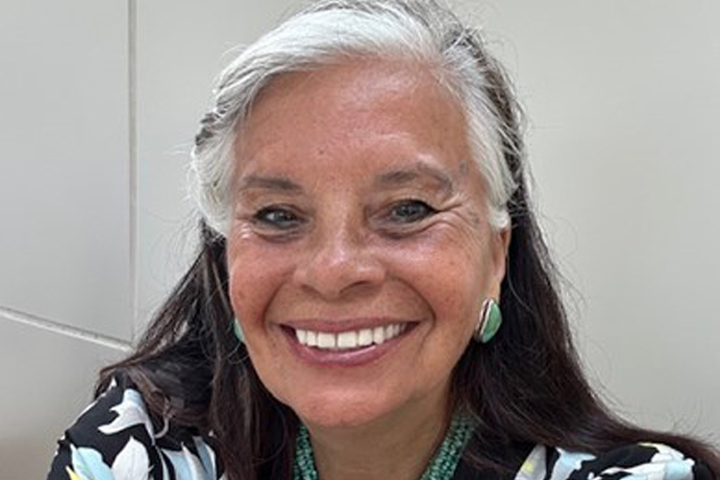
Patina Park
Executive Director

Patina Park is Mnicoujou Lakota from the Cheyenne River Oyate and Executive Director of Tribal State Relations in the Office of Minnesota Governor Walz and Lieutenant Governor Flanagan. Patina is a senior advisor on Tribal affairs, serving as a direct link between the Governor and Lieutenant Governor and Minnesota’s eleven Tribal Nations and Native urban communities. She has spent over 22 years working in Native communities, both with Tribal governments and urban communities, and for the past 13 years has served as faculty for the Falmouth Institute facilitating comprehensive training and consulting nationwide to Tribal and Federal government representatives on issues that impact Indian Country, including Sovereignty, Federal Indian Law, Governance and Constitutions.
Prior to her current position, Patina served as an appellate court judge for the Prairie Island Sioux Community, taught Federal Indian Law at the former Hamline University School of Law, now Mitchell Hamline School of Law, where she also received her Juris Doctorate, held leadership positions with the Minnesota Indian Women’s Resource Center, Minneapolis Division of Indian Work, and the Ho-Chunk Nation Department of Justice, and provided direct legal representation to Native families involved in ICWA Cases throughout Minnesota.
Mariah Norwood
Native American Affairs Advisor

Mariah Norwood is a citizen of the Cherokee Nation and serves as the Native American Affairs Advisor in the Tribal State Relations Office within the Office of Governor Walz and Lieutenant Governor Flanagan. They support the work of building productive and mutually respectful Tribal-State Relations between the state of Minnesota and Tribal Nations and urban Native communities.
Prior to their current role, Mariah served as the American Indian Infectious Disease Liaison at the Minnesota Department of Health, was the Research Coordinator, Electronic Health Record Support Specialist, and Public Information Officer for the Lower Sioux Indian Community and served as an AmeriCorps VISTA in their Native Food Sovereignty Fellows program. They received a Bachelor of Arts in psychology and a Masters in Health and Human Services Administration from the University of Oklahoma. They later obtained their Juris Doctor and Native American Law and Sovereignty Certificate from Mitchell Hamline School of Law.
The TSREP Team
 |
 |
 |
 |
|
| Ms. Stephanie Autumn (Hopi) brings extensive experience in developing, implementing, and evaluating programs in Indian country. With 40 years of local, national, and international AI advocacy and policy work, Ms. Autumn has presented at various United Nations Human Rights forums in Geneva, Switzerland and in New York. Working throughout the country on issues of American Indian adult and youth justice, substance abuse prevention, restorative practices, and tribal youth mentoring programs, she has also directed national projects on American Indian youth domestic assault, pre-and post-release services for AI youth and adults, tribal mentoring, and truancy reduction. Ms. Autumn founded the American Indian Prison Project Working Group, serves as the project director of the Tribal Youth Resource Center at the Tribal Law and Policy Institute, and is a mother and a grandmother. | Jesse Grey Eagle, an enrolled member of the Oglala Lakota Tribe, was born on the Pine Ridge Reservation in South Dakota and now resides in Minnesota. A dedicated Data Analyst, Jesse focuses on data sovereignty and technology-driven solutions to empower Indigenous communities, preserve cultural heritage, and advocate for equity. His work bridges the gap between innovation and tradition, fostering collaboration and sustainable growth for future generations. | Honorable Anita Fineday (White Earth) currently serves as the Director of Equity and Engagement for the Implementation Office which is supporting the creation of the new State of MN agency-the Department of Children, Youth and Families. She was previously the Managing Director for the Indian Child Welfare Program at Casey Family Programs and Chief Judge for the White Earth Tribal Nation. Her focus throughout her career has been improving the well-being of Native children. | Missy Whiteman (Northern Arapaho and Kickapoo) is a two-time Emmy-nominated writer, director, producer, interdisciplinary-publiX artist, and curator. Sitting on the board of Film North, a non-profit organization in St. Paul that fosters and nurtures the careers of filmmakers and media artists, Missy is a cultural consultant who believes in authentic and accurate representation of Native people and culture in film, media, and the arts. Missy’s work incorporates traditional Indigenous practices and perspectives while addressing themes of historical genocide, loss of culture, MMIW(C), revitalization, sustaining of culture, and healing through the creative process. | Maxwell Lurken-Tvrdik previously served the Tribal State Relations Office as an intern before joining the TSREP. His current academic research aims to understand the impact of socioeconomic position on food choice and health. A senior at Columbia University, Maxwell is also developing an ethnographic study of urban construction and trade labor to examine embodied experience and interaction between habitual dispositions. Maxwell believes in the liberation of all and plans to pursue a PhD candidacy in sociology. |